
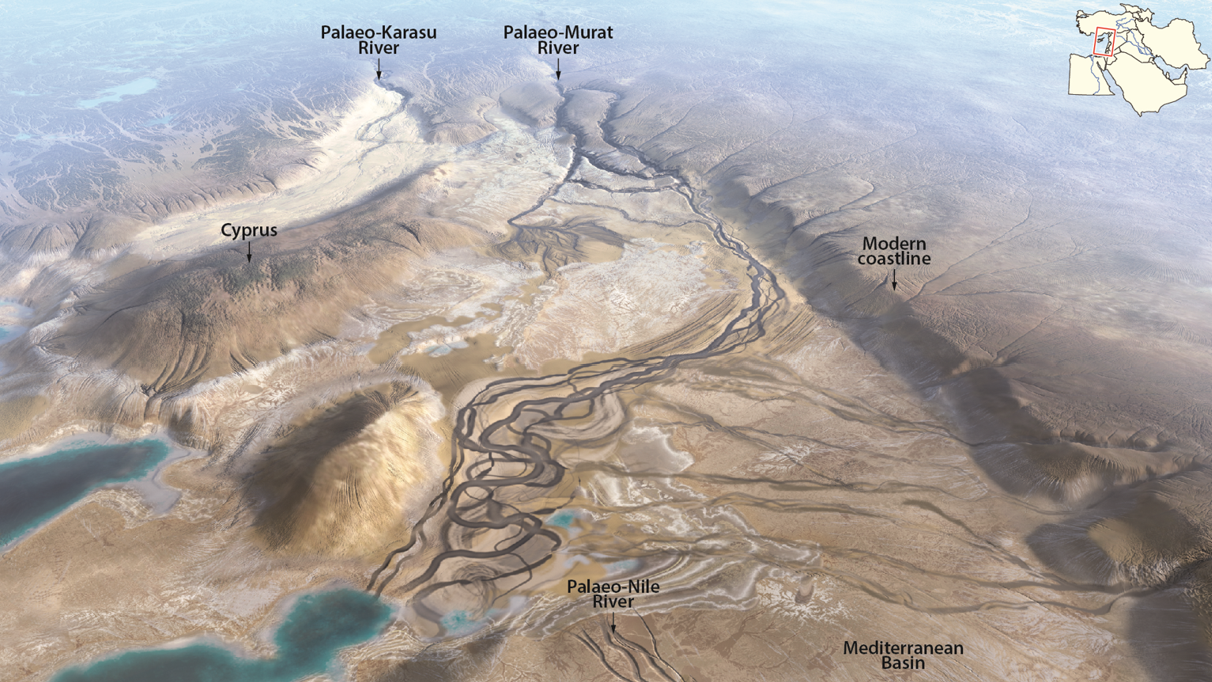
Around 5.4 million years ago, two rivers flowed across present-day Turkey and Syria and into the Mediterranean Sea — and eventually, they would merge to form the Euphrates River, new research suggests. The merged river would play a pivotal role in the development of early human civilizations in the Fertile Crescent.
Scientists revealed that the Paleo-Karasu and Paleo-Murat rivers discharged into the Mediterranean Sea until around 3.6 million years ago, when tectonic shifts altered their paths. The Paleo-Murat River changed course first, and the Paleo-Karasu River was rerouted 800,000 years later. Both waterways combined to flow southeast into the Persian Gulf by roughly 1.6 million years ago, according to the new study.
You may like
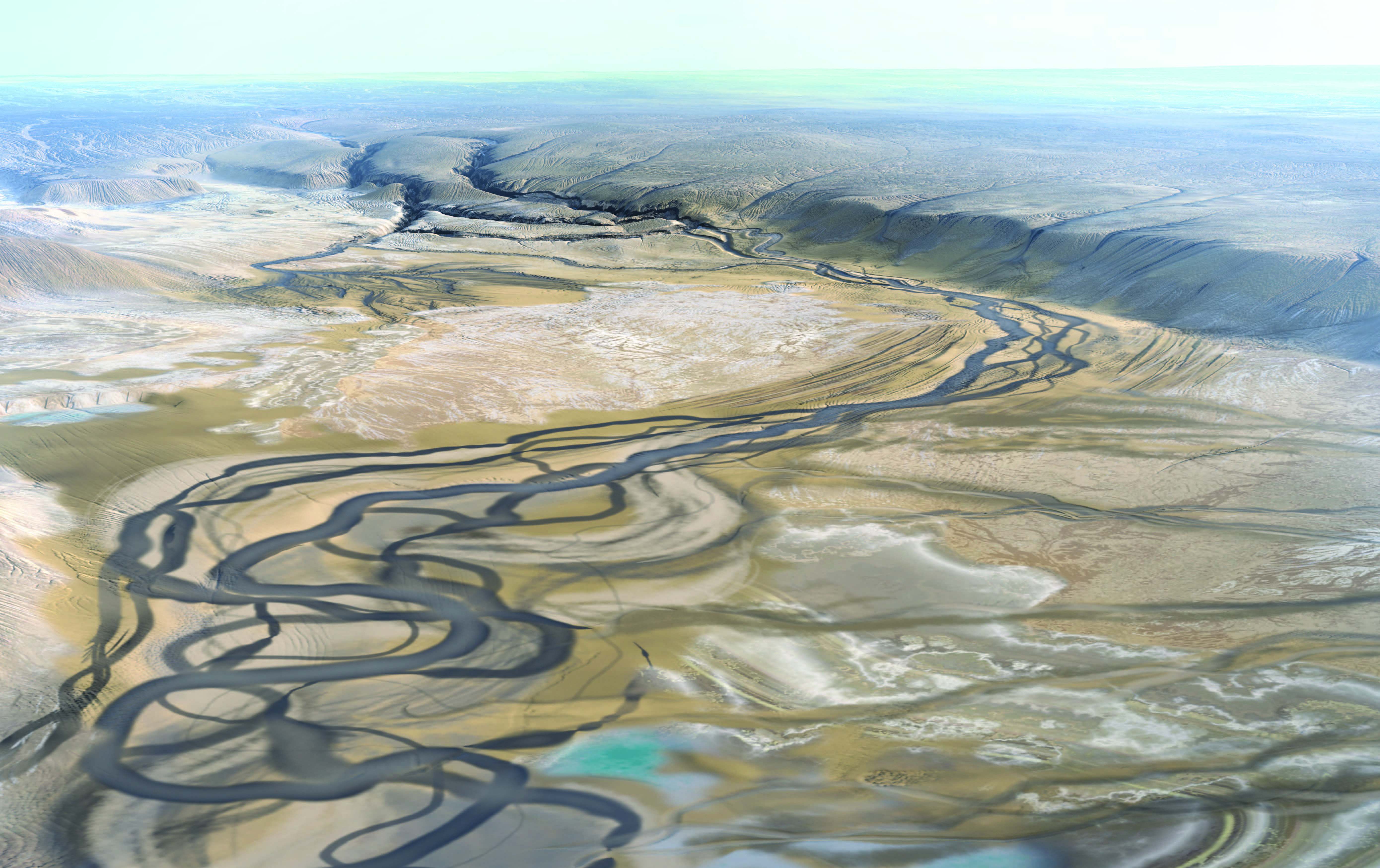
The Paleo-Murat River (in the foreground) altered course around 3.6 million years ago, while the Paleo-Karasu River’s path changed around 2.8 million years ago. At its southernmost extent, the Paleo-Murat approached the Paleo-Nile River.
(Image credit: Reconstruction by Lina Jakaitė and Andrew S. Madof)
What to read next
Madof, A. S., Laugier, F. J., Baumgardner, S. E., Zaki, A.S., Laugier, E. J., Bertoni, C., Walker, R. T., Rivero, C., Lang, S. C. (2026). Late Miocene Euphrates River drained into a partially desiccated eastern Mediterranean. Nat. Geosci. https://doi.org/10.1038/s41561-026-01962-x