
Nitrogen applications also have to be adjusted to avoid issues during hot summer weather. High temperatures stimulate microbial activity in the soil, causing organic matter to break down faster and release more nitrogen than when temperatures are cooler. Research conducted at the University of Tennessee found that, in a controlled environment, as much as 1 pound of nitrogen per 1,000 square feet can be released from organic matter breaking down when soil temperatures were 77 degrees or higher over an eight-week period. The amount of nitrogen released is influenced by the amount of organic matter present in the rootzone.
Continuing to apply nitrogen when temperatures are high will only stimulate excessive growth, impacting both turf health and playing conditions as well as contributing to organic matter accumulation. Disease issues, having to mow more frequently, an increased risk of scalping and slower green speeds later in the day can all result from applying too much nitrogen. Reducing or suspending nitrogen applications when temperatures are high has proven successful at many golf courses. It is also important to consider the nitrogen source. Products with water-soluble nitrogen will release much faster than slow-release forms of nitrogen, resulting in rapid growth.
When temperatures are higher, plant growth regulators (PGRs) are metabolized more quickly by the turf. As a result, regulation will not last as long as it does when temperatures are mild. Using a growing degree-day (GDD) calculator and monitoring clipping volume can help determine when PGR applications are necessary to maintain consistent growth during the summer months.
Modifying the Mowing Schedule
Tough summer weather also requires making adjustments to the mowing program to protect turf health and avoid self-inflicted damage from mechanical injury. Heavy summer rains limit access to the course and mowing before or after rain events when the course is dry enough is recommended. Depending on the forecast, making this adjustment could mean scheduling extra staff to mow more of the course before a storm, mowing later in the day during a break in the weather, or scheduling extra staff on the weekend to mow more of the golf course than usual. If the putting greens are typically walk mowed, switching to a triplex for a period of time can free up some staff for mowing other areas if you need to get ahead or catch up.
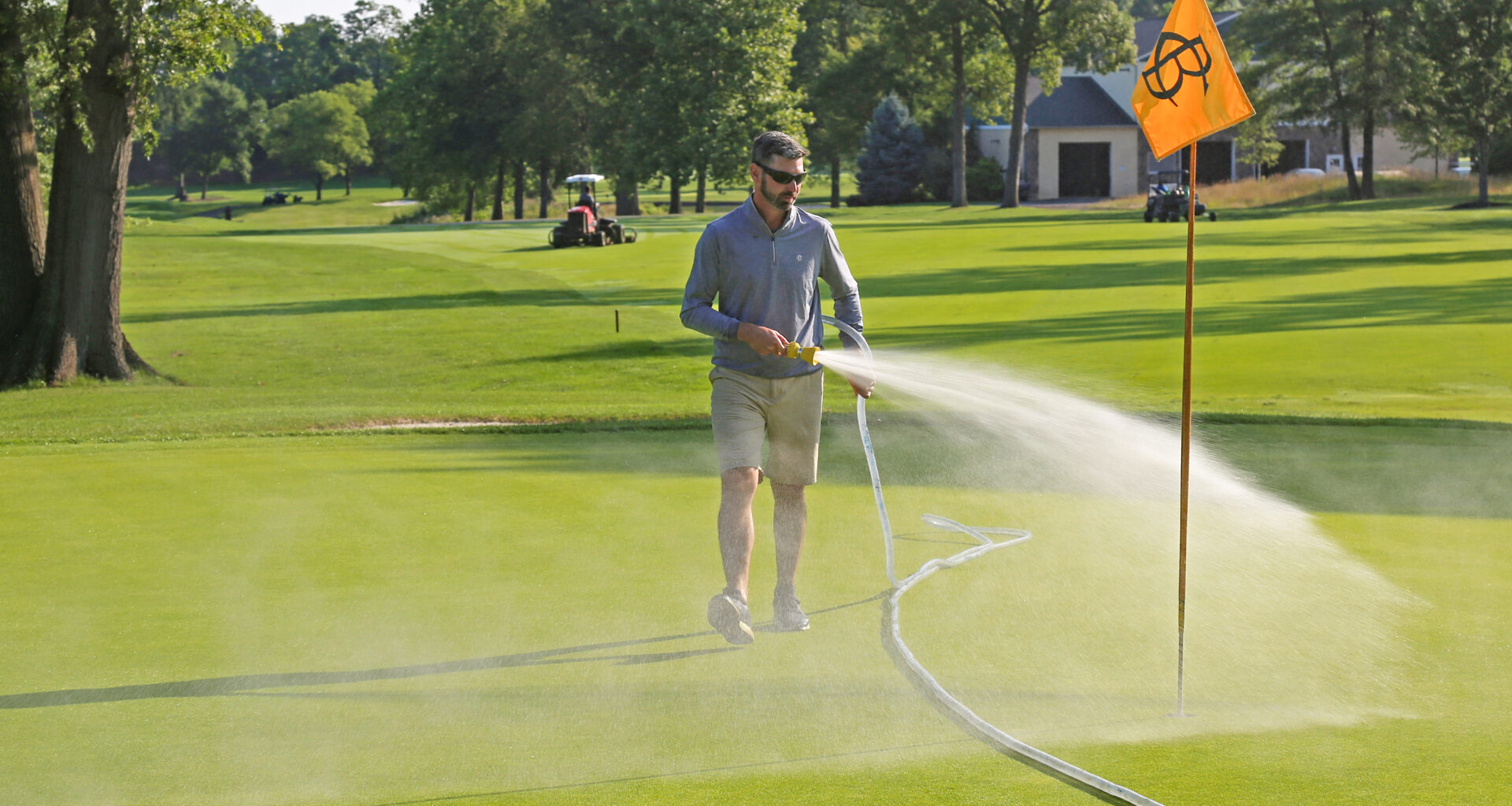
Prolonged high temperatures and minimal rainfall necessitate reduced mowing so unnecessary mechanical stress is not placed on turf that is hardly growing or in drought-induced dormancy. Superintendents should be especially careful about wear and tear in areas that are not irrigated or have limited coverage. Adjustments could include only mowing portions of the rough that need it, or mowing fairways one less time each week until more-favorable weather conditions return. It may even be necessary to forgo mowing in the afternoons so additional stress is not placed on the turf during the hottest part of the day. Increasing hand watering is a sound option for reallocating labor if mowing frequency is reduced during hot and dry weather. In extreme situations, it may be necessary to restrict or limit carts to reduce traffic on dormant turf during dry weather. While golfers might not be happy about this decision, it is a discussion worth having when the forecast indicates that prolonged hot and dry conditions are on the horizon.