
The draft is almost here. The start of free agency will follow. Trades could happen at any moment.
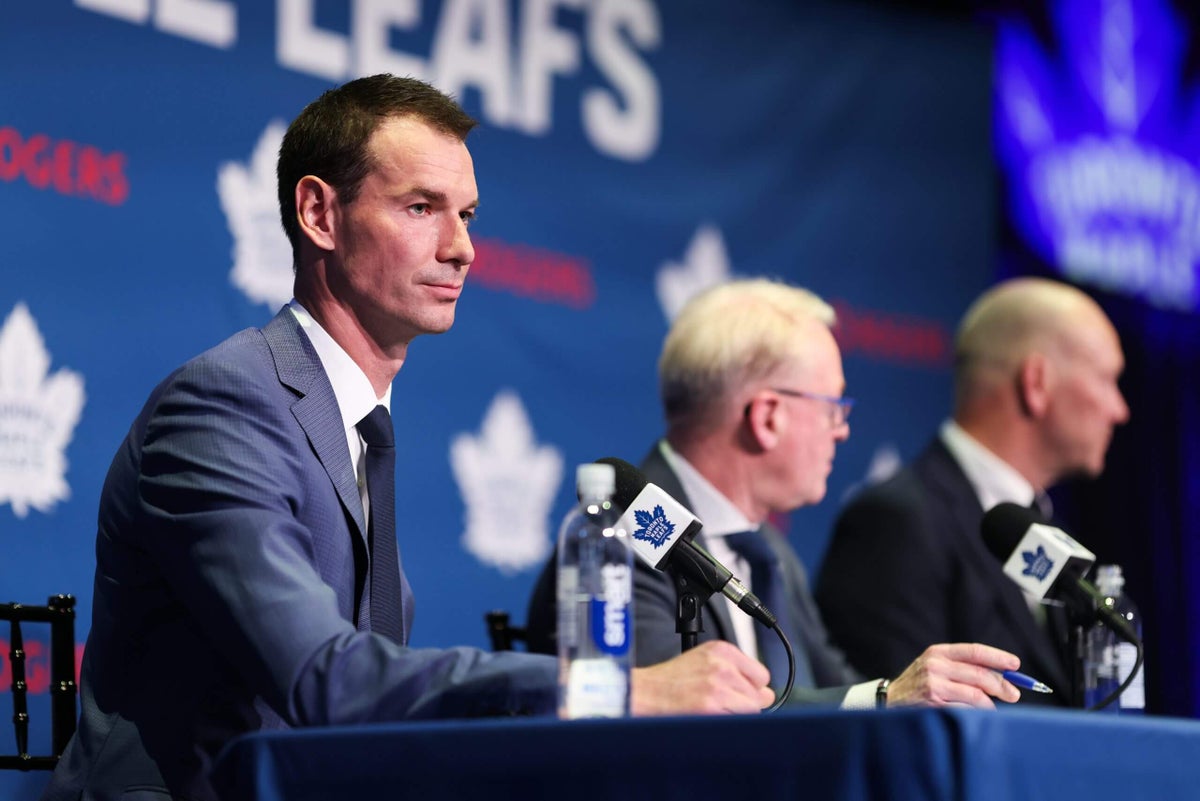
What roster needs does Toronto Maple Leafs general manager John Chayka need to address in the coming weeks? Let’s take a closer look, position by position.
ForwardsLeft wing
The current options: Matthew Knies, John Tavares (?), Matias Maccelli, Steven Lorentz, Dakota Joshua
This could be a solid position for the Leafs depending on how they go about a few things in the coming weeks (and maybe months):
Do they hold on to Matthew Knies?
Do they keep the No. 1 pick and draft Gavin McKenna (or Ivar Stenberg) with it?
Do they move John Tavares from centre to left wing?
The Knies decision is a big one, obviously. Keep him, and the Leafs have one of the top 20-ish best left wingers in hockey in their lineup, whether Knies ends up playing with Auston Matthews again or not. (The NHL still has a hard time listing players at their proper positions. Bobby McMann, for example, is listed as a centre even though he’s never played a single game there in the NHL. But for what it’s worth, Knies ranked 13th among left wingers with 66 points last season.)
Add McKenna (or Stenberg), and suddenly the Leafs are set at top-six left wing for the foreseeable future with two young wingers of considerably different skills: McKenna (age 18), the slick playmaker, and Knies (age 23), the power winger. Both would be candidates to play with Matthews.
The Tavares positional question is a fascinating one. He has spent his entire NHL career (and likely his entire playing career, period) at centre. But he’ll be 36 in September and heading into his 18th season. Moving him to the wing would lessen his nightly burden considerably — and keep him fresher for the playoffs, assuming the Leafs can get back there next spring.
Tavares played left wing for Team Canada at men’s worlds last month and put together a solid tournament: three goals, 6 points in 10 games.
Is it more advantageous for the Leafs to have Tavares as their third-line centre or second-line left wing? It’s probably the latter as third-line centres are much more readily available in free agency than second-line wings. A second-line left winger, mind you, making only $4.39 million cap dollars in Tavares’ case.
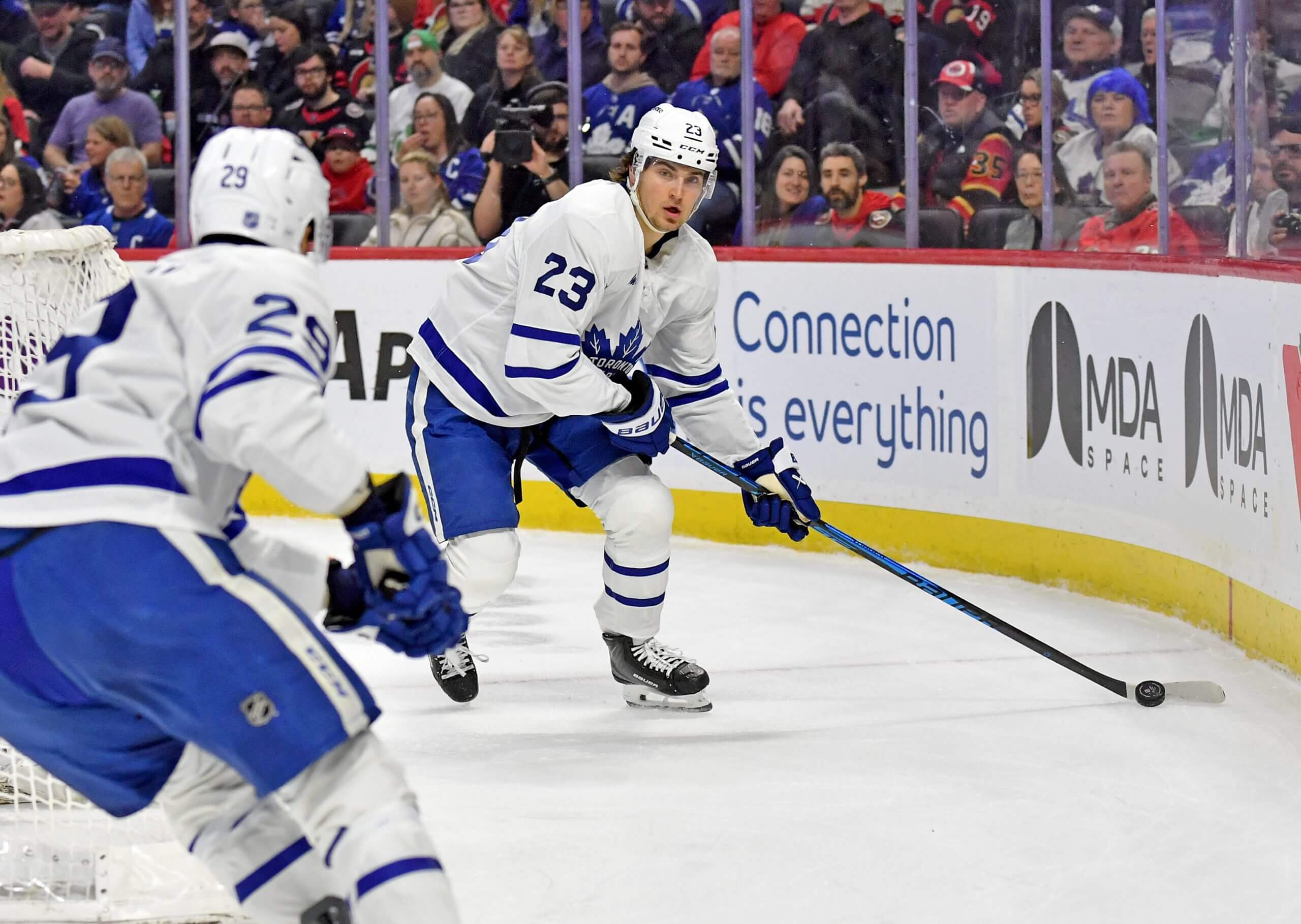
Matthew Knies is the Leafs’ top left winger — at the moment. (Troy Parla / Getty Images)
But here’s where it gets complicated. Slide Tavares over to the wing, keep Knies, draft McKenna, and who gets the top two slots?
On merit, it’s Knies and Tavares. But what would that mean for McKenna? Playing him on a third line as a teenage rookie would ease the competition he faces, but it would also have him playing with lesser linemates. And if the Leafs’ new coach, whoever that may be, intends on asking less of a Matthews-led top line than Craig Berube did, the team must deploy its second and/or third line more often in those spots. Not the right usage, in short, for either McKenna or Tavares.
Trade Knies, on the other hand, and the Leafs could conceivably use McKenna with Matthews, put Tavares on the wing of the second line and then create a defense-minded third line of some kind.
They might still want another winger who can step into top-six minutes if needed. Is there still going to be a place for Matias Maccelli, a pending RFA? Should there be a place?
Fourth-line left wing, meanwhile, figures to go to Dakota Joshua (assuming he’s not traded) or Steven Lorentz, though the Leafs could certainly use a more distinct energy type down there, too.
Centre
The current options: Matthews, Tavares (?)
There has been plenty of talk (and rightly so) about the need for the Leafs to improve on defence. The middle of the ice, though, is equally in need of repairs – and might be the sleeper issue of the summer.
Right now, it’s Matthews and … who?
Acquiring someone to play in front of Tavares down the middle (and maybe even with him) remains a huge challenge. There are zero top-six options in free agency, not after the Columbus Blue Jackets locked up Charlie Coyle on a six-year contract in May. Which means it’s only through trade that Chayka is solving this need. The trick will be finding enough assets to check that box as well as the one on the back end.
I mentioned Nico Hischier recently as a dream possibility. Dylan Larkin has emerged as an option, potentially. Robert Thomas might be one, too. Elias Pettersson would be a high-risk (to say the least), high-reward kind of play. Ryan O’Reilly, on the other hand, would be low-risk in the last year of his contract.
Maybe the most realistic option is New York Rangers centre (and U.S. Olympian) Vincent Trocheck, who has three years left on his contract at a cap hit of $5.6 million. Trocheck, who had 16 goals and 53 points in 67 games last season, would be just the kind of strong two-way (and right-handed) centre the Leafs need to remove some of Matthews’ defensive burden.
He is turning 33 in July, so he’s more of a short-term option.
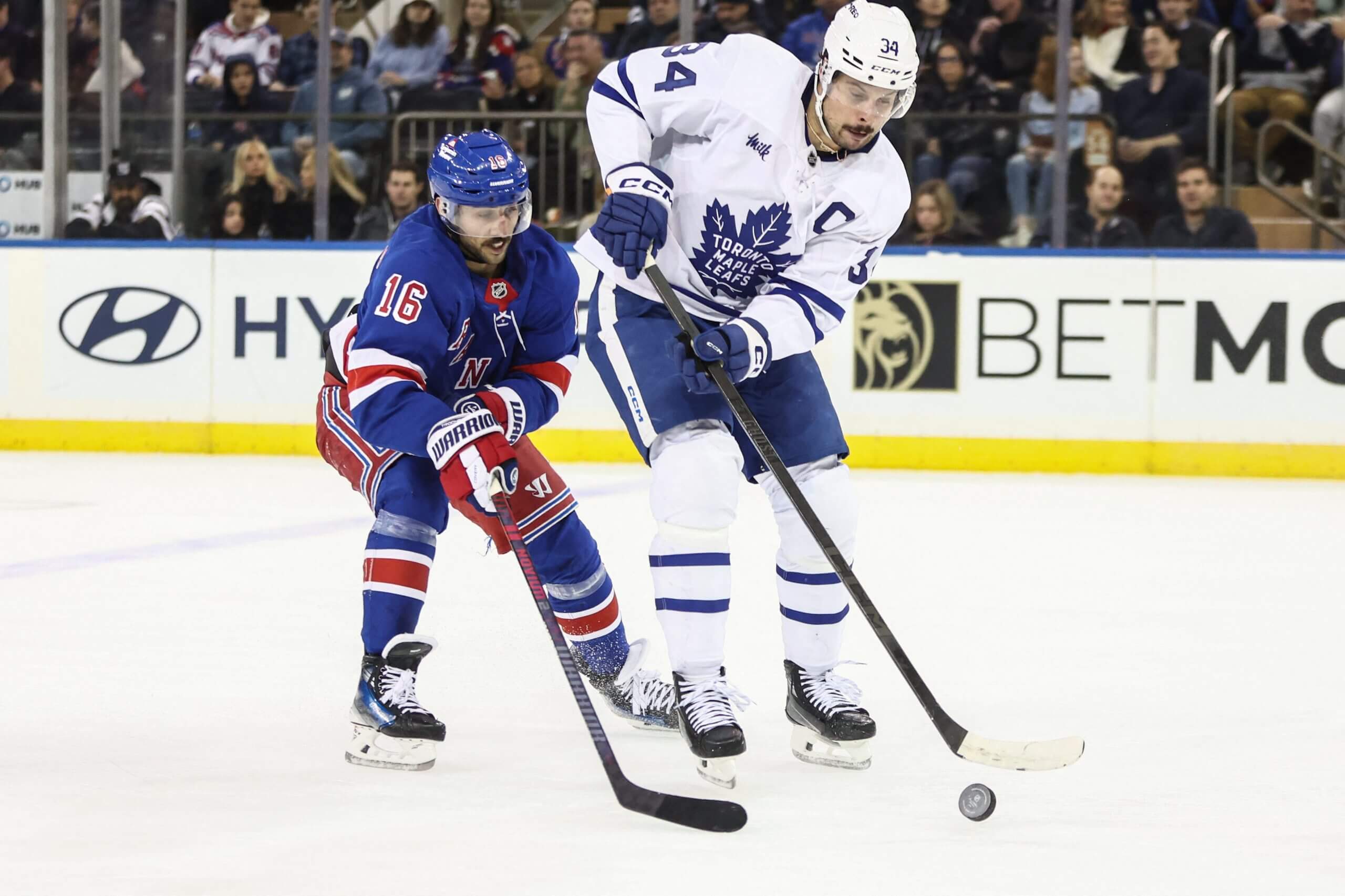
Vincent Trocheck would be a strong No. 2 behind Auston Matthews — if the Leafs can swing a trade with the Rangers. (Wendell Cruz / Imagn Images)
But what does he cost? The Rangers could be eyeing a scoring winger and might just ask for Knies, which should be an easy no for the Leafs given Trocheck’s age and ability. Would Chayka dangle 20-year-old Easton Cowan instead? Dealing an intriguing young forward for a 33-year-old, albeit one at a position of need, might not be the wisest move for the Leafs. Would Cowan, plus other future goodies (maybe the Colorado Avalanche’s 2027 first) be enough for New York?
A 1-2-3 at centre of Matthews, Trocheck and Tavares would be a big improvement on last season (and the one before that), albeit also on the older side. And after trading Scott Laughton at the trade deadline in the spring, the Leafs will need to procure a fourth-line centre this summer — with all due respect to Bo Groulx and Jacob Quillan.
Right wing
The current options: William Nylander, Easton Cowan, Nick Robertson, Max Domi (injured), Dakota Joshua, Steven Lorentz
The Leafs have one of the top right wingers in the league in William Nylander. It gets murky after that.
Easton Cowan will, if he’s not moved (or playing left wing), fill one spot in the top nine and maybe even in the top six. Even if he never ends up becoming a star, Cowan feels like one of those forwards who will impress most next to top-tier talent. He’ll bring out more from them, and they’ll bring out more from him. The sample is super small, just 56 minutes, but the Leafs crushed teams when Cowan was out there with Knies and Matthews (61 percent expected goals rate).
Is Cowan ready for a top-line shot right now? That feels aggressive after an up-and-down rookie year. Ideally, Chayka can acquire more of a sure thing for Matthews’ right wing next season.
Alex Tuch, the top free agent on the market this summer, would clearly be an upgrade on the mishmash of wingers who played there last season. But is he the right bet at this point? Tuch just turned 30, he’s never hit 80 points in a season, he didn’t record a single point in the Buffalo Sabres’ second-round loss to the Montreal Canadiens, and he’s sure to command a huge contract in free agency. He also isn’t the playmaking winger Matthews needs — though maybe McKenna will fill that role on left wing.
Patrick Kane and Claude Giroux could be solid stopgap options if either chose to leave their teams, the Detroit Red Wings and the Ottawa Senators. Or the next coach of the Leafs could decide to do what Berube wouldn’t and play Nylander with Matthews on the regular.
One low-key deja vu kind of decision here for the Leafs (but not Chayka) is what to do with Robertson, a pending RFA once again July 1. Should the team hang on to him once more or finally let him go?
Either way, the Leafs could use more speed and defensive acumen on the wings than they’ve got in the top nine for next season. Domi’s health situation makes him a major question mark for next season.
DefencemenLeft defence
The current options: Jake McCabe, Morgan Rielly, Simon Benoit, Oliver Ekman-Larsson (?)
Morgan Rielly is obviously the big question mark in the bunch. If Chayka somehow manages to pull off a deal involving the team’s longest-serving player, the picture on the left side becomes clearer with Jake McCabe, Oliver Ekman-Larsson (sliding back to his strong side full time) and Simon Benoit.
That still doesn’t feel as strong as it needs to be. Adding one more qualified lefty would knock everyone into their proper place:
McCabe onto a second pair as he heads into his age-33 season
Ekman-Larsson onto a third pair, the role he played so successfully during the Florida Panthers’ Stanley Cup run in 2024
Benoit, assuming he isn’t moved, into the role of seventh defenceman
Ekman-Larsson is also worth watching. Though it was a different regime, the team was prepared to move him at the deadline this spring — if the return were right. It bears noting that the soon-to-be 35-year-old has a history with Chayka dating to their time in Arizona. It was the new Leafs GM, then still working for the Coyotes, who signed Ekman-Larsson to the eight-year contract in 2018 that was later bought out.
Right defence
The current options: Chris Tanev, Brandon Carlo, Ekman-Larsson (?), Philippe Myers, Ben Danford
It’s almost become easy to forget about Chris Tanev, who was the team’s best defenceman only two seasons ago. Last season was almost entirely lost to injuries, including core-muscle surgery in March. Can he get back to even 80 percent of what he was after all that, considering he’ll be 37 in December?
Splurging on a top free agent such as Darren Raddysh would allow the Leafs to ask a little less of Tanev, pushing him one rung down the depth chart.
Add only Raddysh, and the top four could look something like this:
McCabe – Raddysh
Ekman-Larsson – Tanev
That’s an improvement on last season, but the question is whether it’s enough. The Leafs need a No. 1 who can defend, drive some offence and even run the top power-play unit. Easy, right?!
Would Chayka take a chance on Erik Karlsson, heading into the last year of his deal after a terrific 66-point season, if the Pittsburgh Penguins signaled a willingness to move him? Or Dougie Hamilton, with two years and a $9 million cap hit?
There’s a case to be made for adding two top-pairing defencemen, if at all possible — a lefty and a righty. That would allow McCabe and Tanev, so stingy as a unit two seasons ago, to reconnect on a second pair.

Will Chris Tanev and Jake McCabe team up again next season? (Dan Hamilton / Imagn Images)
What becomes of Brandon Carlo this offseason? He’s entering the last year of his contract and doesn’t make much: just $3.48 million on the cap. He could be moved and then replaced through free agency or trade, or held (at least until the deadline next spring) and pushed down the lineup.
If the Leafs are going to bring more mobility, puck-moving prowess and offensive pop to their back end, they’re going to have to move some of the current crop out. Dealing Rielly, the top puck mover in the bunch, won’t exactly help in those efforts either.
Myers played a fairly regular role last season. Those days should be over. A third-pairing righty, depending on who else moves in trades, might be on the docket.
Danford is a long, long shot. He’s only 20 and should play for the Marlies next season.
Goaltenders
The current options: Joseph Woll, Anthony Stolarz, Dennis Hildeby
I’m not convinced the Leafs must trade a goalie this summer because Dennis Hildeby needs waivers next season. They could always wait until the end of training camp, when they know they have two healthy goalies to start the season.
Woll hasn’t been available at the outset of the last two regular seasons. He took a leave of absence during camp last fall and suffered a groin injury the day before the opener the year before that. With that said, if there’s an exit ramp from Anthony Stolarz’s four-year contract, which starts next season, then the Leafs have to take it. The cap hit on his deal ($3.75 million) might be low enough for some goalie-needy team to take a chance on him as its backup/tandem goaltender.
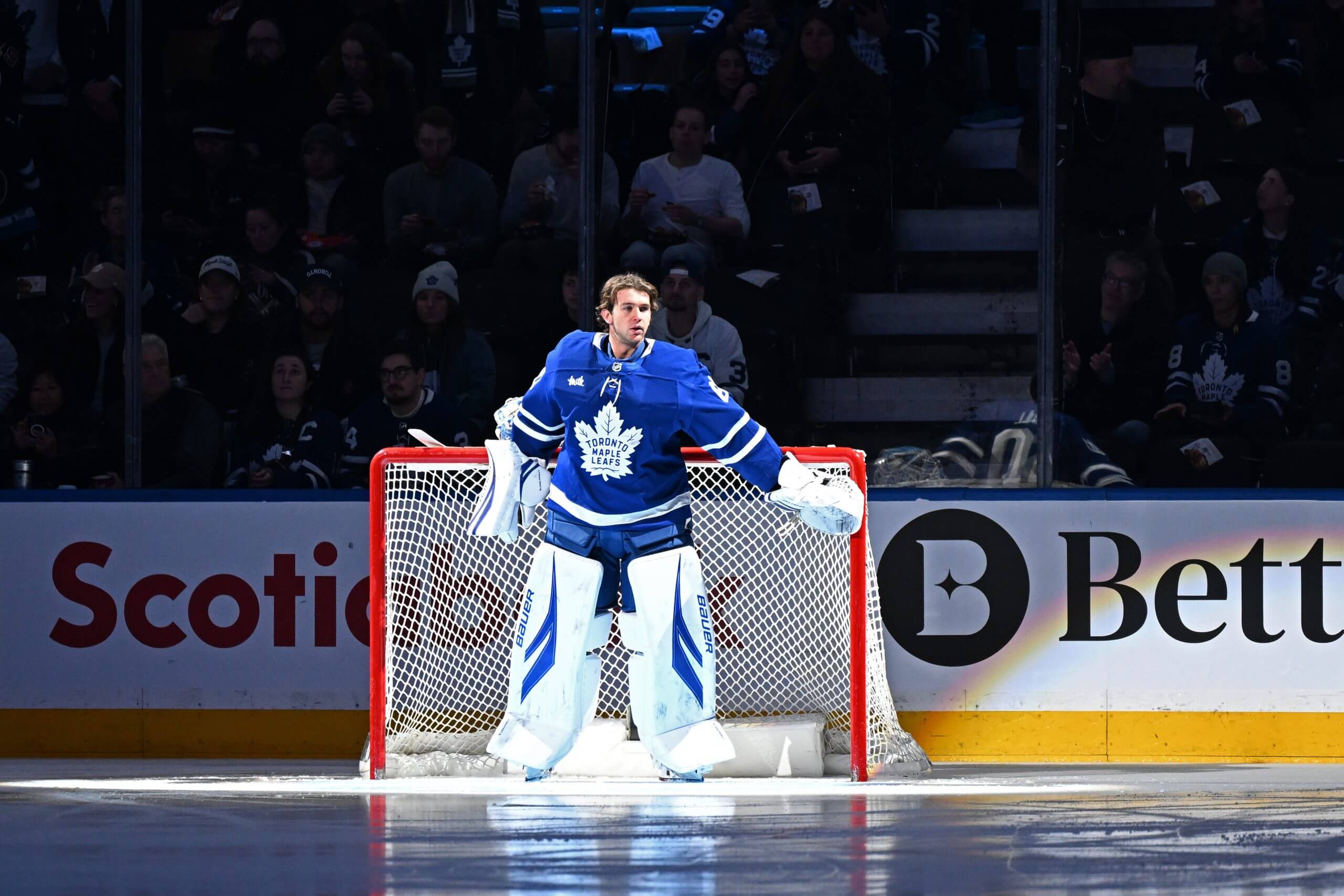
The Leafs’ crease should belong to Joseph Woll next season. (Dan Hamilton / Imagn Images)
One thing that should happen next season whether Stolarz returns or not: The Leafs should plan on having Woll lead the crease and hopefully inch toward 50-ish starts for the first time.
He’ll have to earn it with his play, obviously, and of course remain healthy. Woll has yet to get through a Leafs season without an injury disruption.
The Leafs could trade Woll, who would presumably boast the most value, but that would leave them with a Stolarz-Hildeby tandem that’s hardly proved enough for a team intent on contending again.