
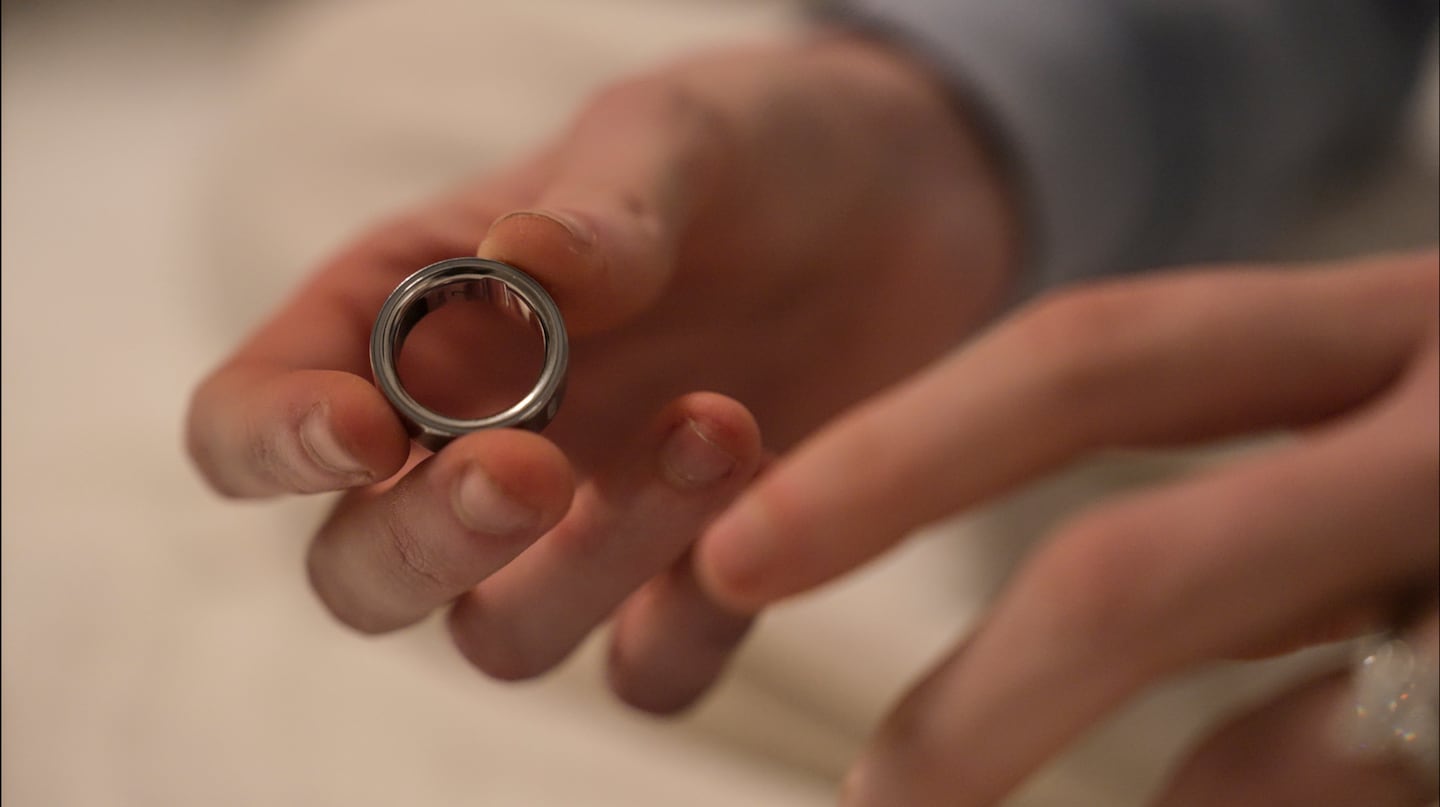
“This was an inevitable development,” said Ida Sim, a physician and professor at the University of California, San Francisco, who studies how to make best use of consumer health data. “We’ve got these sensors that have ostensibly valuable data … but we haven’t even begun to tap into the real clinical value.”
Boston-based Whoop suggests that the integration to virtual care can bridge “the gap between biometric data collection and expert interpretation” and that “these consultations begin with a comprehensive understanding of the member’s health, powered by months of continuous data.” Similarly, Oura touts that the integration will create “a seamless bridge from personal health insights to real medical care.” Besides data from wearables, clinicians can view data from lab testing or medical records downloaded from health information exchanges.
“Oura is really interesting because they’re able to provide signals on your blood pressure, on your oxygen, on heart rate, on when you may be about to get sick, and those are really powerful signals,” said Muthu Alagappan, CEO of Counsel Health, the virtual provider working with Oura. “And we can now combine that with actionability. We can have a doctor minutes away that you can chat with, who can write a prescription.”
The potential connection between consumer wearables and clinical care has been researched for over a decade. But it became a matter of practical importance in 2018 when Apple released an FDA-cleared feature that alerts users of possible irregular heart rhythms. The concern was that doctors would be inundated with users pointing at their smartwatches who need confirmatory testing, as the data coming off the watch is insufficient to make a diagnosis.
“If I have a patient who has symptoms that could be atrial fibrillation, then I am interested to know if they have had an irregular rhythm notification,” said Sanket Dhruva, a cardiologist and researcher at UCSF who recently co-authored an American College of Cardiology guide to using the Apple Watch in clinical care. “But the sheer volume of data that is coming in now is far too much to cover in a traditional clinical encounter, and the larger question is also what the utility is of these data in improving clinical outcomes.”
For Oura, the analogous alerts come from the company’s “health radar” that claims to identify if users are getting sick or that blood pressure or nighttime breathing patterns may suggest an underlying health issue. Oura chief medical officer Ricky Bloomfield said that while the company can provide some education in the app, it has to stop short of providing medical advice.
“We wanted to do something that was more thoughtful and in depth, so we’re not just throwing someone over the edge, saying, ‘good luck talking to a doctor,’” said Bloomfield. A clinician can guide a user through collecting measurements from a validated blood pressure cuff to confirm a diagnosis and recommend lifestyle changes or hypertension medications if necessary.
Oura’s partner Counsel Health is already thinking about the next step. The company believes it can eventually use the ring’s data “to help manage complex conditions like hypertension, hyperlipidemia, and diabetes” including “making personalized medication adjustments.”
Jessilyn Dunn, an associate professor of biomedical engineering at Duke University, said that for data points like blood pressure to be actionable in clinical settings, they need to be trustworthy. Neither Oura nor Whoop has submitted its blood pressure features to the FDA for marketing authorization, nor have the companies released details about how accurate they are. The FDA, meanwhile, has backed off on regulating devices that claim to be intended for wellness purposes. Dunn worries about features that haven’t been authorized by regulators creeping into care.
“The question becomes that line between wellness and medicine,” she said. “I would say if you’re bringing information to a doctor, the doctor is making decisions based off of it, to me, that seems medical. From that perspective, I am concerned about where this all goes.”
Bloomfield said that Oura has taken pains to publish information about its biometric features like Cycle Insights so that clinicians will trust them. He said the company is in the final stages of putting together documentation on the blood pressure feature and that it will be available “imminently.”
“I think there’s a simple narrative that, well, it’s a wellness device, therefore it’s not accurate,” said Bloomfield. “And we’re trying to dispel that myth that whether a device is cleared by the FDA or not is orthogonal to the science that you put into it and the accuracy of that device.”
Marketing from the device makers also suggests users can talk to their doctors about the flood of biometrics and other data collected by wearables. A Whoop spokesperson said that the company captures heart rate variability, resting heart rate, respiratory rate, skin temperature, blood oxygen levels, sleep metrics, menstrual cycle insights, and self-reported behaviors like alcohol consumption, stress levels, travel, and late-night work.
“Because this data is collected continuously, it can provide clinicians with additional context that may not be available during a single office visit or one-time diagnostic test,” the spokesperson said.
The value of such data to a doctor, however, is unclear.
“It’s different if you have a diagnostic test that says you have some sort of infection, it’s obvious what to do next,” said Dunn. “But when you see slight changes and trends, or even a dramatic change in broad measures, it’s not so actionable.”
Added Dhruva: “People certainly often find it interesting to know a lot of parameters like their average heart rate, heart rate variability, etc. — but it is incredibly rare that it informs clinical decision-making.”
A commonly cited problem is the firehose of data being pointed at busy clinicians. UCSF’s Sim said, for example, that she doesn’t make the most of data from her patients’ continuous glucose monitors. But she feels it’s a solvable problem. She points out that lab data might be similarly inscrutable without established protocols.
“We now have a window into highly granular data from the wild,” she said. “How could you expect medical science to have anything to say about that data until we study it? We’ve only just started, we need to do the science to get us to digital biomarkers that are informative, that are tied to clinical value. We’re not there yet.”
Sim said that, currently, it’s very difficult for researchers to assemble the large datasets that are necessary to come to scientific conclusions about biometrics. She advocates for the development of broader shared infrastructure, something like a public utility, that allows for the sharing of consumer-generated data for health research and care purposes.
Alagappan, from Counsel Health, said that the partnership with Oura presents a possible step forward on developing clinical evidence around the use of such data.
“You have this chicken and the egg problem, where sometimes the data is not actionable because there aren’t doctors who are reviewing it, studying it, and making closed-loop inferences based on it,” he said. “And now we can look at someone’s heart rate variability, which is not used in traditional medicine as often, and start to compare, how do our triage decisions or antibiotic prescription patterns affect someone’s [heart rate variability] over time? It opens up the possibility of brand-new science.”
Dunn said she agreed with the idea in principle.
“I strongly believe in the promise of the data and the promise of finding these early signals of dysregulation and learning what kinds of actions change outcomes,” she said. “Unfortunately, it still feels more like it’s research rather than practice.”