
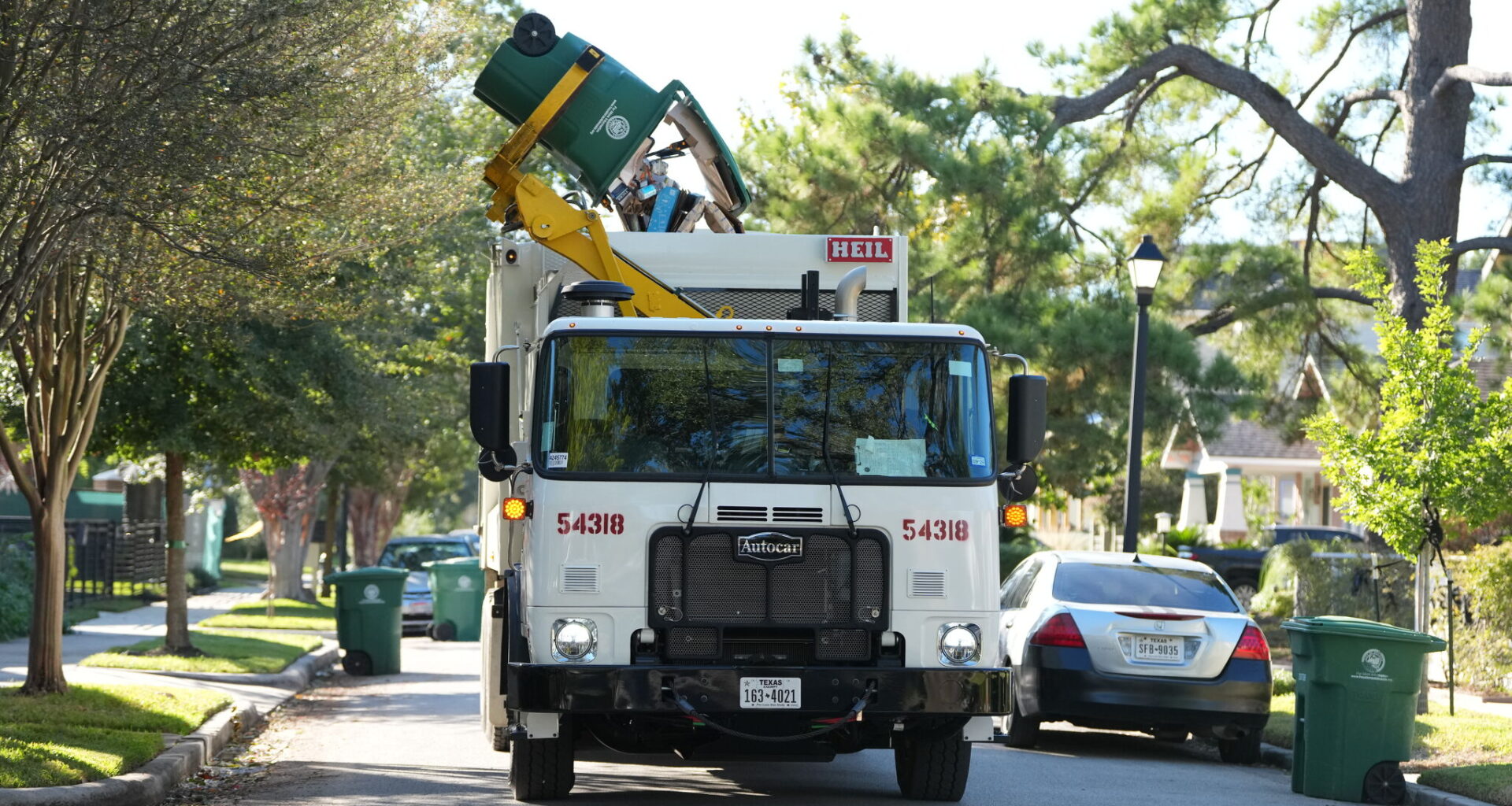
One of the City of Houston’s new recycling truck makes it’s rounds in the Heights in Houston, Thursday, Oct. 30, 2025.
Jill Karnicki/Houston Chronicle
Houston recycles less of its waste and struggles with higher contamination rates than other major Texas cities, yet Mayor John Whitmire’s newly approved budget does not include benchmarks for improving in either area despite charging a new fee for waste services.
The new $5 monthly fee is part of a broader budget restructuring that city officials say will provide more stable funding and improve efficiency in the long-struggling Solid Waste Management Department, but environmental advocates argue Houston must make up for years of underinvestment in the department and its recycling program if it hopes to divert as much waste from landfills as peer cities.
“The recycling program is not getting the attention it needs,” said Luke Metzger, Executive Director of Environment Texas. “It’s kind of a second class citizen when it comes to the waste department.”
Article continues below this ad
EXCLUSIVE: Mayor Whitmire to propose Houston’s first-ever trash fee to help tackle $174M deficit
Houston’s recycling problem is significant — only about 18% of its waste is recycled, according to city estimates, compared to a statewide recycling rate of 23%, and a national rate of 32%.
Houston’s recycling contractor said 42% of the material residents place in their green recycling bins contains nonrecyclable items and contaminants such as batteries, plastic bags and food waste. Other major Texas cities like Austin and San Antonio report contamination rates of about 20%, and industry groups estimate the national contamination rate at between 15% and 25%.
Houston Public Works Director Randy Macchi told city council at a May budget hearing that he would return later this summer with “a much more refined set” of performance measures for waste services.
Article continues below this ad
Whitmire’s new budget moves the solid waste department into the city utility system within Houston Public Works, funding it through water bill revenues and the new fee rather than the city’s general fund, which is fed mostly by property and sales taxes.
The city did not respond to questions about its recycling program. Whitmire’s office has not responded to a request for comment from the Houston Chronicle since August 2025.
DATA ANALYSIS: Houston struggles with trash pickup more than other Texas cities. Here’s what 311 data shows
Advocates say the budget’s missing benchmarks raise questions about whether the city’s overhaul of the solid waste department will improve a program that has struggled with on-time pickups and public confusion over what can be recycled.
The city needs to do more to educate residents on what happens after they place material in recycling bins, why contamination can cause recyclable material to be sent to a landfill and how an effective recycling program helps the community, Savage said.
Article continues below this ad
“We need to get down to the nuts and bolts of helping people understand what happens downstream and how it provides economic vitality in the local community regarding job growth and building a stronger reputation for the city of Houston,” Savage said. “Houston needs to green up its reputation.”
The city council on Wednesday approved a budget amendment from Council Member Martha Castex-Tatum allocating $250,000 from the new monthly fee to recycling audits, education and outreach aimed at reducing contamination.
“We need to do a better job of making sure residents know what can be recycled and what can’t be recycled,” she said.
INTERACTIVE: Explore Houston’s 2027 budget: See where your tax dollars would go.
Public education campaigns have worked before — the city’s contamination rate briefly fell to 36% when crews used a tagging program to identify improperly filled recycling carts, officials from FCC Environmental Services, the city’s recycling contractor, told council members during a May committee meeting.
Article continues below this ad
FCC officials said contamination creates operational and financial problems. Batteries and propane tanks can spark fires. Hoses and wires can jam equipment. Food waste and plastic bags can make material unusable.
The company estimated contamination cost the city nearly $2.5 million in lost revenue in 2025.
Missing benchmarks
The $7.5 billion budget the council passed Wednesday is a break from previous years, when the solid waste budget tracked recycling and contamination rates.
Last year’s solid waste budget presentation estimated Houston’s recycling rate at 16% and set a goal of increasing it to 18% in the current fiscal year that ends June 30.
Article continues below this ad
Those same kinds of recycling benchmarks do not appear in the new budget. The document instead includes a target of about 165,500 curbside recycling stops completed each week – tracking collection activity, not whether more material is recycled.
READ MORE: Houstonians have given up on yard waste pick up, data shows. Will Mayor Whitmire’s budget fix it?
Metzger said Houston’s recycling program has lagged behind other large cities in part because the city has historically underfunded solid waste services. He said the new budget and its accompanying monthly fee is a chance for the city to waste services.
Houston has struggled for years to provide basic solid waste services, including trash, heavy trash, yard waste and recycling pickup. Advocates say missed pickups erode trust in the recycling system and make it harder to persuade residents to separate recyclables correctly.
“Think about the word ‘away’ when you throw something away,” Savage said. “‘Away’ is not a place on planet Earth. It has to go somewhere, and it’s important to have education in place that’s empowering to people to want to care about recycling.”