
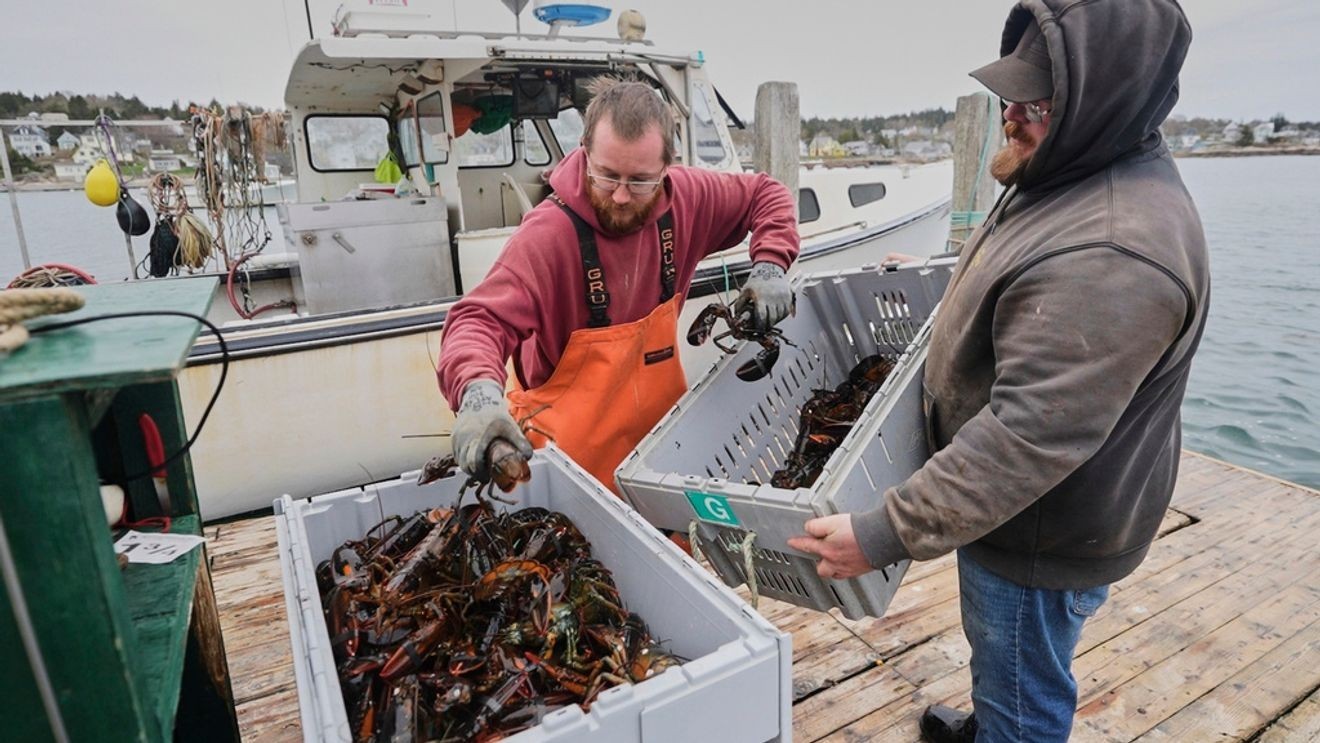
President Donald Trump signed a proclamation Thursday reopening large portions of the Pacific Remote Islands Marine National Monument to commercial fishing.
The proclamation lifts restrictions that had prevented U.S. commercial fishing in waters surrounding several remote U.S.-controlled islands and atolls in the central Pacific, including Wake Island, Johnston Atoll, Jarvis Island, Howland Island, Baker Island, Kingman Reef, and Palmyra Atoll.
Among those celebrating the proclamation was Pacific Seafood CEO Frank Dulcich, who spoke during Thursday’s signing ceremony at the White House.
READ ALSO | Oregon pulls out of Great American State Fair in Washington, D.C.
Dulcich, whose company was founded in Portland and has grown into one of North America’s largest vertically integrated seafood companies, said the policy change would have real-world impacts for employees, fishermen, and coastal economies in Oregon and across the West Coast.
“We have 3,000 families that work with us and 715 fishing families in Oregon, Washington, California, and Alaska that depend on what we catch, what we process, and what we grow,” Dulcich told Trump. “You’ve given us access to these family wage jobs and these coastal communities where we’re usually the number one or number two employer in those cities and counties.”
According to the White House, the action is intended to “restore American commercial fishing in the Pacific” by reducing what it describes as unnecessary regulations that have limited domestic fishermen while foreign fleets continue operating nearby.
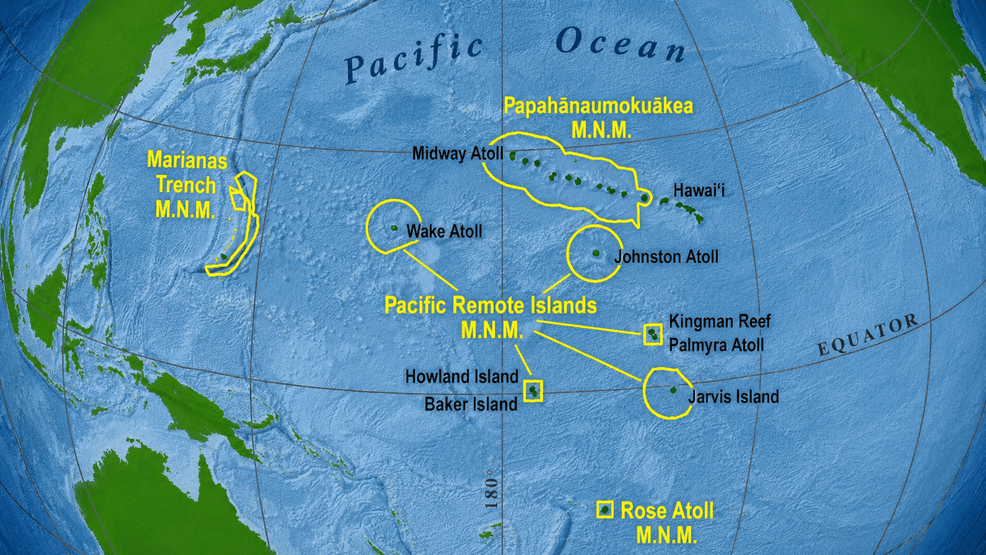
The highlighted areas show portions of the Pacific Remote Islands Marine National Monument where President Donald Trump’s proclamation reopened waters to U.S. commercial fishing. (Courtesy: US Fish and Wildlife Service)
The administration argues reopening the waters will increase seafood production, support coastal economies and strengthen food security by giving American fishermen greater access to productive fishing grounds.
The protected area was first established by President George W. Bush in 2009 and later expanded by President Barack Obama in 2014, creating one of the world’s largest marine protected areas and largely prohibiting commercial fishing across hundreds of thousands of square miles of ocean.
Pacific Seafood and other industry giants have argued that the fishing restrictions unfairly prevented American vessels from accessing productive waters while foreign fleets operated outside the protected boundaries.
But environmental organizations say the proclamation could jeopardize one of the Pacific’s most important marine ecosystems.
Ben Enticknap, fisheries director for the ocean conservation group Oceana, called the decision a major setback.
“These are some of the most remote and pristine habitats on our planet,” Enticknap said. “They are now going to be under threat, and all of the conservation benefits that we have been gaining over the past decades while these areas have been protected are going to be lost.”
READ ALSO | EPA head Zeldin says Trump admin won’t set environmental requirements for data centers
Enticknap said the monument’s isolation has allowed thousands of species to thrive with minimal human disturbance, including deep-sea corals that may be more than 1,000 years old, as well as seabirds, whales, sea turtles, and sharks.
He warned that opening the waters to industrial fishing could increase bycatch of those species and undo years of conservation progress.
He also disputed the notion that reopening the monument is necessary to support the fishing industry, arguing that most U.S. waters are already open to commercial harvest.
“The vast amount of our oceans are already open to commercial fisheries,” said Enticknap. “This really is a cynical move that takes some of our most important areas for healthy ocean ecosystems and now puts them at risk.”
While the protected waters are thousands of miles from Oregon, Enticknap said the effects could still be felt in the Pacific Northwest because many marine species migrate between the monument and the West Coast.
“Leatherback sea turtles are nesting in the far western Pacific and coming all the way over to our waters here off Oregon to feed,” he said, adding that swordfish and tuna also make extensive migrations through the region. “This will just be more pressure on those same populations before they come to our region, where they could be fished here locally.”
Enticknap said Oceana views the proclamation as more than an isolated policy change, arguing it signals a broader shift away from the United States’ historical role as a leader in marine conservation.
“We are now heading in the wrong direction,” said Enticknap. “We think it’s absolutely sending us in the wrong direction when we should be a leader for conservation.”