
Here in Lebanon, people are sceptical of the US-Iran framework dealpublished at 09:13 BST
09:13 BST
 Hugo Bachega
Middle East correspondent, reporting from Lebanon
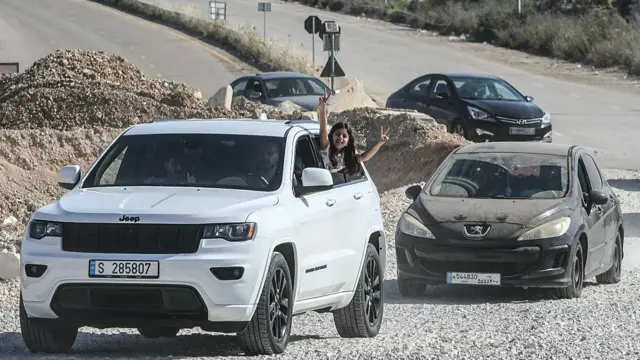 Image source, Getty ImagesImage caption,
Displaced families have been seen driving towards villages in southern Lebanon today, as some return to their homes
Lebanon is, again, hoping that a deal between the US and Iran would mean an end to the war between Israel and the Iranian-backed armed group Hezbollah here.
The morning appears to be calm in the south of the country, where Israel has carried out frequent air strikes, but people seem to be reacting to the announcement of a truce with caution.
Still, some families are starting to return to their communities, despite warnings from the authorities that it is not safe. In a video that is being circulated online, a group of displaced residents arrived in their village and found an Israeli tank blocking a street.
Iran had insisted that any deal should also include Lebanon. This was crucial in strengthening Iran’s image among Hezbollah’s supporters, who have been deeply affected by the conflict, and in reinforcing Tehran’s influence in Lebanon.
This came despite attempts by the Lebanese government to separate the two arenas, to curb that influence and, as a result, isolate Hezbollah even more, with the goal of disarming it, still elusive.
For Lebanon, the war has been catastrophic.
More than 3,700 people have been killed; around 5% of its territory is under Israeli occupation and there is no timeline for any withdrawal; dozens of villages in the south have been destroyed and no-one knows who will pay for reconstruction, and one million people remain displaced, most of them Shia Muslims, which are the bulk of Hezbollah’s support base.
The Lebanese have reason to be sceptical. The ceasefire that ended the last war in 2024 did not bring peace. Israel continued to attack what it described as Hezbollah targets almost every day and many fear that, once the world’s attention moves away from the region, this could be their reality again.