
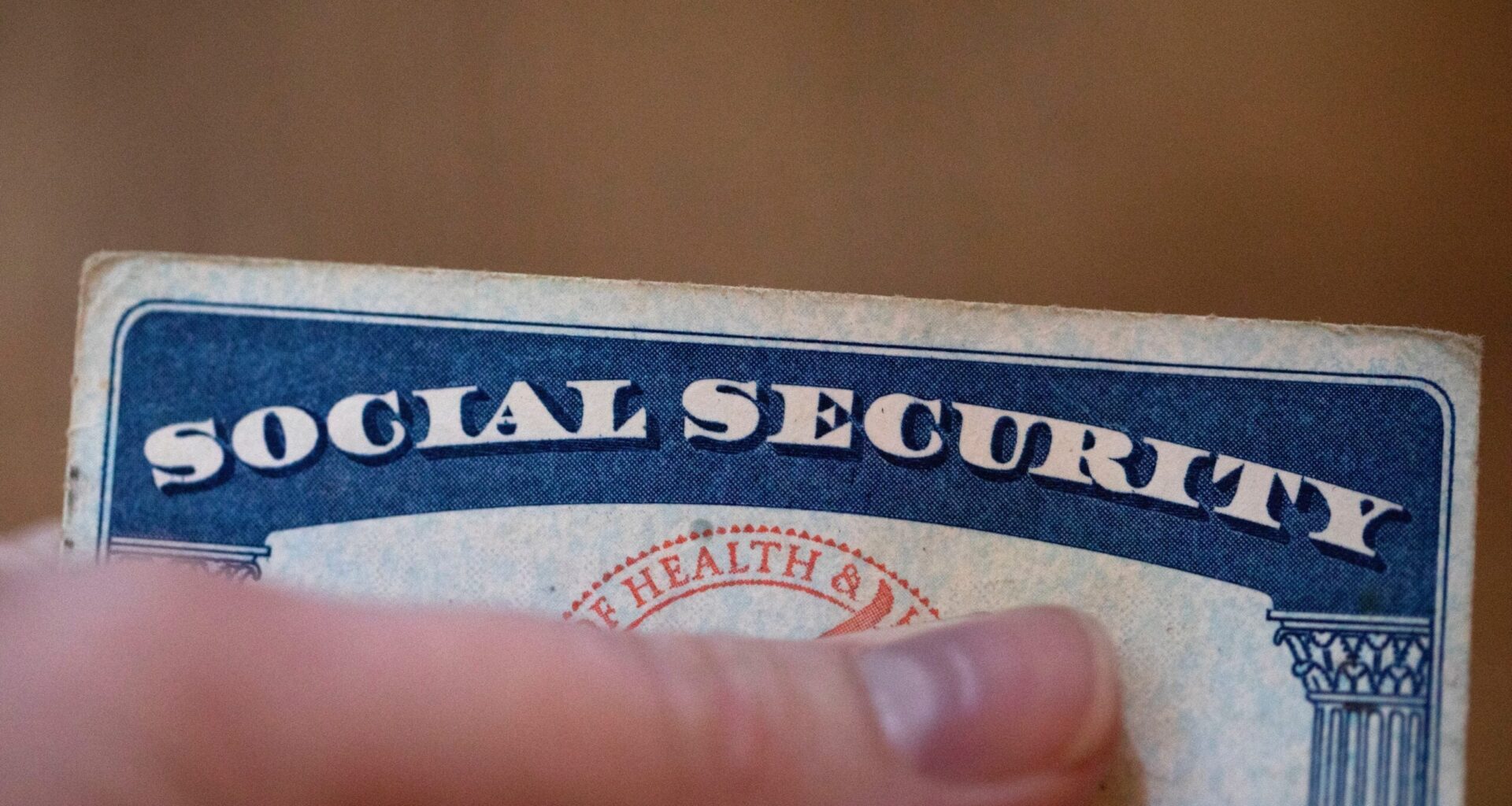
The Social Security trust fund is projected to reach a shortfall by the end of 2032, and Wisconsin could feel a significant economic impact if the insolvency leads to reduced benefit payments.
The board of trustees that oversees Social Security expects that the amount of money the trust fund takes in from taxes will become lower than the amount it pays out in benefits, as more of the large baby-boom generation enters retirement.
Social Security won’t run out at that point, but the government expects to have to cut benefits by 22 percent if it reaches depletion.
Understanding Wisconsin, Together.
WPR’s “Wisconsin Today” newsletter keeps you connected to the state you love without feeling overwhelmed. No paywall. No agenda. No corporate filter.
About one in five Wisconsin residents receive Social Security benefits, and University of Wisconsin-Madison risk and insurance professor Anita Mukherjee told WPR’s “Wisconsin Today” that this growing population is unevenly distributed across the state.
“The northern and rural counties have a lot higher older adult shares,” she said. “I think many more communities would be affected by changes in Social Security than a state that has less of that geographic variation.”
Mukherjee said one in seven retirees rely on Social Security for as much as 90 percent of their income.
She doesn’t expect that the federal government will let the trust fund reach the point where a flat 22 percent cut in benefits is necessary, but that kind of income reduction could force seniors to rely on other social services.
“There’s Medicaid. There’s FoodShare, housing assistance, other things,” Mukherjee said. “But I would say, while the safety net exists, it’s patchier and more means-tested. It’s definitely more administratively burdensome than Social Security.”
To prevent the expected depletion by 2032, the federal government will have to find some combination of increasing the revenue it brings into Social Security or decreasing the benefits it pays out.
Mukherjee said Congress could raise payroll taxes, change the taxable wage base, raise the retirement age or alter the benefit formula.
“I think if benefits have to be adjusted, many scholars would argue that the first priority should be protecting those who rely on it the most.” she said. “One option would be to change the burden of such a cut across the income distribution, like people who are relying on it for 90 percent [of their income], maybe we cut it less.”
Saving for retirement with uncertain Social Security
Those who are saving for retirement and haven’t drawn Social Security still have time to adjust their financial planning to account for the trust fund’s uncertain future.
Kevin McKinley of McKinley Money, LLC in Wisconsin hears a lot of concerns from his clients about what amount of Social Security will be available for them in the future.
He recommends that people who are close to retirement should calculate what a 20 percent reduction in benefits would mean for them and if their projected spending would be sustainable with that amount.
“For a lot of people, working one more year can make up that kind of difference in their long range income planning,” McKinley told “Wisconsin Today.” “I will say that people claiming it sooner generally are happier than those who delay claiming and diminish their savings while they’re trying to support their living expenses in retirement.”
For younger people who are further removed from their future retirement, he hears a much more pessimistic outlook. But those are the people who have the most time to prepare for whatever comes next for Social Security.
“Those people are really looking at going this alone and will be pleasantly surprised if Social Security is there for them in some shape or form,” McKinley said. “I’m not sure it’s something that I would rule out completely, but it’s a good idea to plan on Social Security being there in some form, but also try to save as much as you can on your own, as well.”
He’s seen Congress adjust Social Security a number of times in his decades as a financial advisor, and he expects it will take action again as the shortfall date gets closer.
He predicts that it will be a similar approach to a previous Social Security insolvency crisis in the 1980s, with more gradual changes to taxation and the retirement age.