
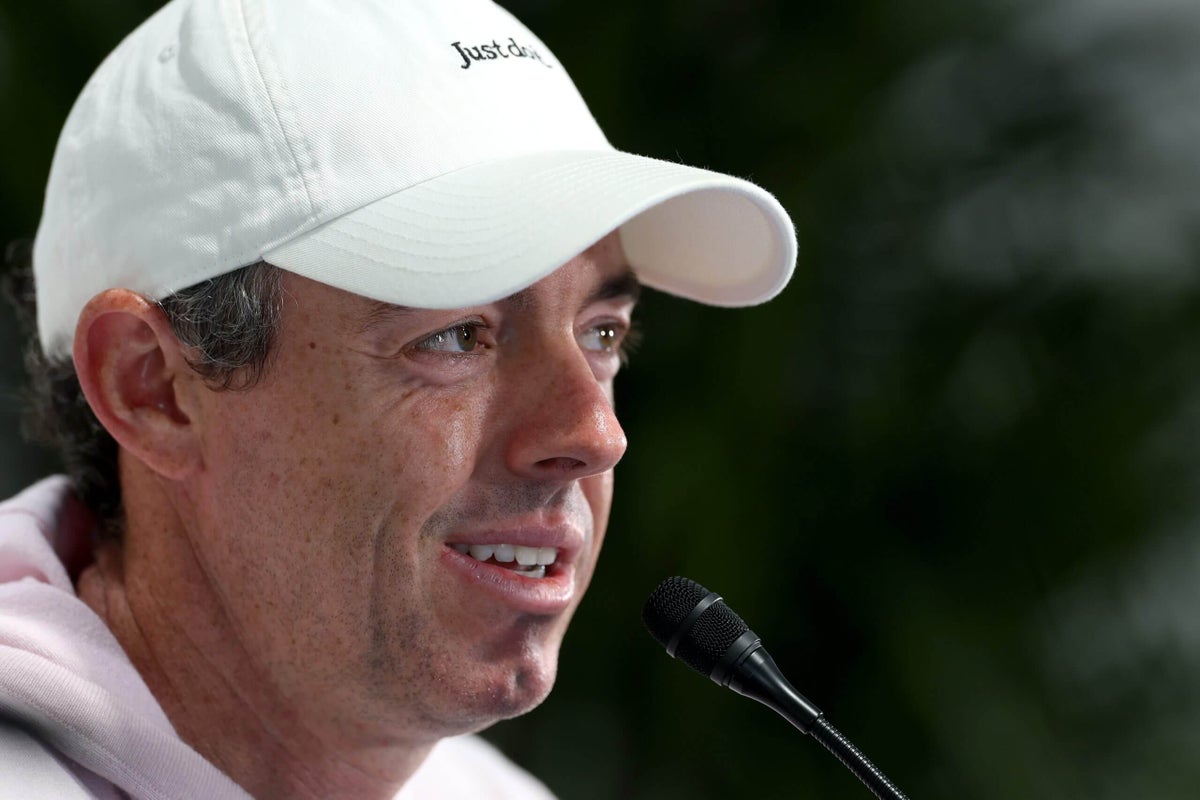
SOUTHAMPTON, N.Y. — The PGA Tour is set to announce a new competitive structure next week, and Rory McIlroy has some thoughts: Maybe the version of the tour that existed before LIV Golf was sufficient?
“Yeah, it’s funny. Like I think, as they’ve done all this work, you start to realize that the way the tour was before LIV came along was actually pretty good. It was a pretty good structure, and everything sort of worked pretty well,” he said.
Addressing the media at Shinnecock Hills Golf Club, ahead of his 18th U.S. Open appearance, McIlroy wondered if the PGA Tour’s plan to divide itself into two tiers — Track 1 and Track 2, with a relegation system between both — is a sustainable model. That question is especially relevant now, as LIV Golf faces severe financial hurdles without the support of the Saudi Public Investment Fund.
Brian Rolapp, the PGA Tour’s CEO, first introduced the new two-track concept in March at the Players Championship, although details had not been officially worked out. With a news conference set for next week’s Travelers Championship, however, it appears as though the tour is planning to move forward with the remodel.
The Track 1 tour will likely include roughly 16 events, with purses in the $20 million to $30 million range, 36-hole cuts and 120-player full fields. The four majors and the Players Championship would round out those players’ schedules. Track 2, however, would likely feature players outside the top 120 on the FedEx Cup standings, fighting to move up in the system. The plan would theoretically wipe away much of the confusion in the current season-long FedEx Cup race, with players receiving different exemptions and boosts from tournament to tournament.
“I just think there’s going to be certain events that might lose their stature if a sponsor doesn’t pony up $30 million. So that’s the tough thing,” he said.
McIlroy understands that the tour needed to make these sorts of moves. Prioritizing larger purses and the consolidation of top players was the tour’s only way to keep talent from jumping ship to the upstart LIV Golf and keep sponsors happy. Now, McIlroy is worried about the trickle-down effects on the PGA Tour’s long-time events that might not be able to afford to keep up with the tour’s demands.
He went as far as to say Track 2 events might resemble “glorified Korn Ferry Tour events.” The Korn Ferry Tour is the developmental minor-league golf tour that would sit below Track 2.
“I guess, just recency bias, an event like last week, the Canadian Open, potentially going to one of these Track 2s. Track 2 is a glorified Korn Ferry event. That’s what track 2 is going to be. So I don’t think the Canadian Open should be one of those,” he said.
McIlroy hasn’t sat on PGA Tour boards since 2023, when he resigned his position as a player director, but his voice has consistently carried weight. Through golf’s civil war, McIlroy has been one of the most outspoken and opinionated players on tour.
His concerns about the new PGA Tour schedule are ramping up as LIV Golf fights a steep, uphill financial battle, as it is only supported by the Saudi Arabian Public Investment Fund through the end of the 2026 season.
If LIV doesn’t find new investment, McIlroy believes it’s worth considering if the previous iteration of the PGA Tour — when “big money” events hadn’t been introduced — was the best-functioning model.
“LIV created this false economy where we had to up prize funds and had to cut fields and try to support the top players and all that stuff, which I think needed to happen because that was the only way to retain talent at the time, but now that LIV looks like it’s less of a threat, I think, as I said, the old ways of the PGA Tour weren’t actually that bad,” he said.