
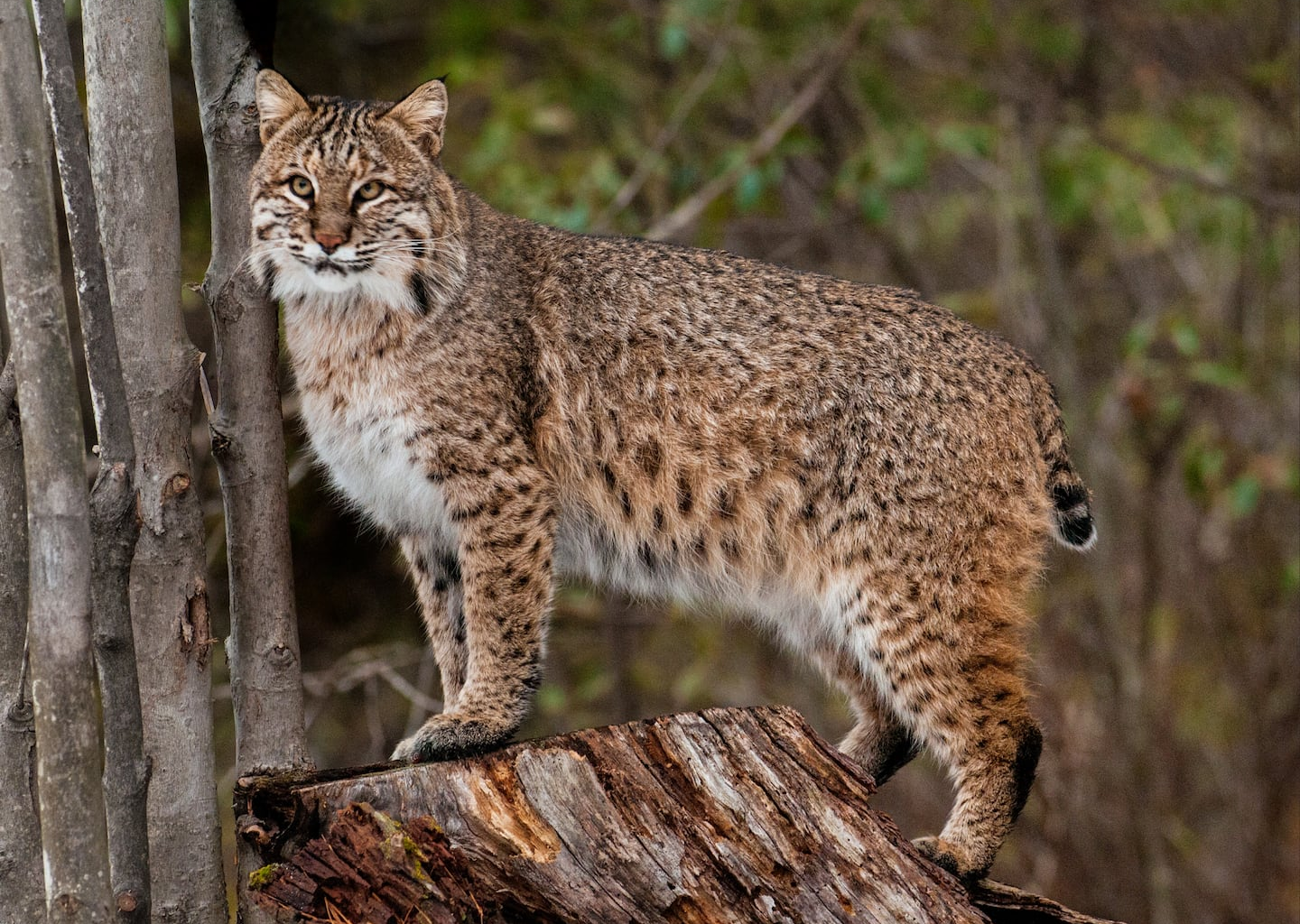
There’s just one problem: Bobcats are the only wildcat known to live in Massachusetts. Mountain lions — also called catamounts, cougars, panthers, and pumas — are typically found in the West. They became scarce in the eastern part of the country due to bounty hunts in the 1900s and other threats.
More recently, there have been only two confirmed reports of mountain lions in Massachusetts — the last one 15 years ago. But no matter how many times state officials review new reports of mountain lions and tell people they’re seeing bobcats or even house cats, the public has its doubts.
Some even think there’s a cougar cover-up.
The idea that the government is in on some big-cat conspiracy isn’t a new one. “I think there’s just distrust of government in general,” said Dave Wattles, MassWildlife’s black bear and furbearer biologist. “It quite frankly took me a while to realize that I actually was the government.”
As the state’s resident expert, Wattles sees A LOT of photos of bobcats that people like me send in, wondering if they are actually mountain lions. “This is a conversation we have all the time‚” he said.
A large percentage of people don’t know what either even is, but nevertheless “will respond as if they’re an authority about it,” he said; then there are the hunters, naturalists, and outdoorsy types who “swear up and down” they know the difference, but still don’t.
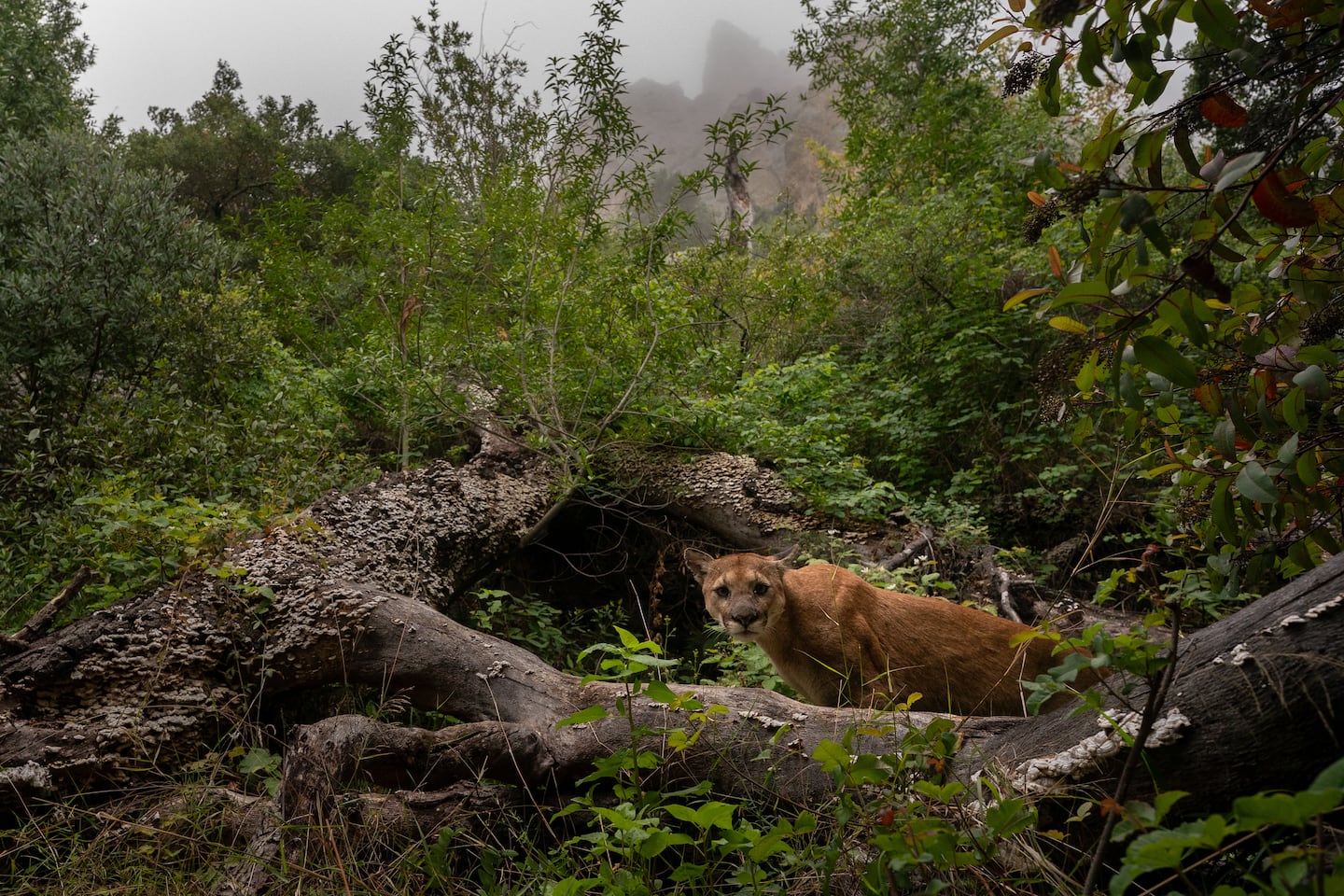 An uncollared mountain lion in the Santa Monica Mountains National Recreation Area in California on May 3, 2025. LOREN ELLIOTT/NYT
And then there are people like my friend David Daley, a local author and journalist who lives in Haydenville.
“You’re trying to out me as a crazy conspiracy nut bag to all my neighbors,” he said, laughing, when I called him. “What I can tell you is what we saw in our backyard a couple of years ago, which was a large cat . . . I am not an expert, but I’ve lived here long enough to know what a bobcat looks like and what a bobcat does not look like. And what we saw in the backyard that day was not a bobcat.”
It was taller with a different tail, but he never got it on film. “I was so stunned and shocked and awed to be looking at this animal that I was slow to be in the real world and grab my phone,” he said. “By the time I realized I should stop looking at it and document it — it was gone.“
Debra J’Anthony, executive director of the Academy of Music in Northampton, said she doesn’t claim to be an expert, either. She’s just “curious,” and she believes it’s possible people are really seeing mountain lions in Massachusetts but haven’t been able to prove it.
“I don’t think there’s a cover-up,” she said, “but scientists are scientists and they want evidence — so it’s either going to have to be scat, tracks, or photographs.”
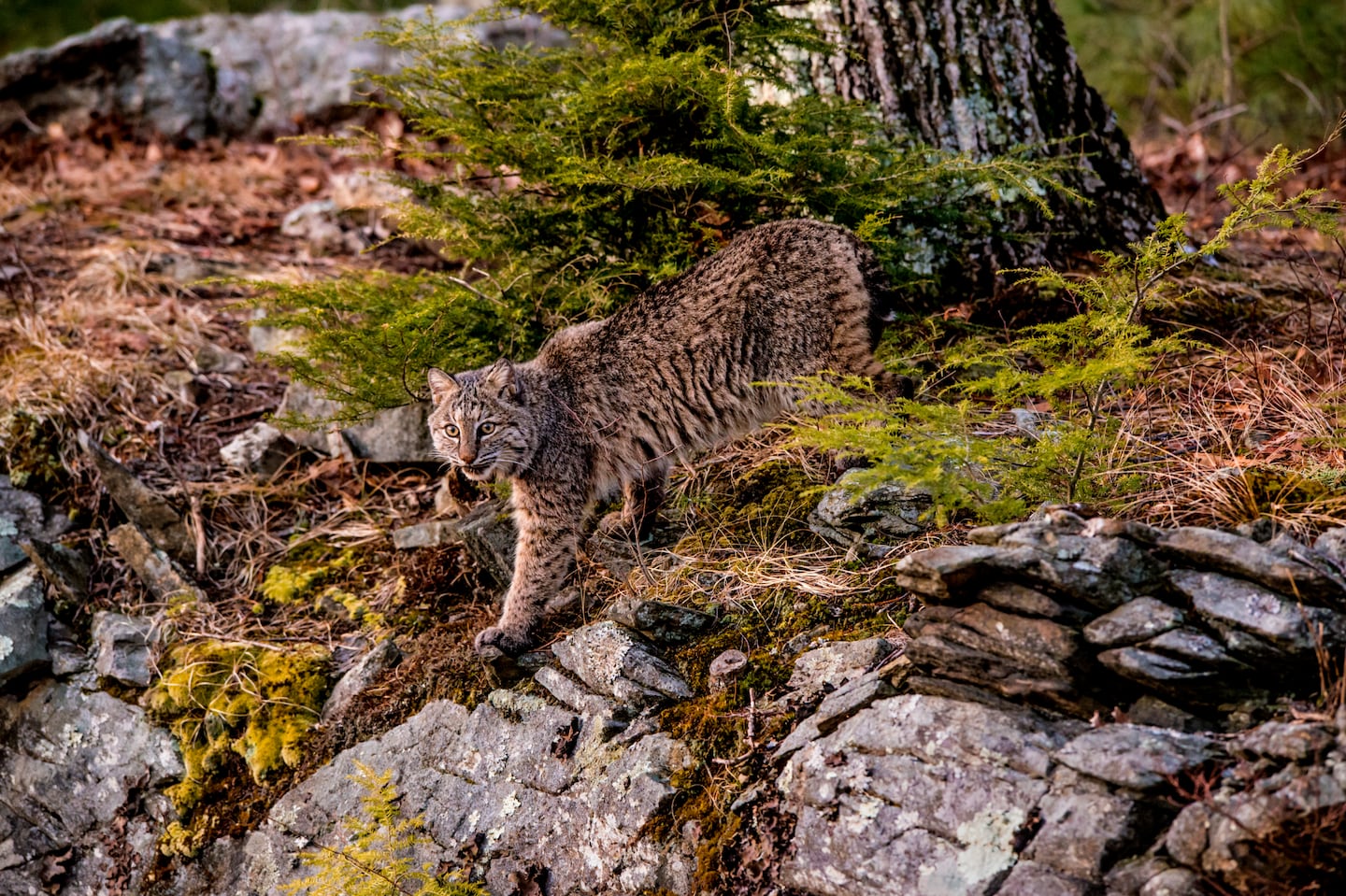 This is also a bobcat.Bill Byrne/MassWildlife
Every year, Wattles gets around a dozen false reports of mountain lions. He has seen AI-generated images, and even the occasional photo of a golden retriever. But bobcats are the animal most commonly misidentified as mountain lions, so here’s a quick rundown.
Mountain lions are often tan (the animal’s scientific name, puma concolor, means “cat of one color”) with black markings on the back of their ears and the tips of their very long tails. They largely live in mountainous regions out West, though there is a small population of panthers in South Florida.
In Massachusetts, bobcats are especially common in the central and western parts of the state. They are generally smaller (twice as big as a house cat) with face ruff and tufted ears. They also have shorter “bobbed” tails and spots, though not always. Wattles recently saw a photo of a bobcat with no spots, and tail length can range up to 12 inches.
“It’s like, I’m 5-foot-9. The guy from the Spurs, who just played in the NBA finals, is 7-foot-4,” Wattles said, referring to Victor Wembanyama. “There’s huge variation among people,” just as there are with bobcats.
Those with longer tails can really throw people off, he said, and adult males can also be bigger than you might think — up to 4 feet long and 40 pounds.
The video I sent of an animal, after some back and forth, was a tougher call — maybe a bobcat, maybe a domestic cat. Still, definitely not a mountain lion. It turns out more than a few people have sent in pictures of house cats and will even argue when the agency identifies them as such.
“They’ll question you, ‘Well, how do you know it’s a cat?’ Because I’ve seen cats!” Wattles said, and laughed. “Believe me, we’ve seen it all.”
The one thing they haven’t seen? A mountain lion in Massachusetts. At least not recently.
There are, however, two documented cases here. In April 1997, an experienced tracker discovered scat by a beaver carcass at the Quabbin Reservation and sent samples to two labs. Both labs confirmed that it was indeed puma poop.
Then in March 2011, a state forester photographed tracks in the snow — also at the Quabbin. The tracks may have been made by a mountain lion that was later struck and killed by an SUV in Connecticut. The young adult male is, to this day, the best documented wild mountain lion in the region. It was photographed at a school, and it also left behind DNA. A genetics laboratory traced the animal all the way back to South Dakota.
While mountain lions don’t normally travel more than 100 miles from their birthplace, this one wandered about 1,800 miles away — at once breaking the record for the longest distance traveled by a mountain lion and lending a sliver of possibility to more recent alleged sightings.
In 2024, Chesterfield Animal Control posted on Facebook saying it had confirmed a mountain lion sighting in the small town of Goshen, according to news reports at the time, though I couldn’t find the original notice.
State wildlife experts aren’t the only ones who are unconvinced. Laurie Sanders, a field biologist and director of the city museum Historic Northampton, said if there were mountain lions here, there would be footage of them from the countless trail cameras and cellphones around the state. And in addition to scat and tracks, what about roadkill? The true answer is often the simplest one, she said: “Occam’s razor prevails.”
Still, it isn’t like Bigfoot — “because mountain lions actually exist,” as Wattles put it. And while it is “very, very, very unlikely” that they’re in this state, it isn’t impossible that one could be identified here again, he added. Just as young, male black bears have started wandering to the eastern part of the state to find a mate, it is also likely that a mountain lion will break out of its established territory in the American West sometime in the future.
That doesn’t mean it will end up in the Northeast — but it could, and if it does, it will almost certainly start showing up on those wildlife cameras, Wattles said.
I have mine ready.
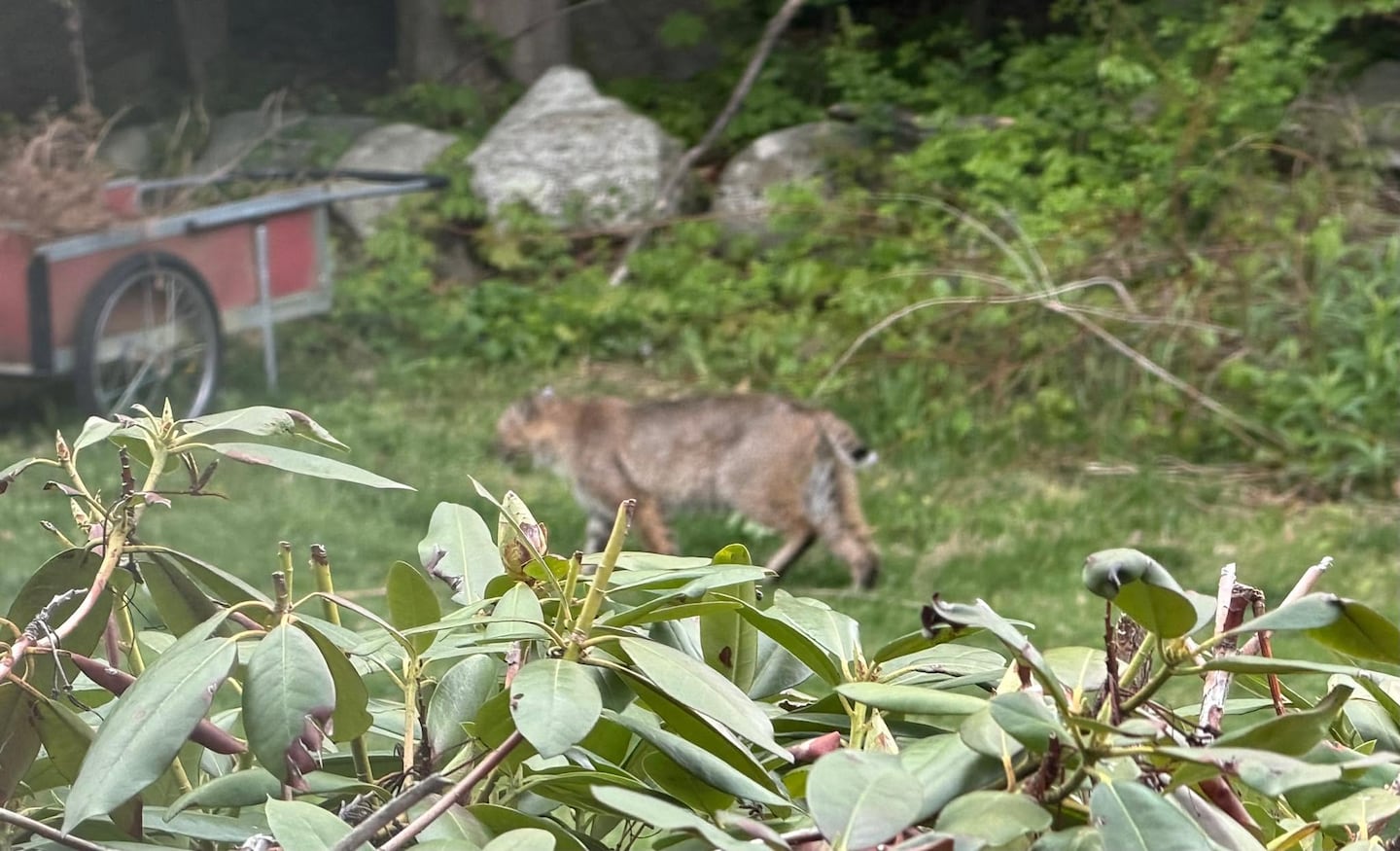 The writer spotted this bobcat in her side yard in Northampton.Brooke Hauser
Brooke Hauser can be reached at brooke.hauser@globe.com. Follow her @brookehauser.