
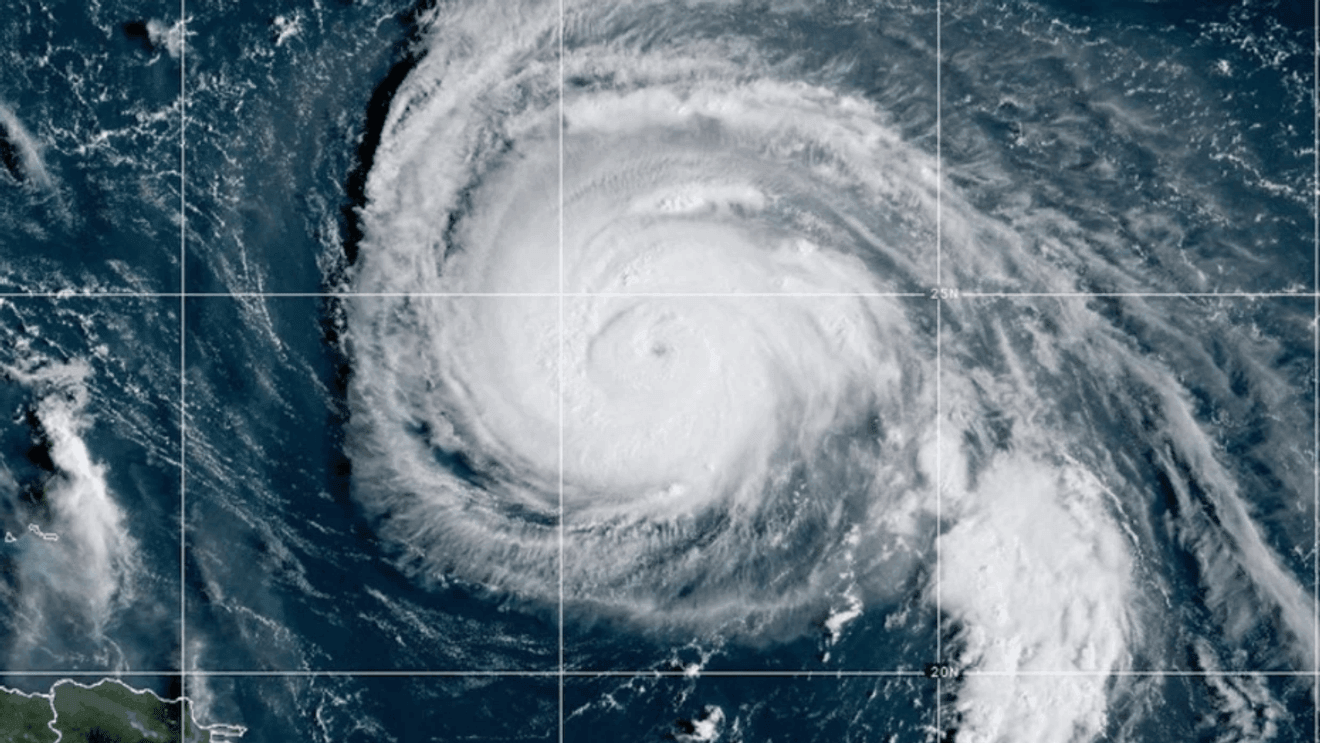
Hurricanes are changing in a warming climate, with stronger winds, heavier rainfall, and higher storm surge making today’s storms more destructive than those of the past.
As sea surface temperatures continue to rise, scientists expect these trends to increase the likelihood of costly and impactful storms in the years ahead.
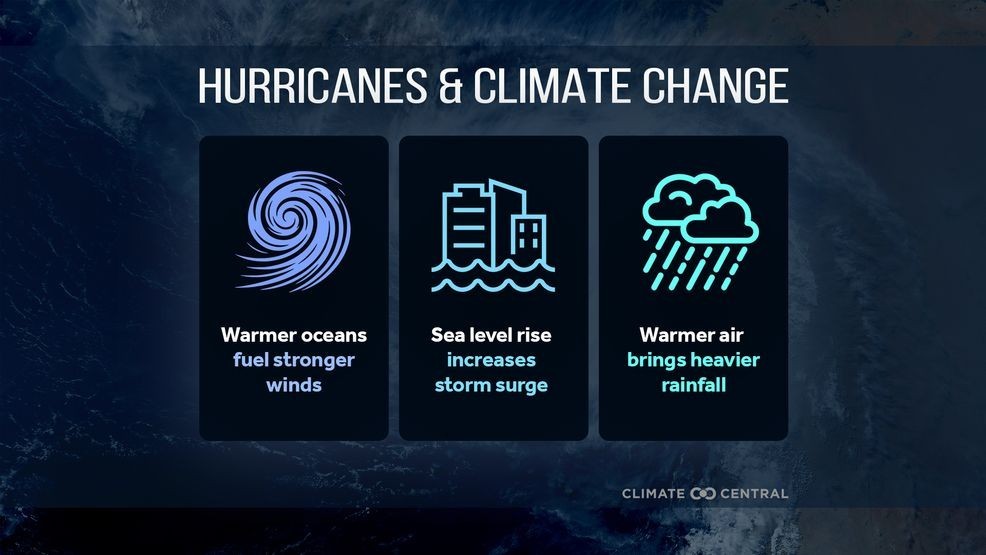
Hurricanes and climate change (Climate Central).
Warmer ocean waters act as fuel for hurricanes, providing the heat energy needed for storms to strengthen and, in some cases, intensify rapidly over a short period of time.
A warmer atmosphere also holds more water vapor, giving hurricanes more moisture to work with and leading to heavier rainfall when they move over land.
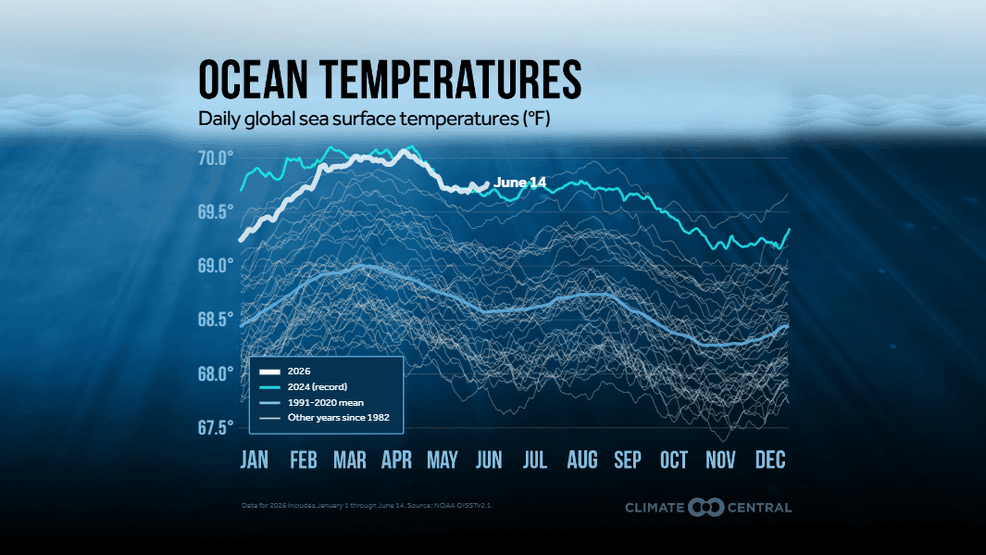
Global ocean temperatures (Climate Central).
According to Climate Central, global ocean temperatures remain near record highs this year.
Although 2024 currently holds the record for the warmest sea surface temperatures on record, 2026 has been running close to those historic levels through the first half of June.
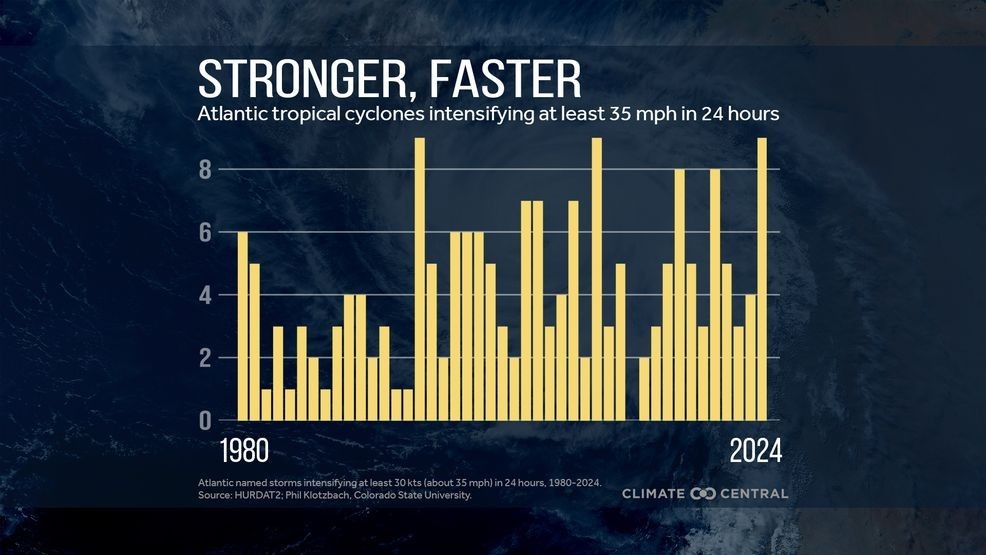
Atlantic tropical cyclones that intensify to at least 35 MPH in 24 hours (Climate Central).
One of the clearest signs of how hurricanes are changing is the increase in rapid intensification events.
Rapid intensification occurs when a tropical storm or hurricane strengthens by at least 35 mph in just 24 hours. In simple terms, it’s when a storm suddenly “powers up” much faster than expected.
This graphic from Climate Central shows that these rapid-strengthening storms have become more common in the Atlantic since 1980.
Unusually warm ocean waters is a key factor, providing storms with more energy to tap into. The faster a hurricane intensifies, the less time communities have to prepare, making these storms especially dangerous.
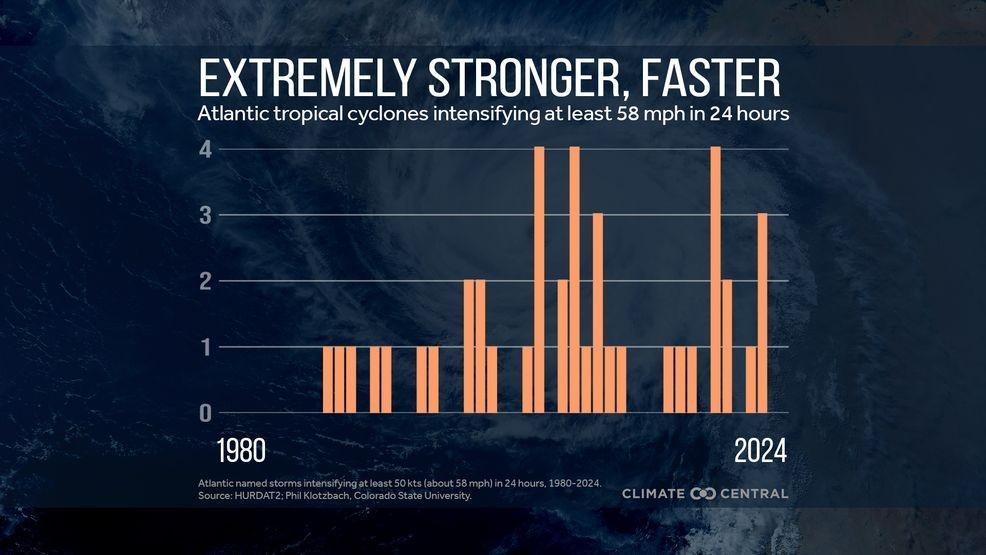
Atlantic tropical cyclones that intensify to at least 58 MPH in 24 hours (Climate Central).
This graphic shows hurricanes that strengthened by at least 58 mph in just 24 hours, a dramatic and dangerous process known as extreme rapid intensification.
Comment with Bubbles
JOIN THE CONVERSATION (23)
Although rare, these events have become more common in recent decades as warmer ocean waters provide storms with more fuel, allowing some hurricanes to transform from relatively weak systems into major hurricanes in as little as a day.