
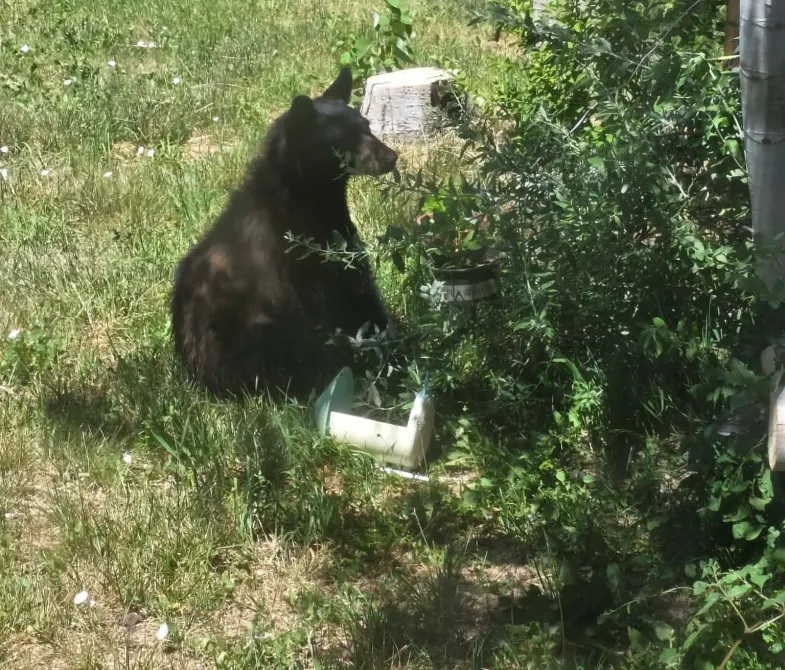
Amy Randall was watching TV on her day off last Wednesday morning, when a dark shape caught her eye through her living room window. She initially thought it was a dog, but further inspection proved her wrong.
“Out of the corner of my eye I saw something big and dark moving,” Randall said. “I look over, and a bear is standing up, looking at the tree in my front yard.”
The yearling black bear was interested in her bird feeder, tearing it off the tree in her southwest Loveland yard and trying in vain to crack the container open and feast on the bird seed inside.
Fortunately, Randall’s two large dogs were inside the house, and furiously barked at the animal as it tried to loot the bird feeder in the yard, before eventually moving on across a small ditch near the property. Not knowing how to respond to the surprise, Randall called 911, and a dispatcher redirected her to Colorado Parks and Wildlife.
“I didn’t know what to do!” she laughed. “Obviously, it’s not supposed to be here. It was 11:30 in the morning, people have their dogs and kids out.”
The incident was fortunately harmless, typical of interactions between humans and usually skittish black bears, but Kara Van Hoose, spokesperson for Colorado Parks and Wildlife, said such encounters can be dangerous, and provided some practical tips for keeping wild bears in the wilderness where they belong.
Calling 911 is a perfectly reasonable and acceptable approach in such a situation, she said, but dispatchers would likely point callers to CPW for advice and to report the sighting. Those calls are important both for safety and for information gathering, she said.
Black bears, the only bear species native to Colorado, are scavengers who are cautious around humans, but a bear wandering into a neighborhood is more common than residents might expect, she said, especially as the species becomes more comfortable around humans and sees homes as a potential source of food.
Calorie-dense birdseed, garbage bins and even cars with leftover fast food inside can draw the attention of the sharp-nosed species, so keeping areas clear of food waste is critical to keeping bears away.
Bird feeders are common draws for bears, Van Hoose said, and she advised residents to put them away between Easter and Thanksgiving. Birds have plenty of access to food during the summer months, and it’s during the winter that bird species would most appreciate the supplemental food supplied by feeders. Conveniently, this overlaps with the black bear’s feeding cycle. Bears scavenge during the summer months and hibernate during the winter, so putting away bird feeders until the season changes both avoids attracting bears and provides food to birds when they most need it, she explained.
For residents who enjoy attracting birds to their homes during the summer, Van Hoose recommended native plants that draw pollinators as an alternative to summer bird feeders.
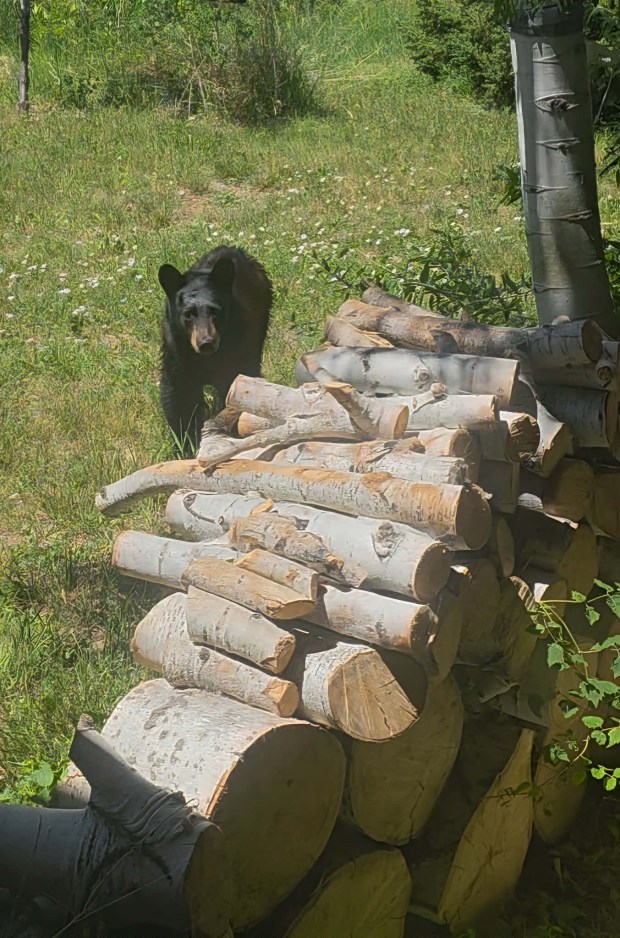 A bear wandered near Amy Randall’s south Loveland home last Wednesday searching for food. Colorado Parks and Wildlife officials said that such encounters are common, and encouraged residents to take precautions to prevent attracting bears to residential areas (courtesy Amy Randall).
Garbage cans are another common draw for bears, she said. Residents should do their best to lock garbage inside a shed or garage until trash day to keep bears from trying to eat human food waste.
Birdseed and garbage are both non-natural food sources for bears, and their presence as appealing food sources not only put humans and pets at risk, they are harmful to the bear.
Birdseed can damage the digestive tract of a black bear, and eating garbage is even worse, Van Hoose said. Necropsies of bears have found wet wipes, potato chip bags and other non-digestible material clogging a bear’s digestive system.
While bears are cautious around humans, dogs will often be perceived as predators or threats, so pet owners are advised to check to ensure that a yard is free of bears before letting their dog roam, including shining lights or making noise before letting a dog out at night. Dogs should be leashed or tied if spending time outside alone during bear season, she said.
Bear cubs also often mean a nearby mother who can be particularly aggressive if she feels her offspring are in danger, Van Hoose added, so baby bears should be treated with extra caution.
Ultimately, bears and residential neighborhoods don’t mix, Van Hoose said. Food sources can prove harmful, and interactions with dogs or humans can be dangerous. Bears living near residential areas can become accustomed to humans and overcome their natural fear of civilization, so residents should reinforce the bear’s natural instinct to avoid populated areas by “hazing,” or frightening off bears and encouraging them to stay within their natural habitats.
“You’re living in bear country, you’re fortunate enough to live near wildlife,” she said. “We also have some responsibility that comes with that, to keep bears wild and do everything we can to make sure they’re not getting into our properties and eating things they shouldn’t.”