
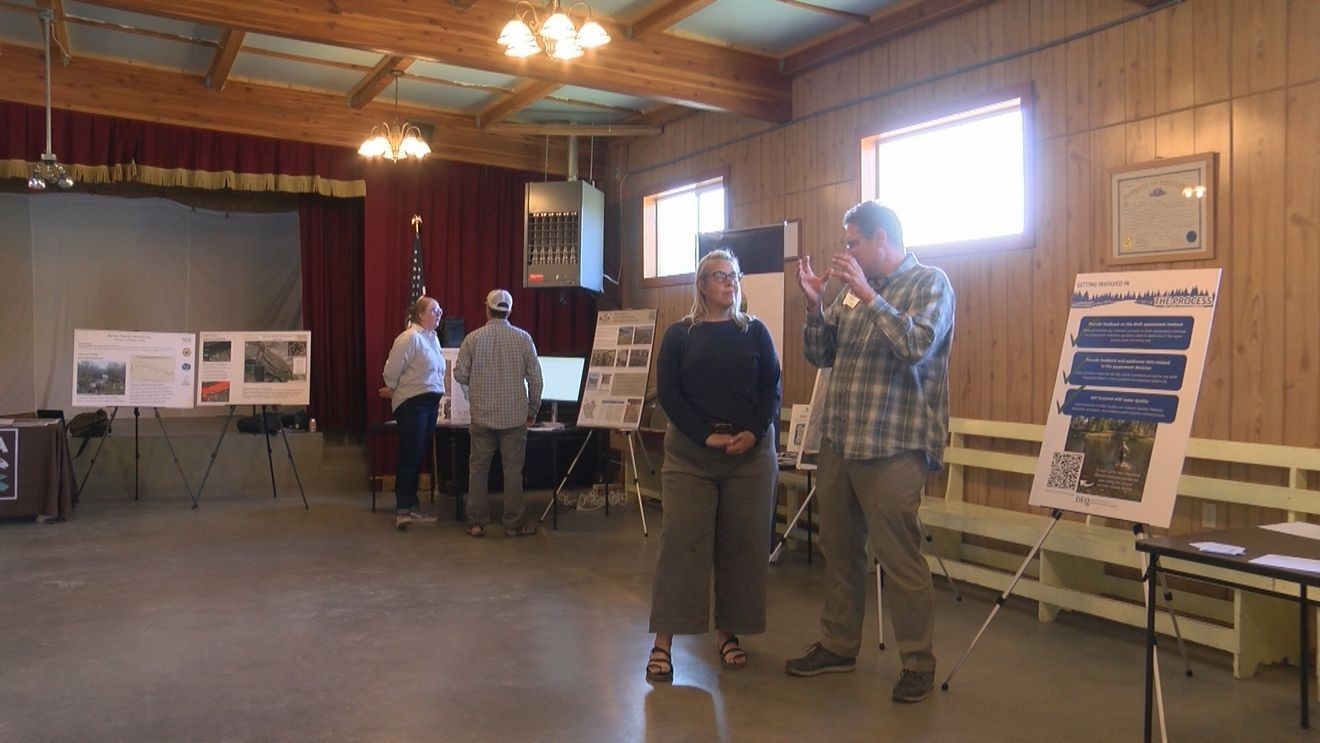
DIVIDE, Mont. — The Montana Department of Environmental Quality is likely to make a significant determination when it comes to one of southwest Montana’s most scenic and vital waterways.
At an open house on Tuesday in Divide, the DEQ announced they are preparing to issue a draft assessment method that, if implemented, would classify the Big Hole River as impaired because of excessive algae growth, also known as eutrophication.
“This is part of their analysis of water quality. So, it’s an indication of the factors that have led to this algae growth happening and the thresholds where those could impact recreation and fishery quality in the river,” Pedro Marques, Big Hole Watershed Committee executive director. “Their data is saying that it’s within the threshold of algae growth that could impact recreation. The data is good, it’s important to have, but to me, it’s still about water and the amount of water. And the overarching driver of this is that we are in basically, the third dust-bowl sized drought in a row in the last 20 years.”
The DEQ says they began receiving reports of large algal blooms back in 2020, and have documented degraded aquatic insect communities, low dissolved oxygen, and high pH levels.
The DEQ and numerous local organizations are working to restore the watershed, with optimism that the Big Hole can be preserved for generations to come.
“Algae growth is complex. There are nutrient inputs, there’s temperature impacts, water depth, light penetration. So, there’s a lot of factors that contribute to algae growth. Some of the things that you can do include reducing non-point sources of pollution or sources of pollution in general. That often looks like reducing erosion and sediment transport to the streams. Sediment often carries nutrients, which are like fertilizer for the algae growth. And there’s other things that we can’t do as much about, like temperature and water availability,” said Andy Ulven, DEQ water quality planning bureau chief.
“Data is important, but it’s what you do with data. If data can help pinpoint projects where we can make a measurable difference and help local landowners, irrigators, producers continue to stay in the land and produce and do it in a way that is less impactful, then there are opportunities for change,” said Marques.
The draft assessment will be released in the next few weeks and then go through a 60-day public comment period, with potential inclusion in the state’s 2027 water quality integrated report.
“There’s a lot of great groups doing work down here. There are volunteer opportunities, the Big Hole Watershed Committee, Save Wild Trout, some of the boots on the ground that are monitoring and doing work within the watershed,” said Ulven. “And really all the recommendations and information that DEQ can provide is only as good as that. It really requires the local community to take it and run with it.”
“I see people coming together all the time. And they see the proof in the pudding of the results we’ve been able to achieve by bringing folks together and pulling off millions of dollars of projects,” said Marques. “People see the work. We’ve got young people wanting to come work with us all the time now. We have six technicians this summer, measuring water, assessing high alpine meadows for natural storage opportunities. We’re doing a big volunteer day related to Montana’s first beaver translocation at Moose Creek in July. There’s tons of opportunities to get our hands dirty and make small improvements across the watershed.”
Marques cites the French Creek Drainage as one success story; 12 years after it was listed on a Watershed Restoration Plan as the highest priority drainage for them to work on, more sediment has been reduced from the drainage than was called for in the plan.
“The DEQ will be going back in September to reassess that whole drainage. We could possibly be looking at delisting 61 miles of headwater tributaries for sediment and delisting them for metals because of a lot of good partnerships and work done on the ground,” said Marques.
It comes as the Big Hole is suffering from another dry water year, with potential fishing restrictions in the upper sections of the river possible in the next few weeks if the weather doesn’t change substantially. However, Marques says guides and outfitters are reporting good fishing conditions.
“The fishing has been amazing so far this year, from everything I’ve heard. Guides and outfitters, like ranchers, they adapt and have to adjust their businesses according to what the weather gives you,” said Marques. “They are getting people out on the river earlier in the year and getting their bookings in earlier, knowing that with the drought persisting the way it is, that August and early Sept. are just not the times to be on the river, and the likelihood of there being restrictions and closures increases unless we get (cooler, wetter) weather.”