
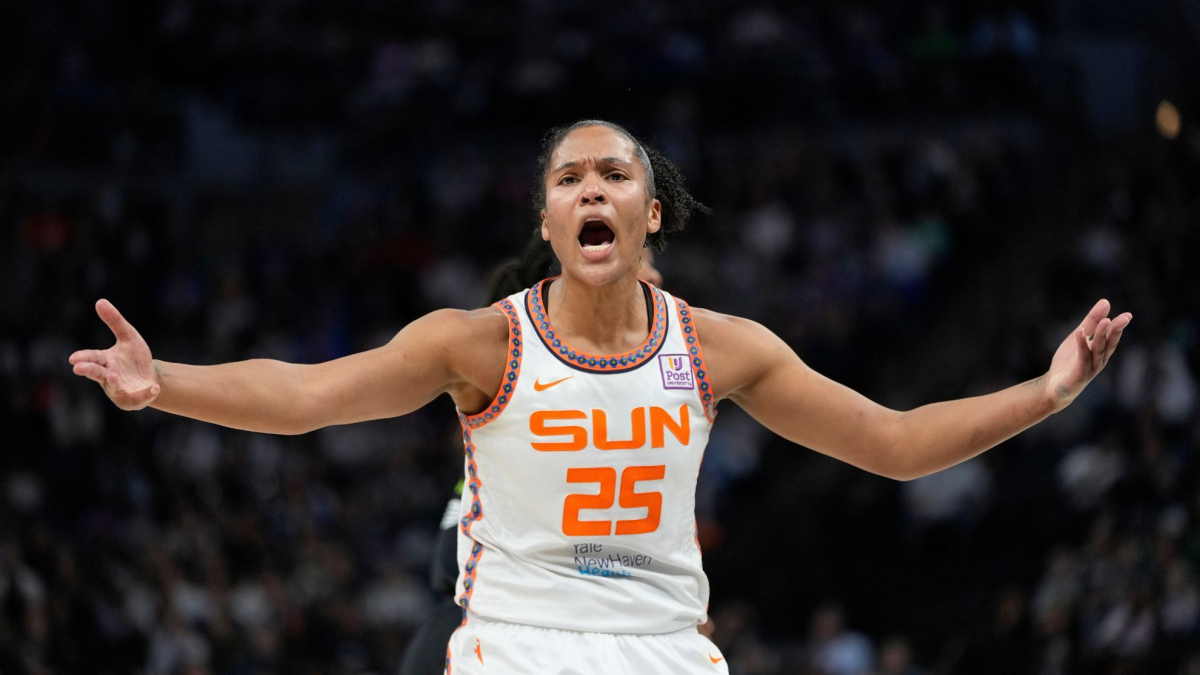
Alyssa Thomas has a well-documented reputation as one of the WNBA’s most physical and aggressive players, a style of play that has occasionally crossed the line and resulted in significant disciplinary action.
Throughout her lengthy career with the Connecticut Sun and the Phoenix Mercury, she has accumulated numerous fouls, placing her among the players with the most flagrant fouls in league history.
As of June 2026, Alyssa Thomas already had a history of controversial plays that resulted in flagrant fouls and ejections. That record now includes the first suspension of her WNBA career. Her history of serious fouls includes several notable incidents:
June 2026: Punch to Caitlin Clark’s throat
Caitlin Clark takes a blow to the throat, and officials don’t call a foul
During a June 2026 game between the Phoenix Mercury and the Indiana Fever, Thomas became involved in a loose-ball battle with Caitlin Clark. During the play, Thomas punched Clark in the throat and then stepped over her.
Although the officials did not call a foul during the game, the WNBA reviewed the play afterward and upgraded it to a Flagrant Foul 2. The league suspended Thomas for one game and fined her $1,000 for “reckless contact.”
May 2025: Elbow to Kiki Iriafen
During a physical game against the Washington Mystics, Thomas was assessed a flagrant foul after striking rookie Kiki Iriafen in the neck with an elbow while battling for position on a free-throw rebound.
May 2024: Neck takedown of Angel Reese
While playing for the Connecticut Sun, Thomas was automatically ejected during a game against the Chicago Sky. As she battled rookie Angel Reese for an offensive rebound under the basket, Thomas wrapped her arm around Reese’s neck and forcefully slammed her to the floor.
The play was reviewed and upgraded to a Flagrant 2, marking the first Flagrant 2 and ejection of Thomas’ career at that point. Before that particular play, all seven of her previous flagrant fouls had been Flagrant 1s.
When physical play crosses the line
While critics point to these blows to the throat and neck as dangerous or dirty plays, Thomas’ teammates and coaches have often defended her aggressiveness as a result of her physical style of play.
Standing 6-foot-2 and having played through chronic labrum tears in her shoulders for much of her career, Thomas relies on an intense, relentless, power-based style to dominate the boards and defend the paint.
If these kinds of actions are not taken seriously, the only result is allowing dirty play to continue having a place in the WNBA. If Caitlin Clark ends up missing multiple games because of the injury while Alyssa Thomas serves only a one-game suspension, then perhaps it’s time to reconsider this type of punishment.
The player who causes the incident should also bear the full consequences of what she creates.