
Slow and steady wins the race.
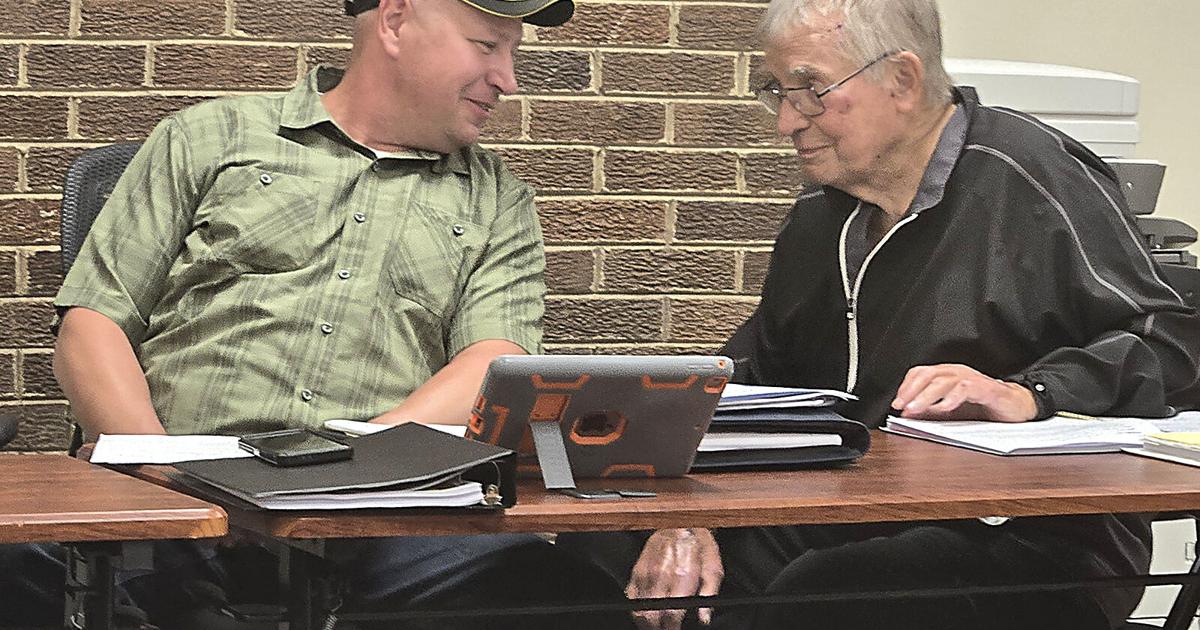
At Thursday’s meeting, a Yankton County task force discussed a forward-thinking approach to economic development by building on current strengths for slower, steady growth.
“We need to be looking forward, not back,” Chairman Kelly Kneifl said.
The task force conducted a wide-ranging discussion during the 90-minute meeting. The group plans to focus on three or four areas when sending its recommendations to the Yankton County Commission.
During Thursday’s meeting, the task force noted the areas already serving Yankton County well, providing a springboard for moving forward with economic development.
They pointed to Yankton County’s economic diversity, which includes agriculture, manufacturing, retail, education, health care and government services in addition to tourism and recreation.
Yankton County’s broad economic base has allowed it to weather major events, such as recessions or the COVID-19 pandemic.
Also, the county contains a mix of small, medium and large businesses. The broad range means the county doesn’t rely on one major employer whose downsizing or closure would devastate the local workforce and economy.
Topics included the promotion of the ag sector and rural communities, lakefront development, grant writing and a business incubator providing a place for a small business to start or expand its operation.
Other topics included expanding tourism, making greater use of the Napa Junction and rail line for rural growth, partnering more with the Governor’s Office of Economic Development (GOED) and leveraging more uses of the Missouri River.
The task force also discussed housing affordability, attracting young families and creating job opportunities with higher wages.
In addition, the group discussed revising the county’s comprehensive plan so the local infrastructure and zoning can handle the additional demands.
“If you have it in your comprehensive plan, it’s easier for utilities to plan,” said task force member Brad Bies from the City of Yankton.
The group discussed ways of encouraging agricultural growth. The conversation focused on things that can be accomplished at the county level, such as changing lot sizes and modifying the discretionary formula.
A discretionary formula is a structured approach used by local governments — such as counties or cities — to provide tax incentives for certain property developments. In South Dakota, it is governed by SDCL 10 6 137 and is designed to promote economic development by offering property tax breaks on qualifying new structures or additions.
The task force talked about the role that such policies could play in encouraging development.
In terms of discretionary formula, a venture doesn’t need to ask for it but instead may automatically qualify for it, according to task force member Nancy Wenande, CEO for Yankton Thrive.
The members discussed two different perspectives on incentives.
One view holds that a prospective business looks at a wide variety of factors in deciding whether to start, expand or relocate, with the discretionary formula not a major deciding factor.
The other view holds that such incentives play a major role and can make a difference in a business’s decision.
The subject of managing Missouri River usage drew a broad conversation, with one task force member noting that water availability has played a major role in the data center debate.
Yankton County Commissioner Dan Klimisch, also a task force member, pointed out that invasive species may taint the Missouri River for certain economic development.
“I don’t know, with zebra mussels in the river, if it’s very useful for data centers,” he said.
Yankton Thrive sponsored an education session on Wednesday night, which included information on data centers.
At Thursday’s meeting, the task force pointed out that industries, including data centers, are working to become water friendly and reduce or eliminate their reliance on massive quantities of water.
“One of the (forum) questions was, what do you do with the heat (from data centers)?” Yankton County Commissioner Don Kettering, a task force member, said in reference to the technology issues.
The City of Yankton has relied less on the Missouri River for its water supply, Bies said.
“We’re relying more on collector wells and deep-water wells rather than river intakes,” he said. “It’s not as much for zebra mussels but because of the shifting nature of the river and the biologics of it that may be challenging for treatment.”
The task force discussed the Lewis and Clark Lake area, including the introduction of a sanitary sewer district. While the service could spur economic development in the lake area, the group agreed it would be difficult to create and install because of the major costs and resources necessary for undertaking the project.
Major development projects, whatever form they take, are costly and require a great deal of investment, Kettering said.
The group talked about making extra-territorial jurisdiction (ETJ) part of the comprehensive plan. The topic could address future growth in the city and county, they added.
Besides Yankton, only Gayville has an ETJ among the county’s other communities, Klimisch said. Those other towns may find the subject as something they can use in their own development, he added.
The task force discussed the availability of grants and other outside resources for county development. The consensus was that such grants, especially at the federal level, aren’t as available as in the past. Also, many communities or other entities don’t have staff members dedicated for that purpose.
However, task force member Mike Welsh, also part of the Yankton County planning commission, recommended University of South Dakota Law School students as summer interns in working on grants. The arrangement would give the law students practical experience while benefiting the city, county and other entities, he said.
Even if grants aren’t as available as before, Welsh advocated for submitting applications and having information compiled when opportunities arise.
The task force talked about other funding options on the table, as the county commissioners are considering a road and bridge tax levy as well as a county sales tax. The commissioners are also considering a temporary moratorium on data centers.
Wenande noted, when it comes to implementing new taxes, the importance of making sure the public is on board with the idea.
The group discussed using GOED as a funding source, but Wenande noted that Yankton can’t rely on the state to bring businesses to the community or county. Yankton needs to make its own case when attempting to attract business and industries, she said.
“Our job as Yankton is to best position ourselves. When new businesses are coming to South Dakota, we need to show them, why Yankton and not (another community),” she said.
“With the GOED, those companies aren’t just looking at South Dakota. They’re looking at (other states). When the GOED sells them on South Dakota, it’s (up to) our individual community to sell ourselves to compete with other communities. And I say ‘compete’ in a nice way, because we talk with Vermillion and do a lot of different projects with them.”
Kettering stressed the importance of good relationships. “With the GOED, a big part is the collaboration that we as a community do with the state,” he said.
The task force addressed the need for affordable housing, high-speed Internet to promote remote jobs — allowing people to work where they want to live — and promoting opportunities for students so they remain in the area after graduation.
Other issues include moving back to the farm and passing the operation to the next generations.
Yankton County has become a hub for retired military, Klimisch said. He pointed to the availability of the full-time county Veteran Service Officer and also the military-friendly community.
Also, the task force spoke about creating higher-paying jobs that make home ownership possible.
Yankton County currently holds a 1.5% jobless rate, meaning the county would find difficulty filling 300 jobs immediately if a company was interested in moving or expanding, the task force noted.
The statistics bring forth two needs: bringing in businesses that need 10-20 employees; and growing the population and workforce that can adequately attract and meet the needs of businesses.
After the meeting, Kneifl said the task force is narrowing down its list for recommendations.
“The best would be something with high growth potential and easy to implement. Those would be the two factors together that would be the best things to pursue,” he told the Press & Dakotan.
“From here, we have 20-some projects that we identified that were categorized. We prioritized and will pick the top handful — the top 2, 3, 4 or 5 — to really dig into and research and see the possibility for prospects that we would send to the county commission with the potential to take it forward.”
Follow @RDockendorf on X.