
2026-06-27T15:05:47+00:00
font
Enable Reading Mode
A-
A
A+
Shafaq News- Beirut
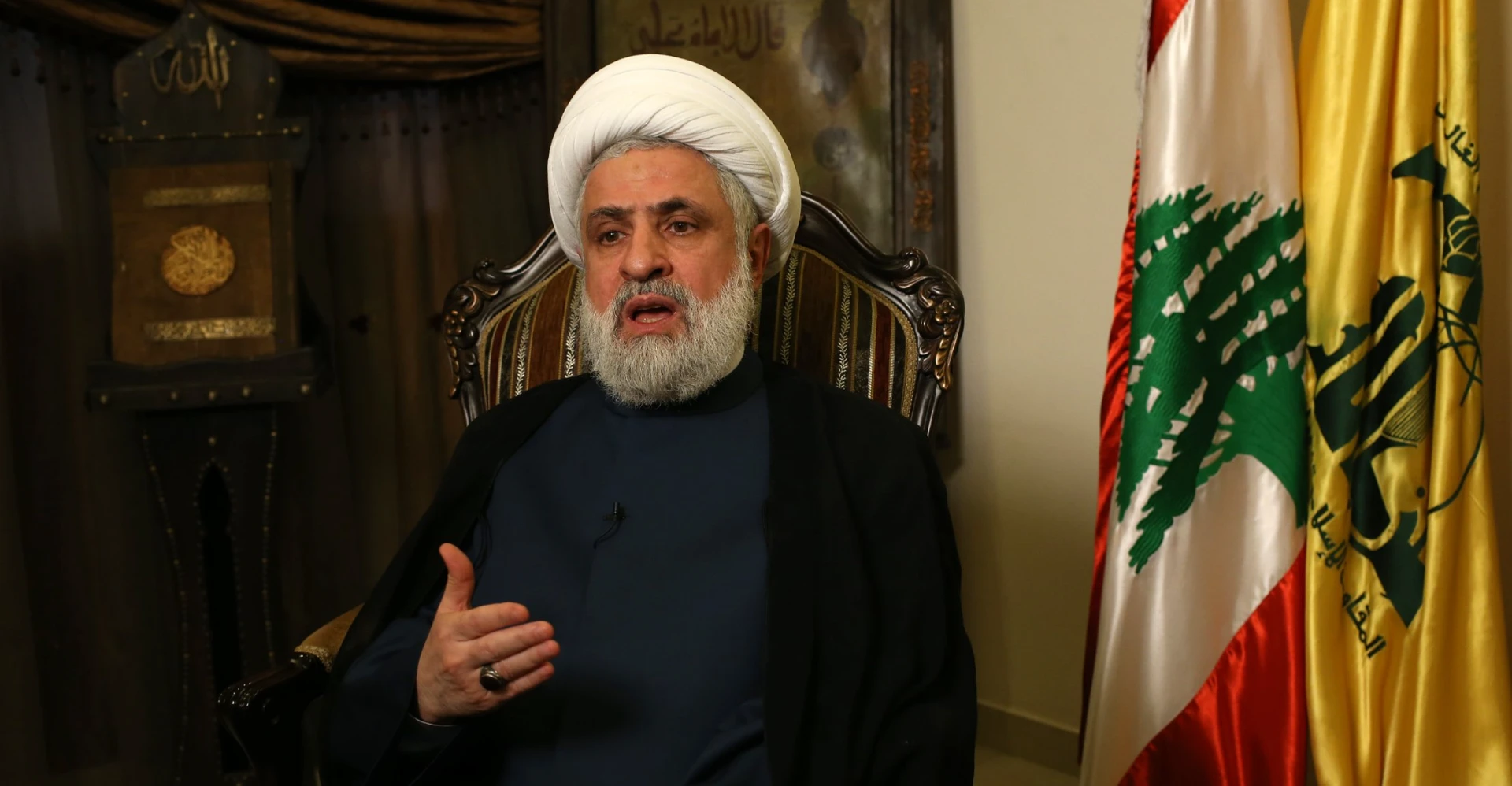
Hezbollah Secretary-General Naim Qassem on Saturday
criticized the recently signed Lebanon–Israel framework agreement, describing
its terms as “free concessions” aligned with US and Israeli demands rather than
balanced negotiations.
In a statement, Qassem argued that the talks are taking
place amid deep political divisions in Lebanon and run contrary to the
country’s constitution, which designates Israel as an enemy and criminalizes
any form of engagement with it.
Accusing the Lebanese authorities of sidelining the group,
he condemned the March 2 government decision that outlawed Hezbollah, calling
it a turning point that served Israeli objectives.
On the US–Iran Memorandum of Understanding (MoU), Qassem
maintained that the arrangement prioritized ending the Israeli war on Lebanon,
stressing that Tehran has repeatedly suspended the framework after Israel
refused to comply.
“The MoU included guarantees over Lebanon’s sovereignty and
territorial integrity,” he stated, warning that the Lebanese–Israeli framework
could entrench Israel’s presence in the south for an extended period, while
potentially paving the way for annexation and preventing displaced residents
from returning to their villages.
He further rejected any link between Israeli withdrawal and
the disarmament of Hezbollah nationwide, calling such a linkage “highly
dangerous,” and cautioned that it could expose Lebanon to sustained external
pressure tied to implementation conditions.
On Friday, Lebanon and Israel signed a US-mediated framework
agreement in Washington following a fifth round of negotiations, outlining a
phased Israeli withdrawal from southern Lebanon conditioned on Hezbollah’s
disarmament. The process begins with two pilot zones —one south of the Litani
River and another to its north— to be transferred to the Lebanese army after
armed groups are disarmed and their infrastructure dismantled, while Israeli
forces remain in place during implementation.
The framework runs alongside a separate US–Iran memorandum
of understanding signed on June 17, committing both sides to end hostilities on
all fronts, including Lebanon, and respect Lebanese sovereignty. While Tehran
has described a ceasefire in Lebanon as one of its red lines, Beirut has
maintained that the two tracks remain separate and that Lebanon alone
negotiates with Israel. Hezbollah, which was not involved in the negotiations,
has categorically rejected the framework, arguing that its obligations under
the November 2024 ceasefire are limited to areas south of the Litani River.