
Ancient human DNA has been found on cave walls for the first time, giving scientists a new way to study people who lived thousands of years ago. The finding shows human genetic material can survive on rock surfaces long after the people who left those traces disappeared.
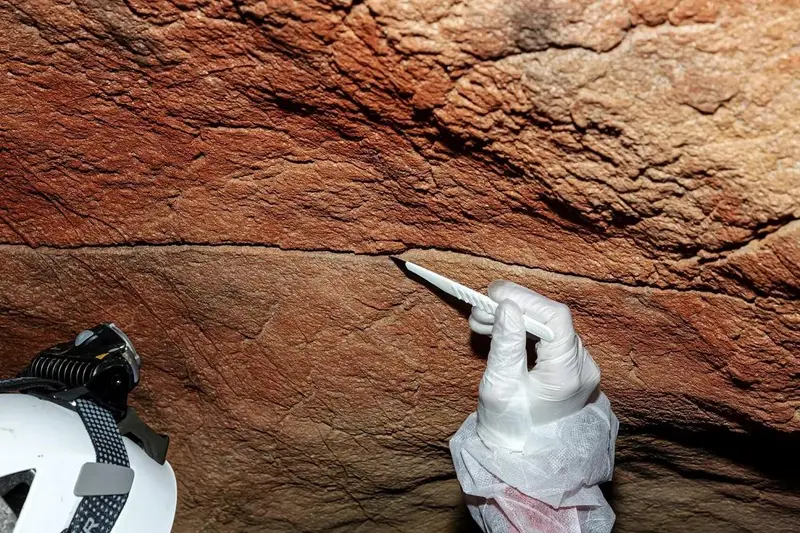 Pigment sampling at a claviform rock art figure in Tebellín, Spain. Credit: Alberto Martínez Villa
The study, published in Nature Communications, involved researchers from Spain, Portugal, the United Kingdom, China, and Germany. The work formed part of the First Art project, which studies some of Europe’s oldest cave paintings and the materials used to create them.
Ancient DNA studies usually focus on bones, sediments, or tools found at archaeological sites. Researchers wanted to know whether cave walls and painted surfaces also preserved traces of the people who visited them.
To find out, the team analyzed 54 samples from 24 rock art panels in 11 caves across Spain and Portugal. The sites included simple painted marks, hand stencils, and famous figurative paintings from Altamira Cave. Scientists collected samples from painted and unpainted cave walls, cave sediments, bones, and a prehistoric airbrush tool.
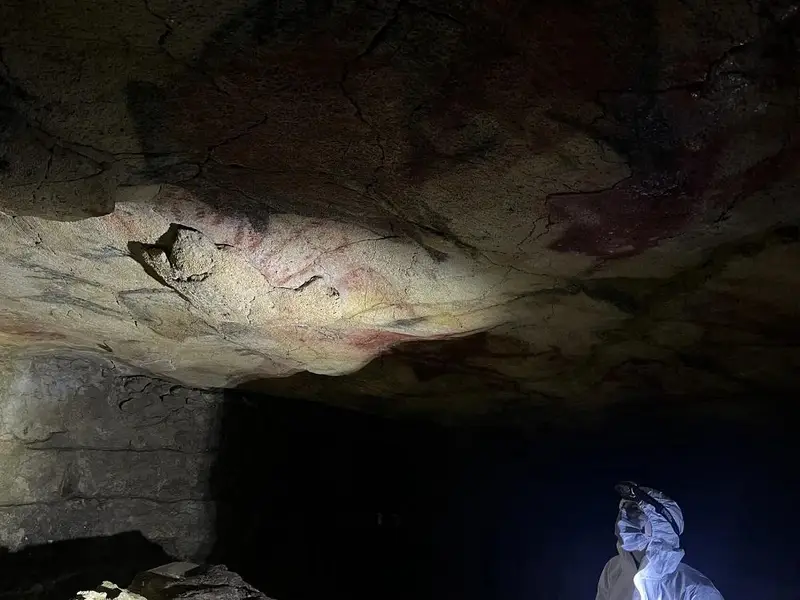 Polychrome ceiling of Altamira from which pigment samples were analysed. Credit: Matthias Meyer
Only five samples contained authentic ancient human DNA. One came from a calcite crust covering a painted surface in Escoural Cave in Portugal. Two more came from unpainted cave walls in the same cave. The remaining two came from unpainted areas near rock art in Covarón Cave in northern Spain.
Researchers expected painted surfaces to offer the best chance of finding DNA. Instead, several positive results came from walls with no visible artwork. Those samples had originally been collected as controls.
Two samples contained human DNA without any animal DNA. This pattern suggests people deposited the genetic material directly, possibly through saliva or other bodily fluids. Three other samples contained both human and animal DNA. Researchers believe water movement or sediment transfer likely carried some of that material onto the walls.
The findings do not prove the DNA belonged to the artists who created the paintings. Even so, the study shows cave walls preserved traces of human presence for thousands of years.
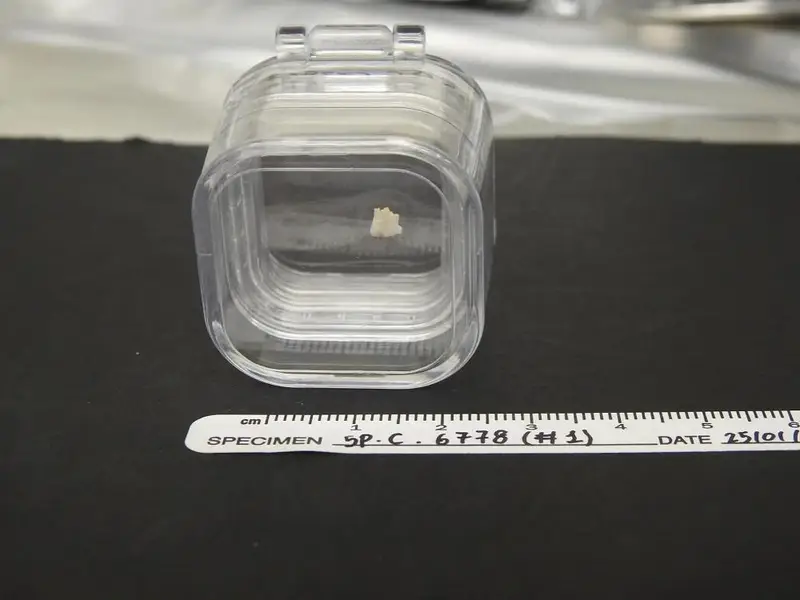 Calcite fragment with pigment underneath from Escoural, Portugal, stored in a membrane box. Credit: Alba Bossoms Mesa
Further analysis provided clues about the people behind those traces. Three samples contained DNA mostly linked to females. One appeared to come from a male individual. Another could not be identified.
Scientists recovered enough nuclear DNA from two samples in Covarón Cave to study ancestry. The results placed those individuals within the Western hunter-gatherer group. Previous studies identified the same genetic background in other ancient populations from the Iberian Peninsula.
The team also examined a bird-bone airbrush from Altamira Cave. Prehistoric artists used such tools to spray red ocher paint onto cave walls. Researchers hoped saliva might have survived inside the artifact. No ancient human DNA was recovered. Modern contamination from decades of handling likely overwhelmed any older genetic traces.
The results show ancient DNA survival on cave walls is uncommon. Despite testing 24 rock art panels, researchers found ancient human DNA in only a handful of samples. Mineral crusts and protected cave conditions appear to improve preservation.
Scientists believe cave walls hold an untapped record of past human activity. Future studies could reveal who entered caves, how far they traveled underground, whether they were male or female, and which ancient populations they belonged to.
Researchers now plan to test more caves, painting styles, and artistic techniques. Hand stencils and figurative paintings are among the targets. As methods improve, cave walls could become an important source of evidence for studying prehistoric people and their use of cave spaces.
Publication: Bossoms Mesa, A., Essel, E., Jáuregui, L., Galtier, A., Zavala, E. I., Nota, K., … Meyer, M. (2026). Investigating ancient human DNA preservation on cave walls and in rock art. Nature Communications, 17(1). doi:10.1038/s41467-026-74234-2