
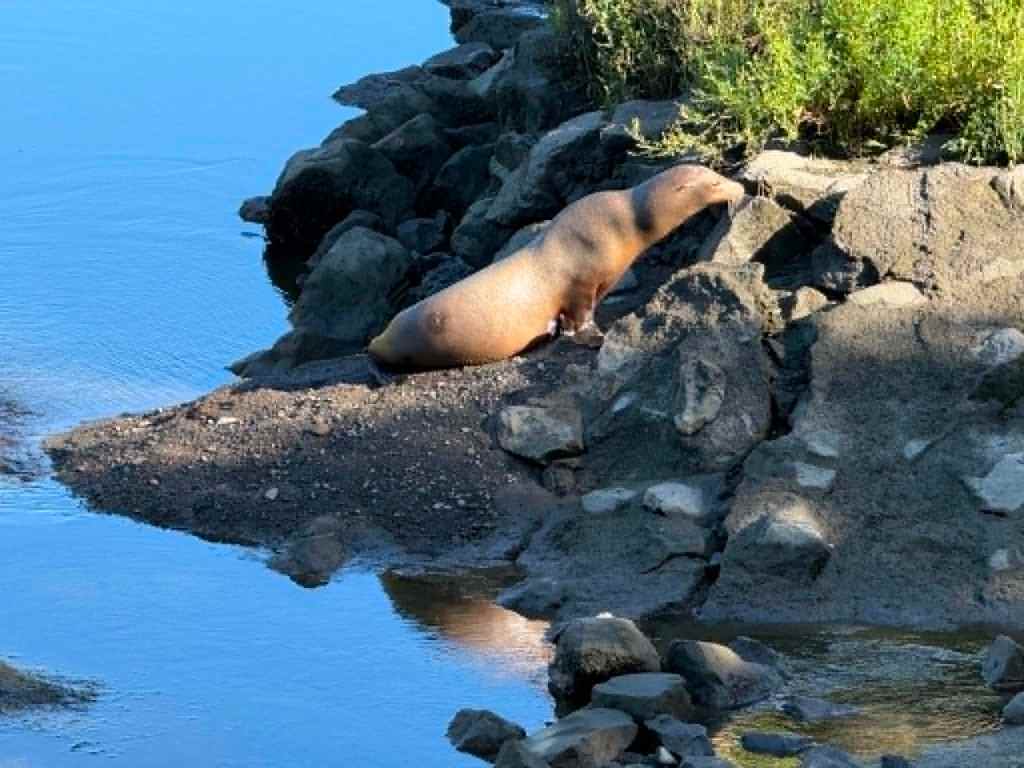
A sea lion has again been spotted upriver in Petaluma, leading some observers to celebrate and others to wonder whether the animal is unwell.
“Not something you see everyday,” wrote Petaluma photographer Bill Parsons in posting some photos and video of the animal on a Facebook page. “Sea lion all the way up Petaluma River. Marine Mammal Center is already on their way to do a wellness check.”
Parsons, who saw the sea lion Friday morning lounging on a riverbank north of Payran Street, told the Argus-Courier that he had personally contacted Sausalito-based Marine Mammal Center about the animal, which in the video appears to be moving its head oddly.
“It did not seem to be in distress, but definitely would not be able to get back until high tide,” he said. “I also wondered if it might be a pregnant female, but that would be a question for the experts.”
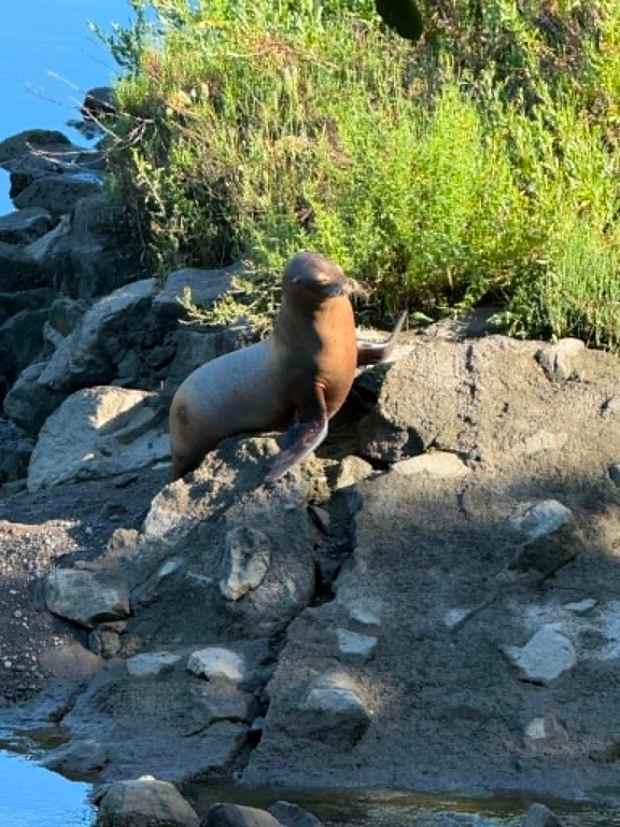 A sea lion was spotted far up the Petaluma River on Friday, June 26, 2026. (Photo by Bill Parsons)
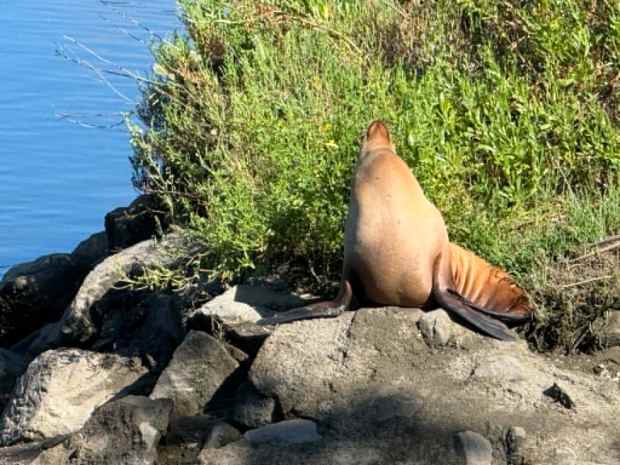 A sea lion was spotted far up the Petaluma River on Friday, June 26, 2026. (Photo by Bill Parsons)
Although the sighting drew positive comments such as “I love him” and “So beautiful,” others thanked Parsons for calling the Marine Mammal Center out of concern for its well-being. A similar visit from a sea lion on the Petaluma River one year ago ultimately led to it being euthanized.
That sea lion garnered widespread attention after swimming up the Petaluma River in June 2025 and lingering in the Turning Basin area for several days. By early July it had traveled farther upriver to the Petaluma Village Premium Outlets, where Marine Mammal Center biologists captured it.
At the time of those sightings, Phil Tacata, a marine science teacher at Petaluma High School, told the Argus-Courier in an email that “The thing to be worried about with the sea lion is if it’s suffering from domoic acid toxicosis (DA).” The deadly neurotoxin, generated by toxic algae, has been proliferating in California’s ocean waters in recent years due to climate change, Tacata said.
“That particular sickness … causes neurological dysfunction in the seals, makes them aggressive, act out of the norm, and — ultimately — die of brain seizures,” he said.
In the case of last year’s sea lion, experts from Marine Mammal Center determined that it was indeed suffering from DA and euthanized it.
An assessment of the current sea lion’s health was not available as of Friday afternoon.
“DA is kind of terrifying to watch in an animal and the rate of sickness in pinnipeds and otters is really high in Southern and Central California over the last couple of months (again, due to warming coastal waters and associated plankton blooms),” Takata wrote in June 2025. “I hope this doesn’t mean that Northern California sea life is now at risk but it definitely wouldn’t be a surprise.”