
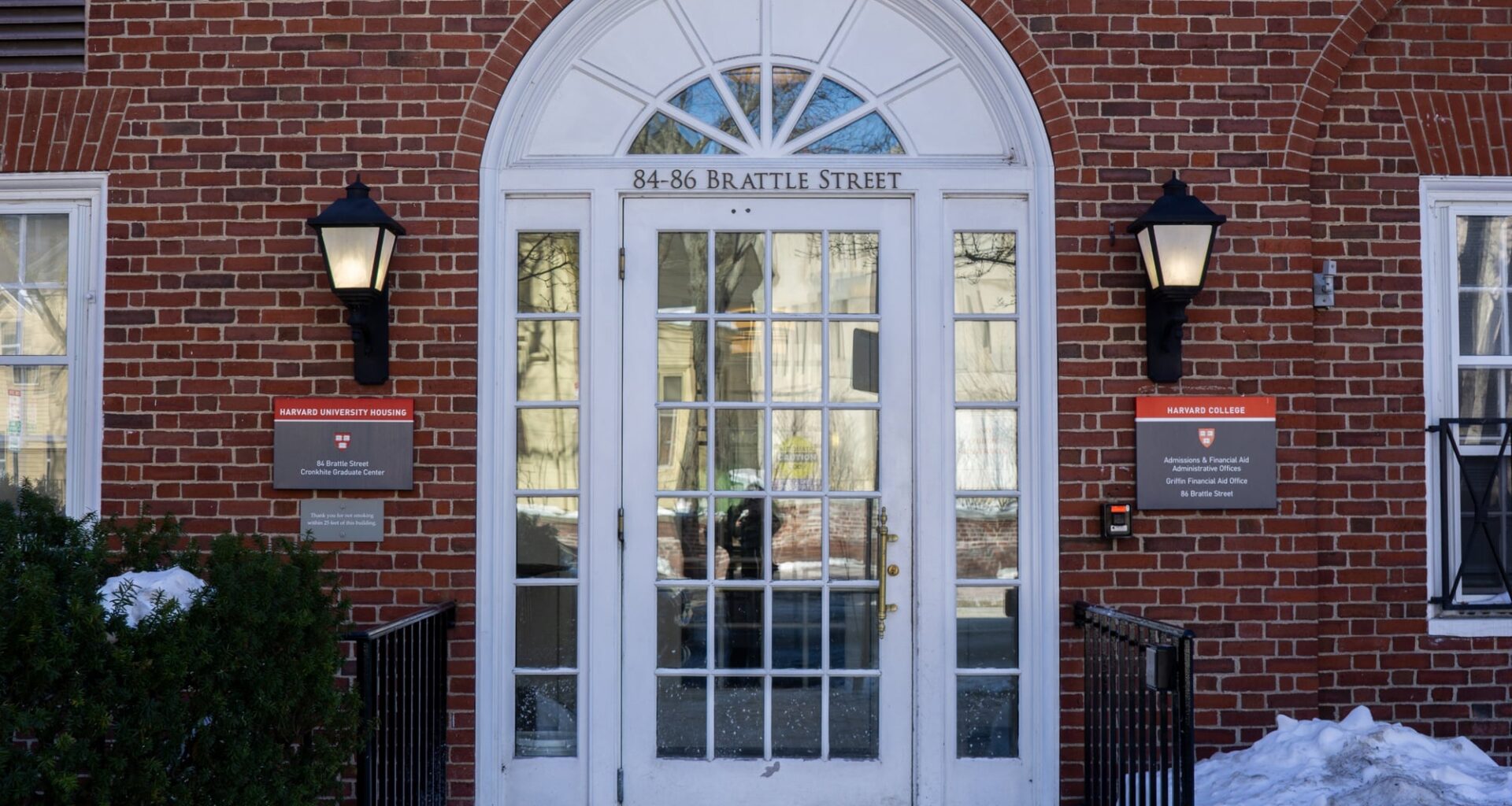
Harvard College is raising its sticker price at a rate that now consistently outstrips inflation, following a recent stretch of increases that have grown larger each year.
For the 2026-27 academic year, Harvard will raise its total cost of attendance by more than five percent to $91,634. The increase marks the latest in a five-year run of increasingly large dollar hikes — and the fourth straight year in which the percentage increase has accelerated.
A Crimson analysis using annual CPI averages found that Harvard’s cost would have reached about $88,300 next year if it had tracked inflation from the 2025-26 academic year. Instead, it will climb to about $91,600 — roughly $3,300 higher. Multiplied across Harvard College’s undergraduate enrollment, that gap amounts to roughly $22 million in additional listed costs before accounting for financial aid.
Among peer institutions, only Yale has shown a similarly steady acceleration in inflation-adjusted cost growth in recent years, though Harvard’s increases have been steeper.
Earlier in the decade, Harvard’s pricing told a different story. Before the pandemic-era inflation spike, Harvard’s sticker price generally rose by roughly 3 to 4 percent annually. In 2021-22, 2022-23, and 2023-24, the sticker price still rose in nominal terms but lagged behind inflation, including an inflation-adjusted decline of about 5 percent in 2022-23.
That trajectory has since reversed.
Beginning with the 2024-25 academic year, Harvard’s inflation-adjusted cost of attendance has risen at an accelerating rate. The real increase reached 1.31 percent in 2024-25, widened to 2.14 percent in 2025-26, and is set to hit 3.73 percent in 2026-27.
Harvard College does not disclose the specific factors behind its annual cost-of-attendance decisions. A Harvard spokesperson did not respond to a request for comment on the increases.

Get The Crimson in your inbox.
Other Ivy League schools have not followed the same pattern. Several peers, including Columbia University, Brown University, and Dartmouth College, will list higher costs than Harvard for the coming academic year. But their increases have fluctuated rather than steadily accelerated.
For instance, at Dartmouth, the listed cost rose by nearly 7 percent in 2025-26, before slowing to about 3 percent in the coming academic year. Adjusted for inflation, the increase fell from roughly 3.7 percent to 1.4 percent.
Evan Riehl, associate professor of economics at Cornell University, attributed the earlier dip, and subsequent rise, in inflation-adjusted tuition growth to the unexpected surge in inflation beginning in 2021.
“It was also widely thought at the time that inflation would be transitory, so universities may have been reluctant to raise tuition significantly in 2022 in case prices fell back down,” Riehl wrote.
“In 2023 the rate of inflation began to decrease, but it remained at a higher level than in the pre-pandemic years,” he added. “At this point in time expectations for inflation were more stable, which likely allowed universities to set tuition more in line with their rising costs.”
Harvard’s pattern of rising costs holds even when measured against the Higher Education Price Index, which tracks cost growth within higher education.
The rising costs have also drawn scrutiny in Washington. Last year, the federal government subpoenaed Harvard for documents related to tuition and financial aid, after Republican lawmakers raised concerns that Ivy League institutions were “collectively raising tuition prices while engaging in perfect price discrimination,” according to a letter signed by Rep. Jim Jordan (R-Ohio) and Rep. Scott Fitzgerald (R-Wis.).
Several of Harvard’s peers have faced related legal challenges. Cornell University, the University of Pennsylvania, Columbia, Brown, and Dartmouth were among 32 institutions named in a federal lawsuit about the legality of early-decision admissions, which argued that tuition at those schools had been increasing at rates exceeding both general inflation and HEPI. Harvard was not named as a defendant in the suit.
The cost of attending elite universities has risen sharply in recent years. At Ivy League schools, the average price now exceeds $90,000 a year — more than $25,000 higher than a decade ago.
Julia G. Lenthe, owner of College Financial Consultants, said the increasing cost of higher education is not unique to Harvard.
“Harvard’s not the only school doing it — you have all the private universities, pretty much are astronomical,” she said.
Still, she pointed to growing costs tied to technology and campus investments as key drivers.
“They’re blaming it on having to increase their technology, having to update dorms, having to do things on campus that are going to make it more attractive to students,” she added.
At Harvard, rising listed costs have coincided with an expansion of financial aid. More than half of undergraduates receive need-based assistance, and beginning in the 2025-26 academic year, families earning less than $100,000 annually are not expected to contribute toward the cost of attendance.
Students from families earning under $200,000 attend tuition-free, though some asset-based exceptions apply.
Lenthe said that expansion has made a difference for families navigating the cost of elite colleges.
“We have more folks that are able to be eligible for financial aid, which is impactful for schools like Harvard, because there are no merit-based scholarships,” Lenthe said. “I have families that, maybe five years ago, never would have been eligible for financial aid at Harvard that now are.”
But she cautioned against viewing financial aid growth as a direct counterweight to rising costs, describing the two as moving in tandem. As the cost of attendance increases, she said, institutions face growing pressure to extend aid to a broader share of students.
The increases are also occurring as Harvard faces financial strain. The University is managing a $365 million structural deficit while navigating an ongoing dispute with the federal government over research funding. More than $2.7 billion in federal funds were frozen last year in a move later ruled unconstitutional, and the Trump administration is seeking to reinstate those restrictions on appeal.
In response, Harvard has reduced faculty hiring, scaled back research funding, and cut nonessential projects. The University has not publicly tied those measures to cost-of-attendance decisions.
—Staff writer Celine Muir can be reached at [email protected] or Signal at celinem.33. Follow her on X @celinemuir1.
—Staff writer Alexa M. Schmitt can be reached at [email protected] or Signal at alexaschmitt.15. Follow her on X @alexa_m15_s.