
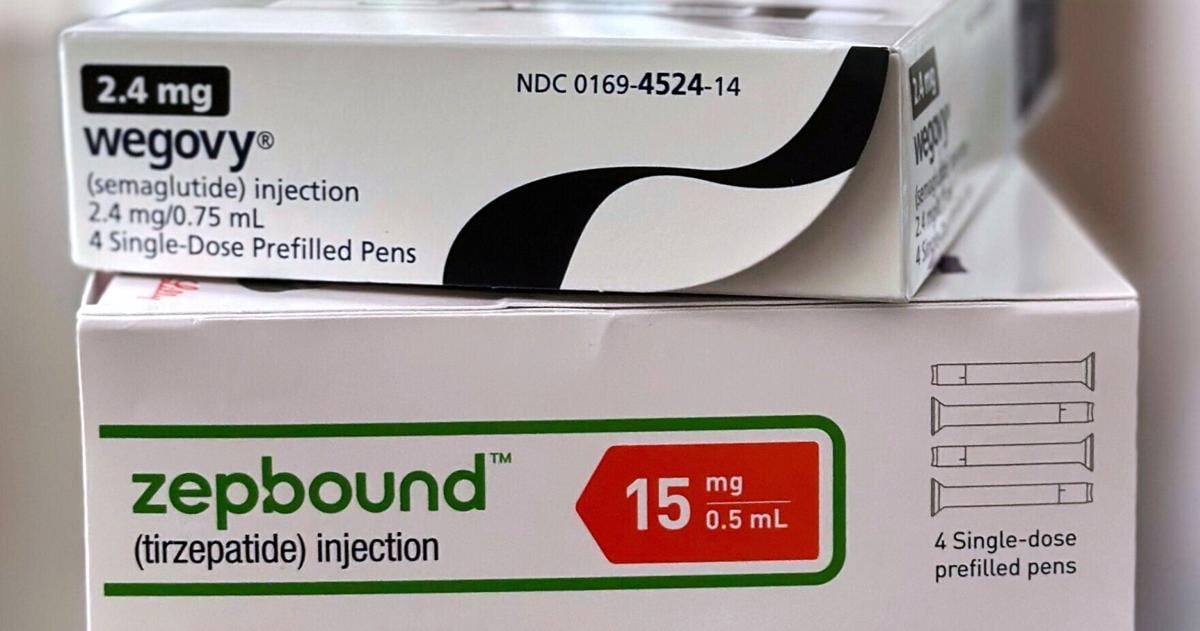
GLP-1 medications like Ozempic and Wegovy have been hailed as near-miracle drugs that have revolutionized how people lose weight.
The drugs mimic a hormone produced by the body that manages blood sugar and triggers a feeling of fullness. People who take the medication generally lose between 15% and 25% of their body weight in a year, studies found.
But what about the drawbacks that can come with such dramatic transformations?
In addition to short-term side effects like nausea and constipation, some patients experience muscle loss and a slowing of their metabolism. With a state obesity rate of 40%, more and more Louisianans will have to manage those outcomes.

Dr. Eric Ravussin, LSU’s Pennington Biomedical Research Center
One potential solution might lie at the Pennington Biomedical Research Center, where Dr. Eric Ravussin is both measuring the extent to which the medications affect muscle mass and exploring a way to prevent the drugs from decreasing patients’ metabolic rate.
“They have spectacular weight loss,” Ravussin said. But pharmaceutical companies “want to know, what does it do to your body composition, and what does it do to your energy expenditure?”
His study will track the resting metabolic rate, or the number of calories burned while at rest, and muscle mass while participants receive a weight loss drug.
The research tackles what’s known as “metabolic adaptation,” a survival mechanism to protect the body from starvation that can cause some people using the medications to plateau in their weight loss.
As people lose weight on the drugs, the body becomes very “energy efficient,” Ravussin said — too efficient to continue shaving off pounds.
“You lose maybe 20% over six months, then the next three months you lose only 2% of your weight, and the rest of the year you stay stable, or you even regain,” Ravussin said. “Part of the regain is due to the lowering of your metabolism.”
But other substances, like caffeine, speed up metabolism, which is why Ravussin is experimenting with adding to the GLP-1 mixture (though he emphasized he wouldn’t recommend caffeine specifically).
He also seeks to study the effect on muscle mass. The public and many scientists believe the drugs decrease muscle mass profoundly without truly measuring that impact, he said.
“The hypothesis is you don’t lose as much muscle as people think because we don’t measure the muscle,” Ravussin said. “To measure the muscle, you need to do an MRI.”
Baton Rouge General physician Drake Bellanger, who specializes in obesity medicine, said doctors spend a lot of time with patients debunking myths or exaggerations around GLP-1s — including fears about muscles deteriorating. He said that if patients eat enough protein and exercise, muscle loss is less of an issue than it’s perceived to be by the public.
“If you’re above 80 grams of protein per day, you’re in the safe zone,” Bellanger said. “As long as you’re doing some exercise, some resistance training, making sure your muscles are stimulated, you should lose a minimal amount.”
He sees the short-term side effects show up more regularly, with about one to two out of every 10 patients reporting nausea, he said.
Ravussin’s study will last 1.5 years and make use of Pennington’s metabolic chamber, a research environment that tracks the inhabitant’s oxygen consumed and carbon dioxide expelled to provide sophisticated data on how many calories they are burning and what kind.
Pennington is one of a handful of institutions around the world to own metabolic chambers, which cost millions of dollars. Participants of Ravussin’s study will spend 23 hours at a time in the chamber to calculate their metabolism.
“It means we do studies with or without the drug and measure your energy expenditure doing basically nothing for 24 hours in a metabolic chamber,” Ravussin said.
Minimizing the impact on metabolism and muscle mass are key questions for the next generation of GLP-1s, he said.
“Is there a way to lose the least possible muscle mass, and is there a way not to drop your resting metabolic rate, or your basal metabolic rate, too much?” Ravussin said.