
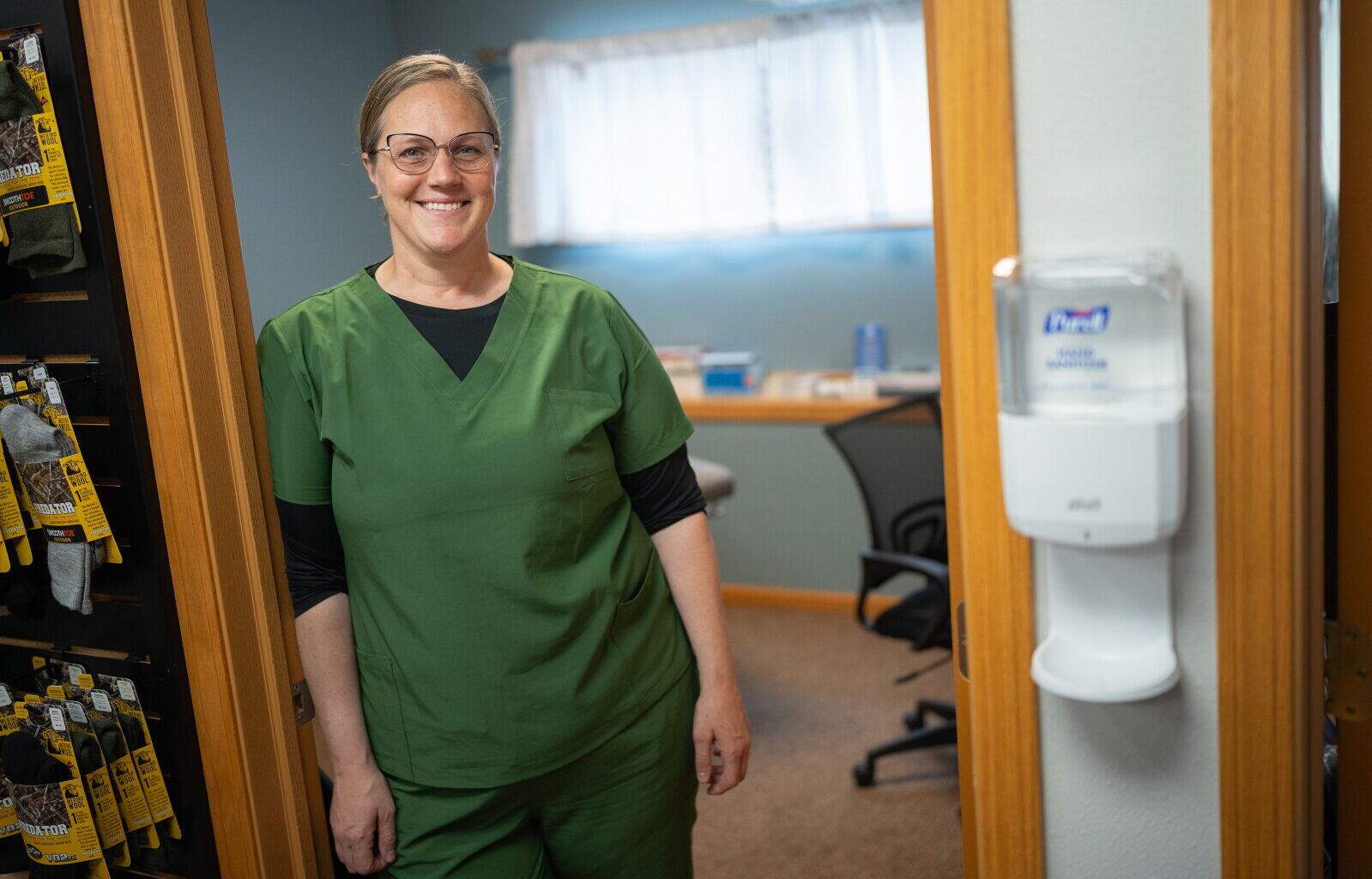
CALEDONIA, Minn. — It was a happy accident that Amanda Middendorf opened her one-room, same-day clinic in Caledonia just after another healthcare provider left town.
“Convenient care is what I like to call it,” said Middendorf, a nurse practitioner, “because I’m not really a full urgent care, and I’m not really a primary care yet — although I’m moving towards that direction.”
As of November 2025, primary care is an unfilled niche in Caledonia, a community of 2,800 in the heart of Houston County. That month, the local Mayo Clinic Health System closed its outpatient clinic there, transitioning those staff members to the La Crosse, Wisconsin, location.
In September 2025,
Mayo Clinic Health System announced the closure of Caledonia’s clinic
and five others in rural communities: Belle Plaine, Montgomery, St. Peter, North Mankato and Wells. The changes also included some service reductions at Mayo Clinic Health System’s hospital campus in Albert Lea.
“What you see when you talk to people,” said Steve Tufte, treasurer of the Albert Lea Healthcare Coalition, “is they express frustration with the drive it takes to go have an actual visit with someone, and then how far out things are getting pushed now.”
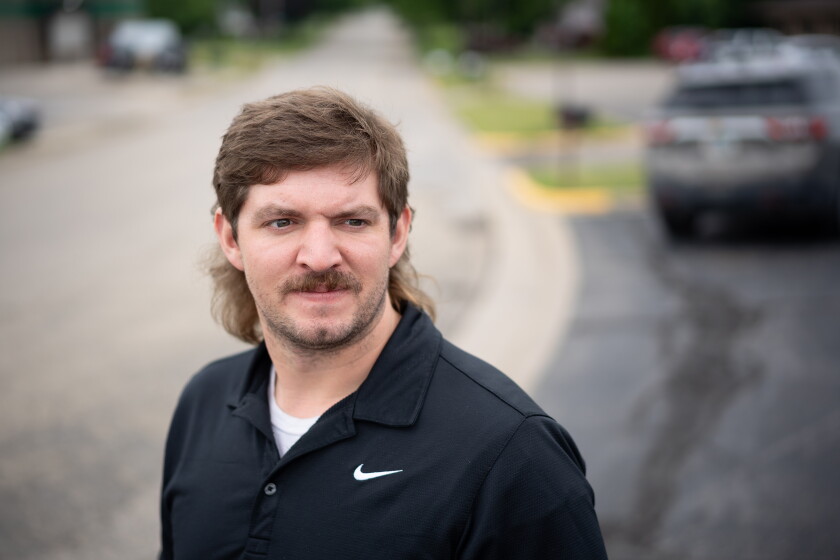
Jake Dickson, Caledonia Clerk/Administrator, on Friday, June 5, 2026, in Caledonia.
Joe Ahlquist / Post Bulletin
For Caledonia and Montgomery, a town of 3,200 in the lake country between Mankato and the Twin Cities metro, the move left them without another healthcare system-affiliated clinic in town.
“I don’t understand why they did it,” said Jake Dickson, Caledonia’s city clerk and administrator. “It was just labeled as consolidation, and there has to be some sort of reason for it, but up here we don’t understand what that reason could be.”
Rural Southeast Minnesota is not an isolated case. With impending federal changes to Medicaid, workforce issues and the increasing cost of American healthcare, many rural healthcare providers are in “a period of uncertainty to outright stress,” said Michael Shepherd, an assistant professor of health management and policy at the University of Michigan School of Public Health.
And when medical services disappear from a rural community, that care in the next town over might become unreachable for vulnerable community members.
In response to the Post Bulletin’s outreach, a Mayo Clinic spokesperson said the health system has nothing further to add beyond its Sept. 8, 2025, news release.
“This change,” Mayo Clinic said in September, “is part of ongoing efforts to strengthen rural healthcare delivery and ensure safe, high-quality and sustainable care for generations to come.”
While the national decline in rural hospital access is well-documented by researchers and industry leaders, tracking rural outpatient and primary care availability is more difficult. This is because patients get their primary care from various sources: clinics, hospitals, mobile clinics, telehealth appointments through health systems or corporate services such as Amazon One Medical.
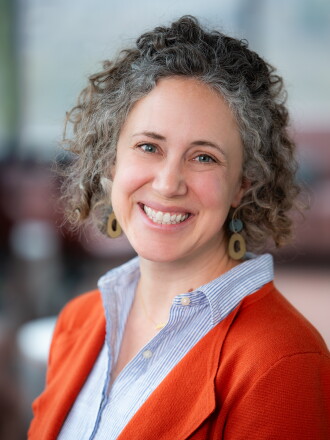
Carrie Henning-Smith, an associate professor at the University of Minnesota School of Public Health, co-director of the University of Minnesota Rural Health Research Center and 2026 president of the National Rural Health Association.
Contributed
But those hospital closures, in particular, can have a ripple effect on a community’s access to primary care, said Carrie Henning-Smith, an associate professor at the University of Minnesota School of Public Health and co-director of the university’s Rural Health Research Center.
“When hospitals close, that doesn’t just mean losing those inpatient services,” Henning-Smith said. “It also means losing outpatient services and sometimes means losing satellite clinics that were affiliated with the hospital.”
Much like hospitals, payer mix — the proportion of patients with private, public or no insurance — plays a big role in clinics’ financial health, Shepherd said. Both Medicare and Medicaid underpay healthcare providers for services, Shepherd said, and rural communities tend to be both older and more likely to be publicly insured.
“You sort of have this multifaceted problem of people who might need more intensive medical care, but are being covered by public programs that underpay relative to the private insurance,” Shepherd said. “That creates some pretty significant financial hurdles for rural providers to overcome.”
And finding small, private practices is increasingly less likely in rural communities, Shepherd said, due to health systems and private equity firms buying up those doctors’ offices.
Provider recruitment and retention are other factors, especially for specialty providers such as obstetrician-gynecologists. Shepherd said physicians, nurses and other medical professionals who grow up in rural areas are more likely to return to their hometowns, or similar communities, to live and work.
However, President Donald Trump’s administration recently scaled back the number of healthcare-related degrees that are considered “professional,” and therefore eligible for higher federal student loan limits. Nurse practitioner, physician assistant and physical therapy degrees
“When you enact policies, like the changes to a loan program that many rural people benefit from,” Shepherd said, “you’re … making the rural pipeline problem, that already exists, a lot worse.”
The reason given for the Montgomery clinic’s closure: a shortage of support staff.
“If they had someone that called in sick or was on vacation … they didn’t have the support staff to support the operations,” said Brian Heck, Montgomery’s city administrator.
Without access to primary care, Henning-Smith — who is also the current president of the National Rural Health Association — said people in rural communities could delay or forgo care, leading to bigger issues down the road.
“Untreated continuations will land people in the emergency room and ultimately lead to higher rates of other conditions and of mortality, unfortunately,” Henning-Smith said.
Social well-being is another consideration. Henning-Smith said this is a topic that needs more research.
“There’s just a psychological impact of seeing disinvestment in your community,” she said.
One pain point: transportation
Transportation and time spent traveling are key factors for rural healthcare access. For people with reliable cars and flexible working hours, an extra hour of round-trip driving might not be a barrier, Henning-Smith said.
“If you don’t have that,” Henning-Smith said, “it’s going to be harder to access that care. … And so the people who need that care the most, the people at greatest risk of poor health outcomes, are the most likely to not be able to access that care.”
People who cannot drive often have to rely on volunteer drivers, family members or public transit services.
Caledonia has a unique hurdle: the local transit provider, Rolling Hills Transit, can only operate in Minnesota. Mayo Clinic Health System’s closest clinic is in Wisconsin.
“Right now, the only public transit option is for Grandma to get on a bus here, get dropped off in La Crescent and wait for the Apple Express to then take them to La Crosse,” Dickson said. “While that is an option, and it certainly would get you there, we don’t really feel that it’s meeting the need for, especially, seniors.”
Other organizations, including SEMCAC, provide medical transportation with the help of volunteer drivers. Jordan Knoke, supervisor for Houston County Public Health and Human Services, said she encourages people to volunteer, but notes that this year’s higher gasoline prices have hampered volunteer recruitment.
In Montgomery, a transportation program exists for those on Medical Assistance to travel to the next nearest clinic, Mayo Clinic Health System in New Prague. That has been working well, so far, said Megan Kirby, Le Sueur County’s public health director.
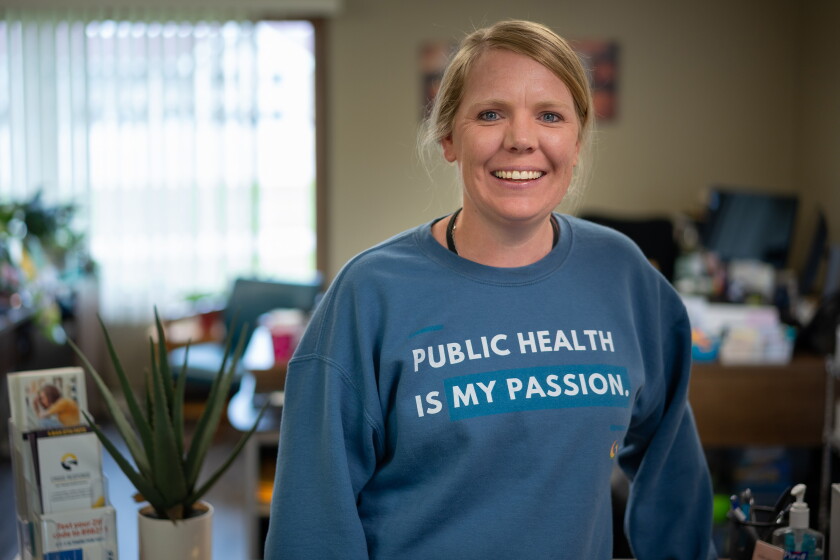
Jordan Knoke, Houston County Public Health supervisor, on Friday, June 5, 2026, in Caledonia.
Joe Ahlquist / Post Bulletin
“It’s those that maybe have different insurances and maybe not the family or friend support within their community,” Kirby said, “they’re maybe just not going to their primary visits.”
Adapting to the new landscape
In the Caledonia Convenient Care office, Middendorf, the nurse practitioner, said she has a good relationship with providers in the Mayo Clinic Health System network and often coordinates care with them. For example, a patient’s doctor will ask Middendorf to draw and run that patient’s lab work in Caledonia to spare them a trip to La Crosse.
“I can place orders in the Mayo system, I can see all my patients’ charts that are Mayo patients,” Middendorf said. “I would say 75% of my patients are Mayo patients.”
As a Minnesota transplant, Middendorf said she is still building trust in her community. But as that trust grows, she’s becoming a primary care provider to more patients.
“The hope is to move towards primary care, but I need a little bit more infrastructure and time,” Middendorf said. “That doesn’t come together quickly.”
Overall, Shepherd said many healthcare systems are experimenting with telehealth appointments and mobile clinics — buses, often, outfitted with medical equipment — to bridge access gaps for rural patients. MCHS offers both. Others, Shepherd said, also offer their own transportation options.
“That’s not keeping medical services in rural areas; it’s moving rural people to healthcare services,” Shepherd said. “And there are benefits and drawbacks to those things.”
In Montgomery, there’s not much optimism for getting a new medical provider to operate in the former MCHS clinic, which is connected to a nursing home.
“My sense is, given the changes to Medicare and Medicaid and the reimbursement levels that are there, particularly that are going to take place in the next couple of years,” Heck said, “attracting another clinic, I think, is going to be extraordinarily difficult.”
Some of the former MCHS facilities, though, have gained new tenants. In North Mankato,
is home to a combined midwifery practice and birth center, as well as Options, a crisis pregnancy center.
In Caledonia, Family & Children’s Center, a nonprofit mental health, foster care and family services provider, will soon open its new office in the former MCHS building. Recruiting another health system could be more challenging, Dickson said, without that clinical space available.
“It’s meeting a different need that I’m sure is out there,” Dickson said. “But it leaves us with a completely different health continuum.”