
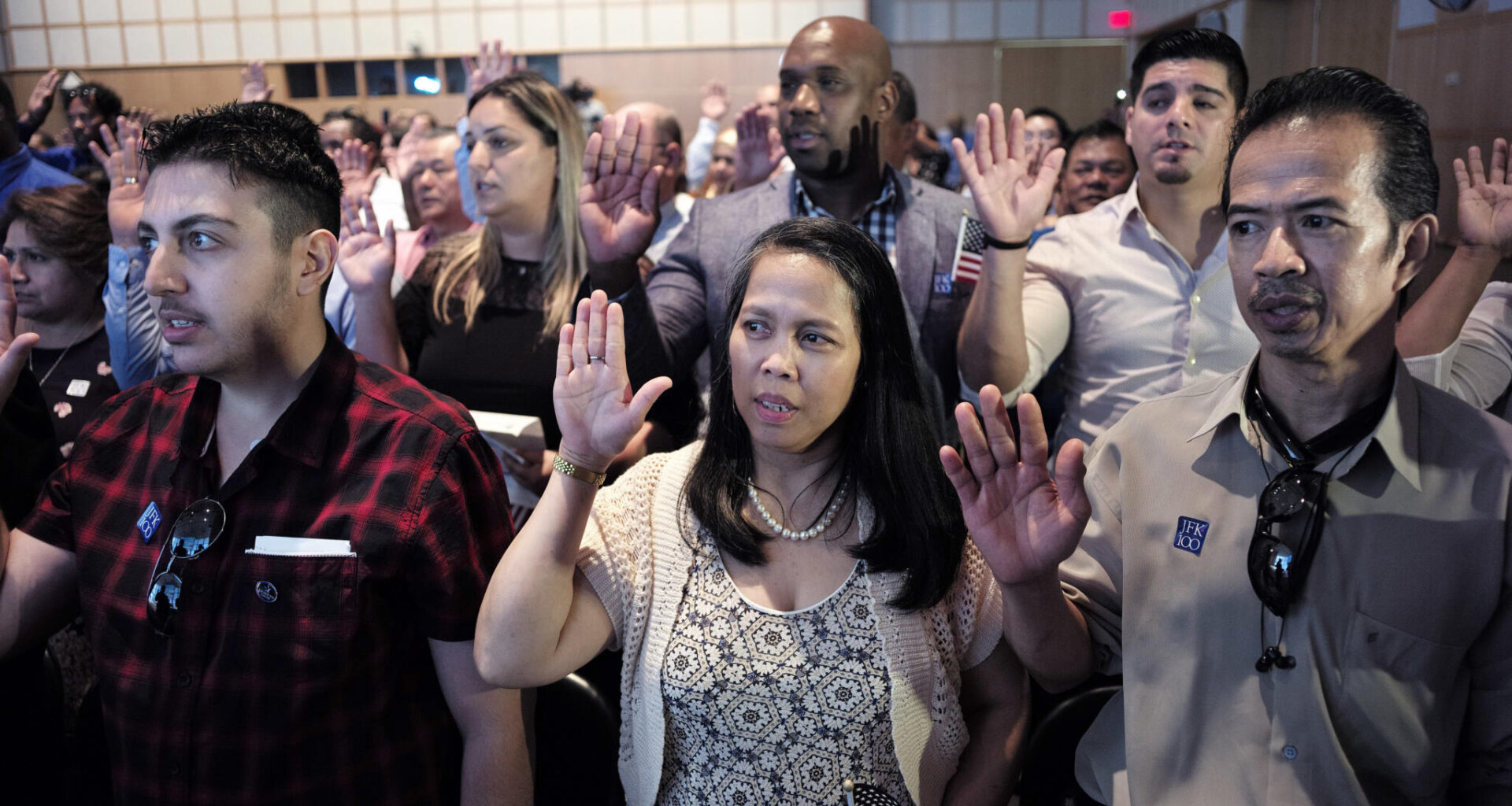
My favorite day of the year is in the spring, when hundreds of aspiring U.S. citizens gather at the Reggie Lewis Center in Roxbury to complete their citizenship applications. Hosted by the City of Boston and Project Citizenship, Boston Citizenship Day is a joyful event when immigrants from all over the world embark on the last stage of a journey, with support from volunteers, pro bono attorneys and immigration professionals, that has been years (if not decades) in the making.
One of these aspiring citizens is a man named Shu Sing Paul Wong. He moved to Boston from Hong Kong more than a decade ago to care for his aging parents. Now in his mid-60s and working as an educator, he attended last year’s Boston Citizenship Day along with his wife and daughter. Today, all three are U.S. citizens.
“We’re so excited,” Paul (his preferred name) shared. “Now we can live here, work here, and serve our communities. We’re full of hope…for the future.”
As our nation celebrates its 250th anniversary, Paul’s story should feel familiar. While indigenous people have long stewarded this land we call America, every other American family has an immigration story of their own.
Some arrived seeking safety, opportunity, or freedom; mine fled the pogroms in Russia in the early years of the last century. Others were forced here through enslavement. Together, these histories shape the diverse nation we share. Over the past decade alone, more than 240,000 Massachusetts residents have chosen to become U.S. citizens, deepening their commitment to the country they already call home.
Yet, at precisely the moment we should be celebrating what it means to be an American and the benefits of citizenship, it’s becoming harder to attain.
In the past year, the Trump administration has introduced aggressive anti-immigrant policies that make becoming a citizen increasingly inaccessible.
The administration established a longer civics exam and broader, more subjective standards for evaluating an applicant’s “good moral character.”
They abruptly halted interviews, oath ceremonies and application processing for people born in 39 designated “high-risk” countries (a policy that a Rhode Island judge has ruled unlawful, though the administration plans to appeal).
And in June, U.S. Citizenship and Immigration Services proposed raising the naturalization application fee by a whopping 75%, from $760 to $1,330, and eliminating the fee waivers that have historically enabled immigrants with low incomes to apply. For our clients at Project Citizenship, 70% of whom are from low-income households, this change will place U.S. citizenship squarely out of reach. It’s a cruel move at a time of economic hardship across America.
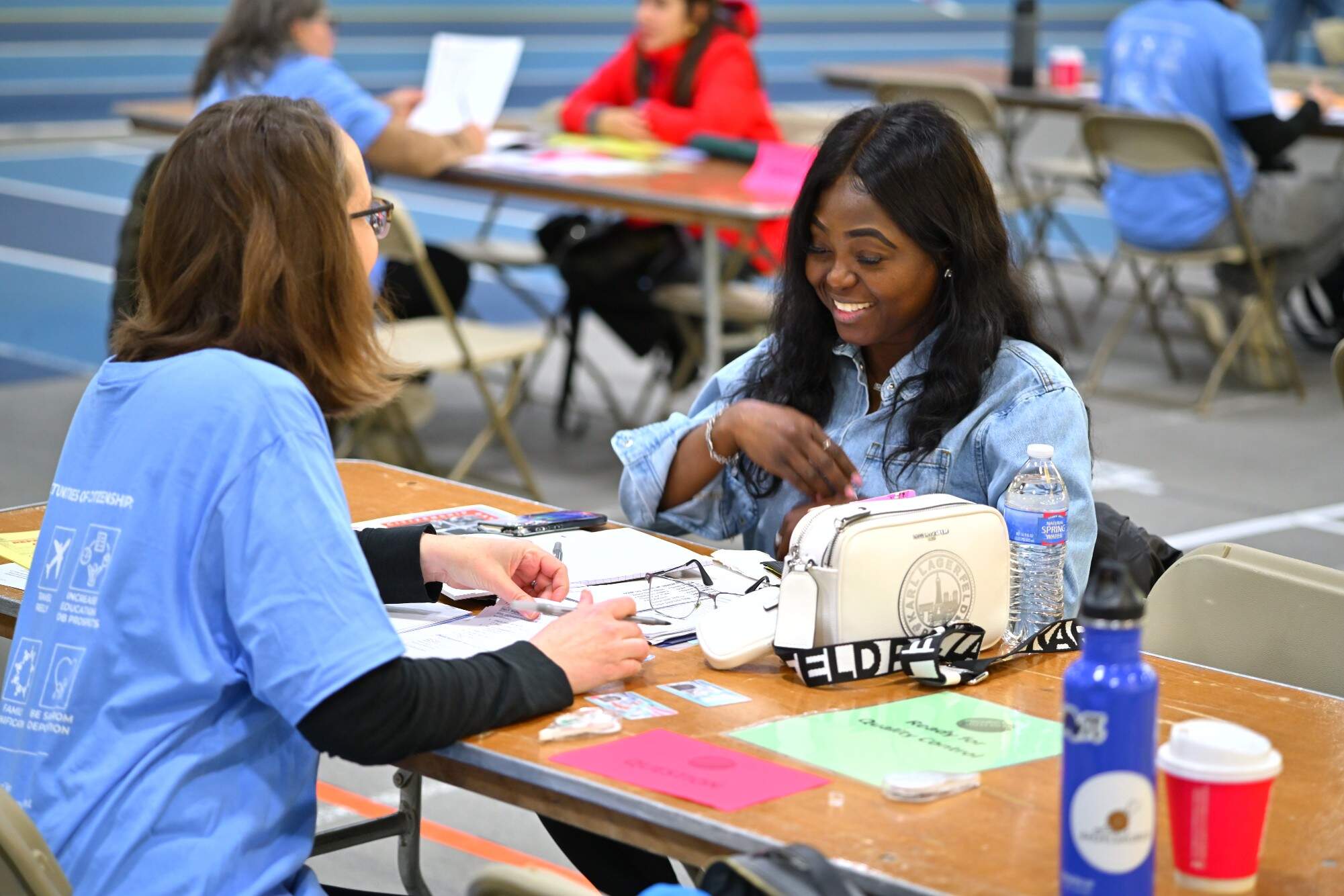 A volunteer for Project Citizenship assists a woman applying to be a citizen of the United States at the Reggie Lewis Center in Roxbury on May 2, 2026. (Courtesy Boston Citizenship)
The effects of these policies are acutely evident here in Massachusetts. At this year’s Boston Citizenship Day, I was dismayed to see attendance down 50% from the year before, falling from 316 participants to 158. It was still an inspiring day with immigrants from 56 different countries, but the number of people who registered — and didn’t attend — nearly doubled.
And it’s understandable. Some fear that attending a public citizenship event could expose them or their loved ones to immigration enforcement. Others worry that applying for citizenship will invite scrutiny from a government that has made immigrants feel unsafe and unwelcome. Still others question whether it’s worth applying at all if their case could be delayed indefinitely because of where they were born. And it’s worth remembering that the people we serve are all living in the U.S. legally.
Ultimately, this trend is not just a loss for these aspiring citizens and their families, but for all of us. Becoming a U.S. citizen means more than a change in legal status. It provides the security to build a future, the right to vote, freedom to travel, protection against deportation, and the opportunity to fully participate in the civic life of the communities immigrants already call home. When barriers make citizenship significantly harder to attain for people from diverse backgrounds and economic statuses, our democracy is weaker for it.
What gives me comfort at this devastating time is the local outpouring of support. Boston Citizenship Day is just one example — most of this year’s 200+ volunteer spots were filled in 45 minutes. As one volunteer told me:
When I volunteer at Boston Citizenship Day, I see myself in every person I help. I sit beside applicants as they work through complex forms, answer their questions, and try to ease the same fears I once had. In those moments, it’s not just about completing an application — it’s about reassurance, dignity, and hope.
As we celebrate our nation’s 250th anniversary, we should ask whether our government’s actions reflect the values we so proudly commemorate. The Supreme Court’s catastrophic ruling last week ending TPS for Haitians and Syrians is just the latest example. Immigrants seeking citizenship today are our neighbors, coworkers, family members and friends. They have built their lives here, raised families here, contributed to our economy and met every legal requirement to become U.S. citizens. They deserve a pathway to citizenship that is fair, transparent and accessible, not one defined by cruel and discriminatory barriers.
We like to think we are a nation that offers opportunity and belonging to others, that welcomes people like Paul and his family, a place that stands for “life, liberty, and the pursuit of happiness.” But these ideals mean little if they are not upheld in practice.
At moments like this, defending these promises requires action. This includes standing with immigrants on July Fourth and every day, and refusing to tolerate attempts to weaken our democracy.