
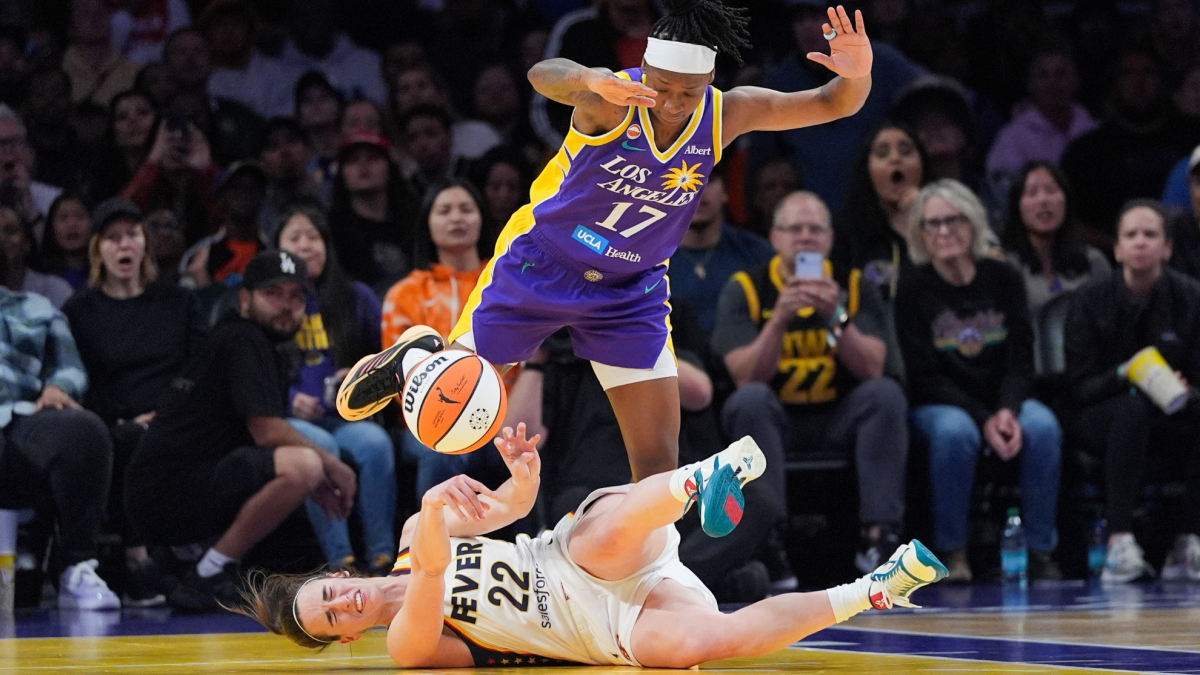
Since arriving in the WNBA, Caitlin Clark has become much more than the No. 1 overall pick. The Indiana Fever star has transformed into the league’s biggest attraction, drawing sellout crowds, moving games to larger arenas and bringing unprecedented attention to women’s basketball. But with that spotlight has also come a level of pressure she admits few people truly understand.
Speaking candidly about the mental demands of her career, Clark revealed that working with a sports psychologist has become an essential part of staying healthy mentally throughout the season. She explained that she intentionally distances herself from social media, practices meditation and breathing exercises, journals regularly, and focuses almost exclusively on her teammates and the Fever locker room once the season begins.
Sophie Cunningham can’t stop creating viral WNBA momentS
“You have all the physical skills,” Clark said. “That’s why you’re one of the players in this league. This is a really hard league to play in. Sometimes that’s the harder part of it.” She added that many people underestimate “how taxing the pressure and the spotlight can be,” even though she considers herself fortunate for everything basketball has brought into her life.
The pressure behind the spotlight
Her comments come after another stretch of intense scrutiny and physical play. Since entering the league, Clark has repeatedly found herself at the center of controversial on-court incidents, many of which have sparked debate over whether officials are doing enough to protect one of the WNBA’s biggest stars. Critics have pointed to several hard fouls and missed calls, arguing that some contact against Clark has gone beyond ordinary physical basketball.
The latest controversy came against the Phoenix Mercury when Alyssa Thomas struck Clark in the throat during a loose-ball sequence before later making additional contact that fueled even more criticism.
Caitlin Clark takes a blow to the throat, and officials don’t call a foul
Officials initially allowed play to continue without calling a foul. After reviewing the play, the league upgraded the incident to a Flagrant 2 foul and suspended Thomas for one game. Clark later missed time as she recovered physically.
Clark never suggested she wants the spotlight to disappear. In fact, she made the opposite clear. Despite acknowledging the emotional toll, she said she would not trade the experience for anything. But her comments offer a rare glimpse into the mental work required to carry the expectations of an entire league while continuing to perform at the highest level every night.