
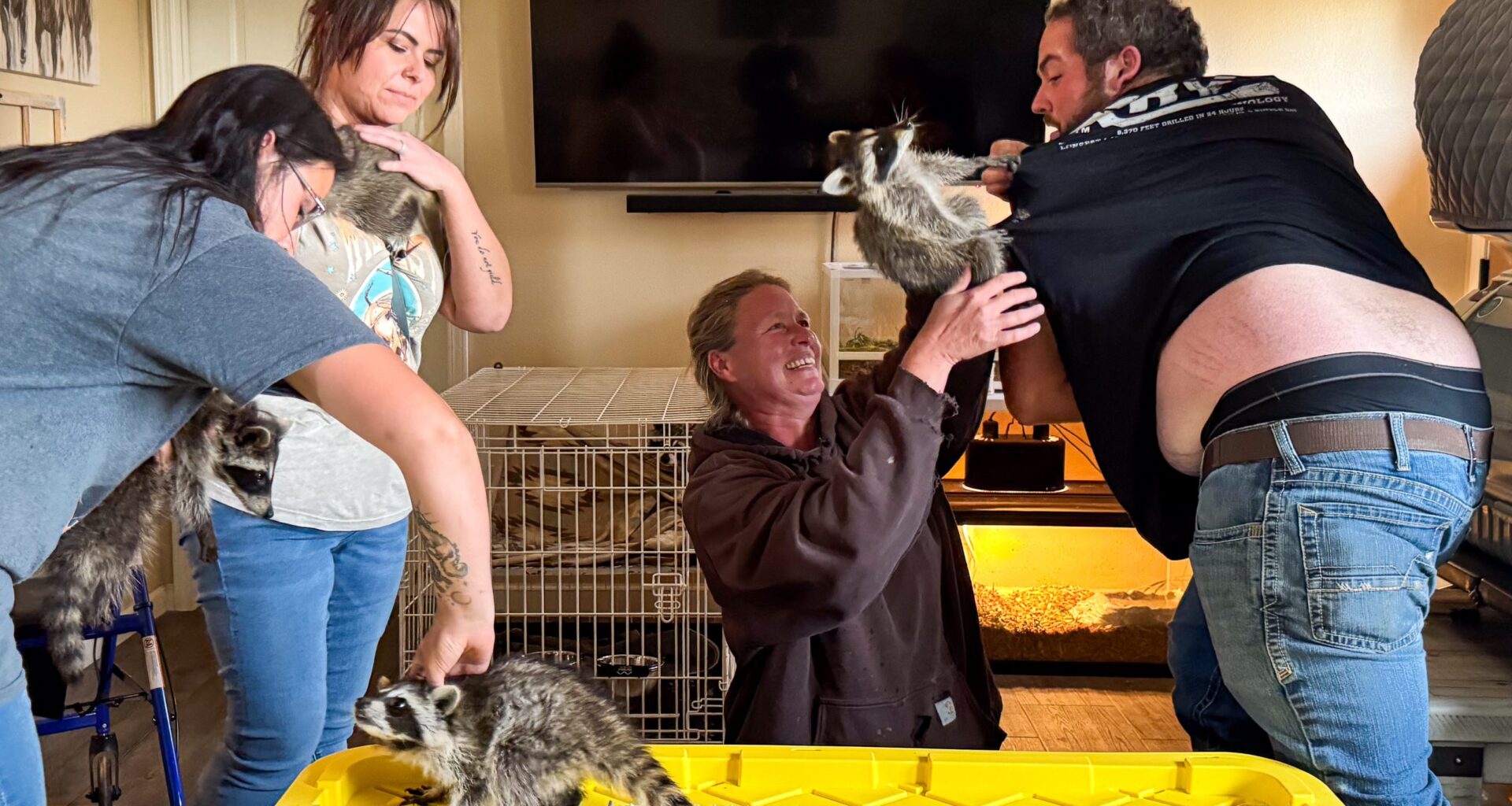
HILLSDALE, Wyo. — Animal welfare and rehabilitation, especially for wildlife, isn’t an easy line of work. The emotional highs and lows, the discipline and the constant poop cleaning is all a part of the job that Broken Bandit Wildlife Center founder Tricia Wyer said is not for everyone.
“It’s not a choice; it’s a lifestyle,” Wyer said at the kitchen island in her home, which is currently overrun by 40 orphaned baby raccoons squeaking and scratching at the gates of their enclosure behind her. “It is truly your life. You’re either in it from sunup to sundown, 24 hours a day, seven days a week, 365 days a year, or you’re not in it.”
That’s especially true for Wyer right now. Since undergoing an intensive back surgery, she’s had to move a lot of her operations into her house and rely even more heavily on her committed team of volunteers. Together, they’ve formed a family built on the shared joys and pains of saving the lives of the most misunderstood and helpless creatures.
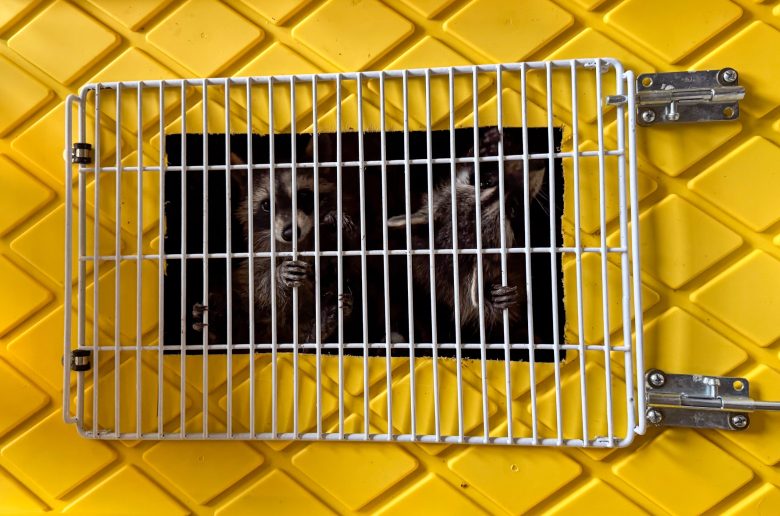 Baby raccoons attempt an escape of their temporary enclosure at the Broken Bandit Wildlife Center June 30, 2026 (Garrett Grochowski, Cap City News)
Broken Bandit Wildlife Center is a Hillsdale-based wildlife rehab organization. Wyer has been caring for raccoons, the residents most commonly found at the center’s rural campus 30 minutes east of Cheyenne, for over 20 years.
“Somebody gave me a baby raccoon and said ‘figure it out,’ and I was hooked on raccoons ever since,” Wyer said over more raccoon chirping. “So it was the dream to open a rescue. Five years ago, we bought the property and we made the dream a reality. We opened it up, we built our building and it just has been growing every year.”
The center now cares for much more than raccoons. Skunks, opossums, coyotes, foxes, bobcats, horses, ponies and even exotic animals like zebras, servals and coatimundis, raccoons’ Central and South American cousins, have all found care at the center at some point over the years.
They’ve really seen it all, and every volunteer has a story of an animal that they couldn’t forget. Fluffy the alligator, volunteer Dillon Martin said, stuck with him. He still goes to visit him in Colorado at his new home from time to time. For Wyer, Frank the porcupine stood out. All the volunteers were afraid of him when he stood on his hind legs and approached with arms wide open. It wasn’t until they sent him off to a specialist facility with more experience with the animal that they realized he just wanted hugs.
As Wyer spoke, one of her volunteers, Angelita Cardinas, brought in a very scared 13-lined ground squirrel that a Laramie County resident found in need of help. The team has to be ready for an intake at any time, regardless of how swamped they already are. Oftentimes, the animals are on the brink of death.
“Sometimes I want to tell them to go fly a kite and go somewhere else and take care of their own problems, [but] we’re not going to because the worst-case scenario, they’re going to dump them off and that animal’s going to suffer,” Wyer said.
Other times, the animal will come into Broken Bandit’s care after being surrendered by a well-intentioned owner who didn’t know how to take care of the animal or couldn’t handle its wild instincts. Whether the animal is sick, injured or overly dependent on humans, this background can be just as detrimental.
Social media has only worsened the problem. The team’s all too familiar with videos of “domesticated” creatures living indoors, wearing diapers and being cute. That’s just what the owners want people to see, they said; the owners don’t show the animals biting, spraying and destroying their indoor environment.
“Everybody has big hearts when it comes to them and everybody wants that one on social media, that one special raccoon that’s going to ride in your car seat or hang out in your house on the couch with you eating popcorn watching a movie,” Wyer said, “but that’s not the reality of it. Usually by October we start getting slammed with phone calls because somebody raised this raccoon and it wasn’t that glamorous one that they saw online.”
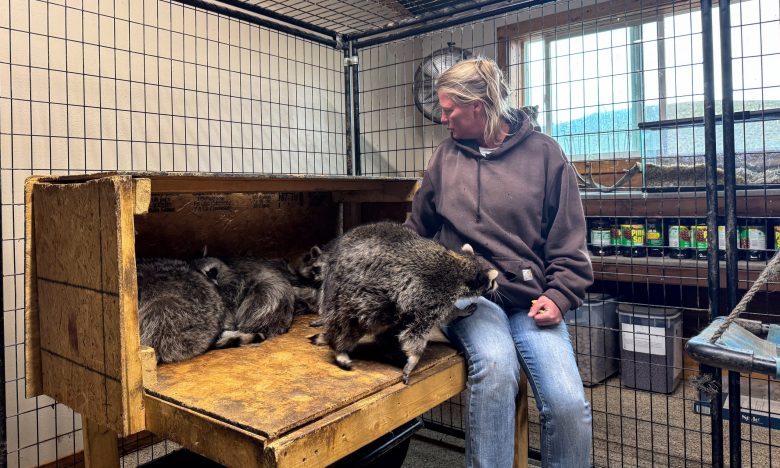 Tricia Wyer, founder of the Broken Bandit Wildlife Center, checks in on the permanent resident raccoons June 30, 2026. Due to medical reasons or irreversible habituation, these animals cannot be safely returned to the wild (Garrett Grochowski, Cap City News)
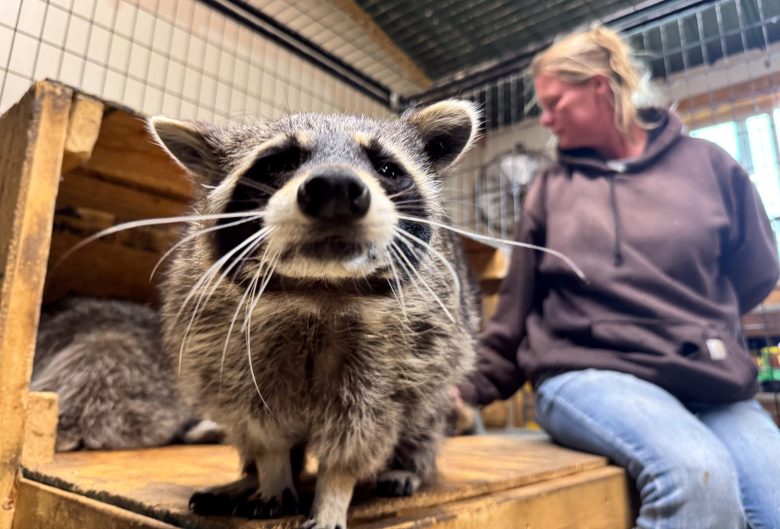 A raccoon investigates the camera as Tricia Wyer, founder of the Broken Bandit Wildlife Center, checks in on some of the animals under her care June 30, 2026 (Garrett Grochowski, Cap City News)
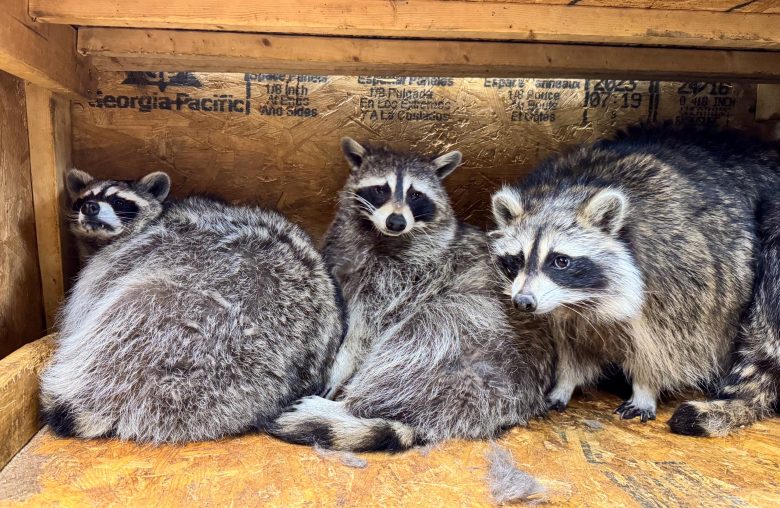 Three resident raccoons at the Broken Bandit Wildlife Center June 30, 2026 (Garrett Grochowski, Cap City News)
Around-the-clock feedings, foregoing vacations and getting hands dirty aren’t the only costs associated with the job. The volunteers know all too well the emotional toll that comes from caring for helpless, sick or injured creatures.
Volunteer Breanna Teets, who has endured plenty of those experiences, said workers at Broken Bandit have to turn off the emotional parts of their brain sometimes just to get through the day.
“We’ve all seen our fair share of death and injury and some really rough stories of circumstances of how animals have gotten here. At the end of the day, it may sound callous, but the day has to go forward,” Teets said. “You have so many other mouths that need bottles and that need food or love. It’s really difficult, but there’s not a lot of room to shut down, to be honest with you. Everything has to keep going.”
The pain catches up, though. Teets said that in those quiet moments before bed or during calmer periods in the fall after raccoon baby season ends, she will lie in bed and think about the animals that changed her, both positively and negatively.
All of the team goes through it. Being able to relate to each other’s struggles and their mutual love for the center’s animals keeps them healthy and together.
“We have to rely on one another or we’d fall apart,” Cardinas said.
“We also laugh together and giggle together and we may have to cry together,” Teets added. “Five baby skunks running around the kitchen and jumping at you and you’re just like, ‘Yay!’ All of us turn into little kids. We’re like, ‘Did you see the new baby?’ We’re all very kid-like in that way, too.”
They also hold each other accountable. Having volunteers who have bonded the way the folks running Broken Bandit have means they’ll understand when one of them says they took an animal’s death extra hard and need some time. They’ll make sure they don’t make a mistake that could cost an animal’s life.
“You have to be OK with being accountable and owning your mistakes because you learn things all the time out here and there’s things that you would never know or that slip your mind because you’re in the pace of everything,” Teets said. “Being accountable, being honest and being kind are the biggest things out here. We’re all pretty close enough where we all communicate pretty effectively. If anything changes with diets, you have to be on it to communicate with the group, like ‘This is changing. This animal’s not eating. This animal has an injury, cuts on its feet,’ or something like that.”
It’s especially difficult when volunteers have other things going on in their personal lives. That can’t affect the job, Teets added.
“When you walk through these doors, you’ve got to be 100%, because if you miss something, that could be the difference in the animal being there that night and not being there the next morning.”
And they all do it for free. When they’re not working their day jobs, Teets, Martin, Cardinas and all of the center’s other volunteers will come do whatever it takes to keep the center running.
You’ve got to b a special kind of crazy to do this kind of work, Wyer said.
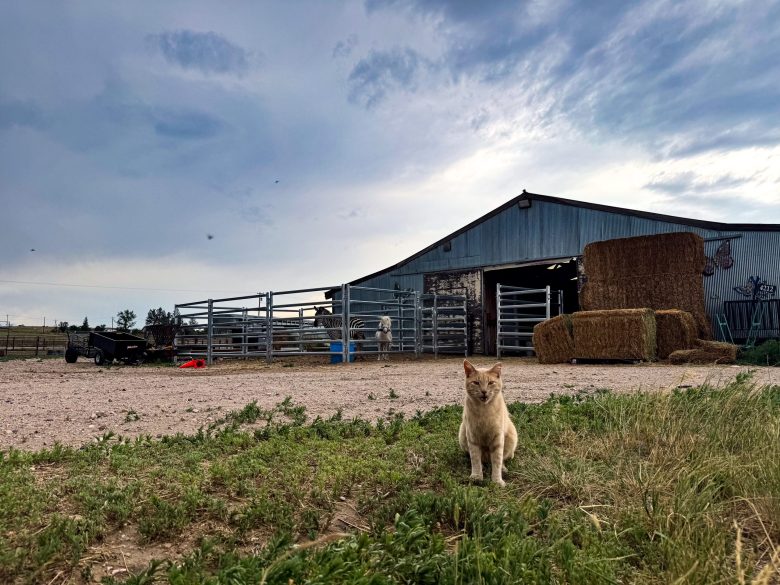 A barn cat protects the equine residents of the Broken Bandit Wildlife Center in Hillsdale, Wyoming, on June 30, 2026. The center cares for multiple horses, ponies and even a zebra (Garrett Grochowski, Cap City News)
As many bad experiences as there have been, there have been just as many, if not more, incredible ones. Broken Bandit’s ultimate goal is to rehabilitate wildlife to a point where they can be safely released back into the wild. As cute as it is being able to interact with cuddly baby animals that most people will never get to touch, that experience pales in comparison to the feeling of watching an animal successfully revert back to its animal instincts.
Wyer and her team can see it. As an animal gets closer to full health, they’ll begin introducing a more wild diet and keep it in a special area. It’ll grow more wary of humans to a point where touching and hand feeding are impossible. That’s when it’s ready to go home and the folks at Broken Bandit know they did their job.
When they’re ready, one of the volunteers will take them to a location far away from people, where they have access to food and water, for release.
“Give them a fighting chance at having a real wild life,” Wyer said. The center isn’t a zoo or an adoption center. The quicker an animal is back into the wild, the better. If it has to stay, it’ll remain with Broken Bandit and caretakers who know how to look after wildlife. Wyer clarified that Broken Bandit Wildlife Center will never adopt out an animal other than horses and other domestic animals it takes in on an irregular basis.
The animals that aren’t released are too physically or cognitively disabled to survive in the wild, such as Angel the raccoon, who fell 30 feet from a industrial building’s rafters onto hard concrete and is now permanently disabled.
“The animals that we keep here, we keep here because they can’t survive on their own,” Wyer said. “But we also have big huge elaborate enclosures for them, we have shelters from the weather, we have heated enclosures for animals during the wintertime to where they’re not house pets. They can’t be. That’s not what they were born for.”
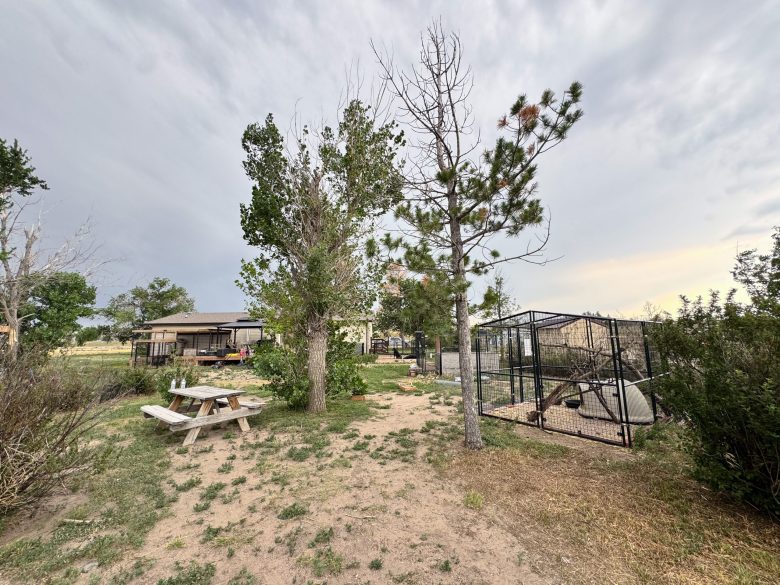 View of a portion of the Broken Bandit Wildlife Center’s outdoor campus on June 30, 2026 (Garrett Grochowski, Cap City News)
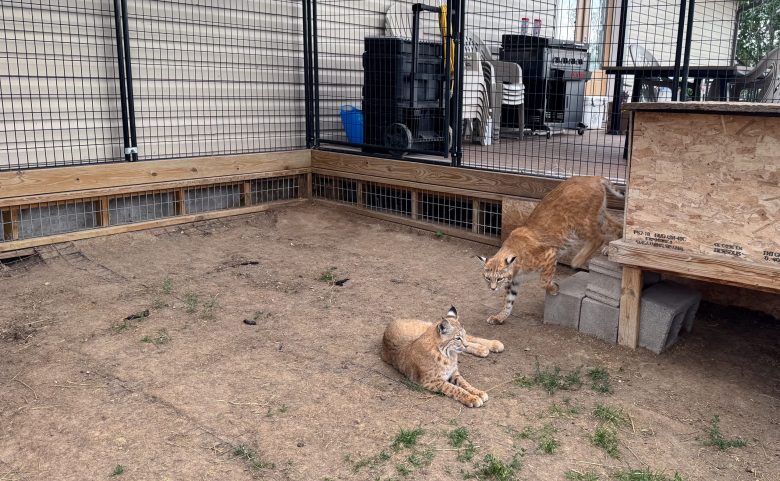 Bob and Cat, resident bobcats at the Broken Bandit Wildlife Center, exit their house June 30, 2026 (Garrett Grochowski, Cap City News)
Despite being entirely run by volunteers and funded by donations, Broken Bandit’s campus is sprawling. Each species has large enclosures separated from the others where they can rest, play and stay relatively undisturbed by humans.
It takes $3,000–$5,000 a month to maintain the facility, buy food and care for the animals. Broken Bandit Wildlife Center relies exclusively on community support to pay for those expenses. If Laramie County residents are interested in helping make sure the work at Broken Bandit Wildlife Center can continue, donations are accepted at the organization’s website.
The center also accepts game meat, other special foods and animal care supplies that interested residents can inquire about donating on Facebook. Additionally, the center participates in community fundraising events like WyoGives Day, when residents can financially support the organization and help win it additional monetary perks. See Broken Bandit’s WyoGives Day page here.
Related