

During England’s 0-0 World Cup group stage draw with Ghana, Declan Rice rocked up to the corner flag. Then, the England and Arsenal midfielder rolled up, one navy short leg at a time, a double flash of sinewy, pale footballing flesh for all of Boston Stadium and the world to behold.
Exactly what compelled Rice to hike up his England shorts to such salacious heights became a matter of online debate that eventually spiralled into conspiracy. What did Rice’s particular degree of short lift signal? Did one short leg indicate an inswinger? A double-hike outswinger? Exactly how proportional was quad exposure to ball placement?
If you find the time to scroll through FIFA’s most recent annual equipment regulations code (a meaty, 100-plus page dossier that spans everything from hair bands and undergarments to balls and substitute bids), you’ll discover the world governing body has five pages dedicated exclusively to shorts.
The regulations are impressively exhaustive. There’s the rudimentary requisite that all players must actually wear shorts, followed by a more scrupulous description of an accepted pair of shorts (a left and right leg, a lateral or outer seam and a waist edge). Zippers, pockets and untucked drawstrings are verboten, as are multiple “dominant colours” and players’ names. A player’s number must be adorned on one of the front legs and, according to section 14.4.1.3, “entirely visible when the Shirt is untucked and hanging loose over the Waist Edge”.
Nowhere does FIFA stipulate an exact limit for short length.
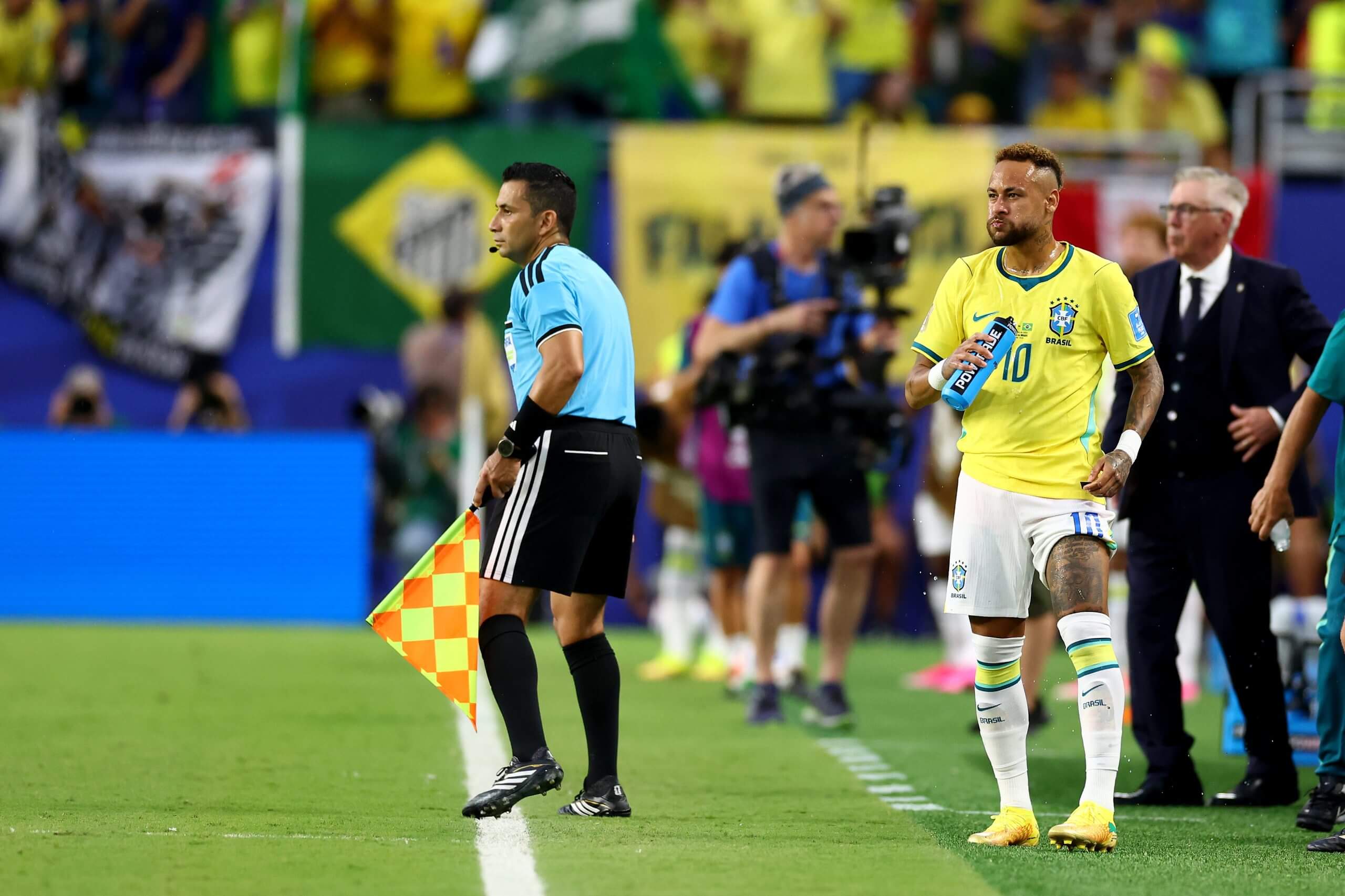
Neymar Jr hikes his short leg. as he prepares to come on as a substitute against Scotland (Photo: Megan Briggs/Getty Images)
Which is good news for Rice and others who prefer the sensation of wind on the thighs for whatever reason. And there are plenty of them knocking about.
Chuck in a request to any of your football-feasting group chats for players who have loved or still love to rock a self-imposed short short (as this writer did) and the deluge arrives quickly: Manchester City’s Jack Grealish, former Germany international Lukas Podolski, former Brazilian left-back Marcelo, most of the United States women’s team. Leeds United’s Dominic Calvert-Lewin has been known to request shorts a size too small in pursuit of the perfect fit. Brazil star Neymar is a serial hiker.
We could go on.
Yet the motivations for going short are — like those who practise the art — myriad and nuanced.
Code sending is potentially one, at least according to a Women’s Super League set-piece coach in the United Kingdom, who chose to remain anonymous to protect relationships. Baseball and American football have historically used signs for pitch delivery or route calling, with opposition teams attempting (often illegally) to steal them.
Then there’s fashion and personal aesthetic to basic functionality and performance psychology.
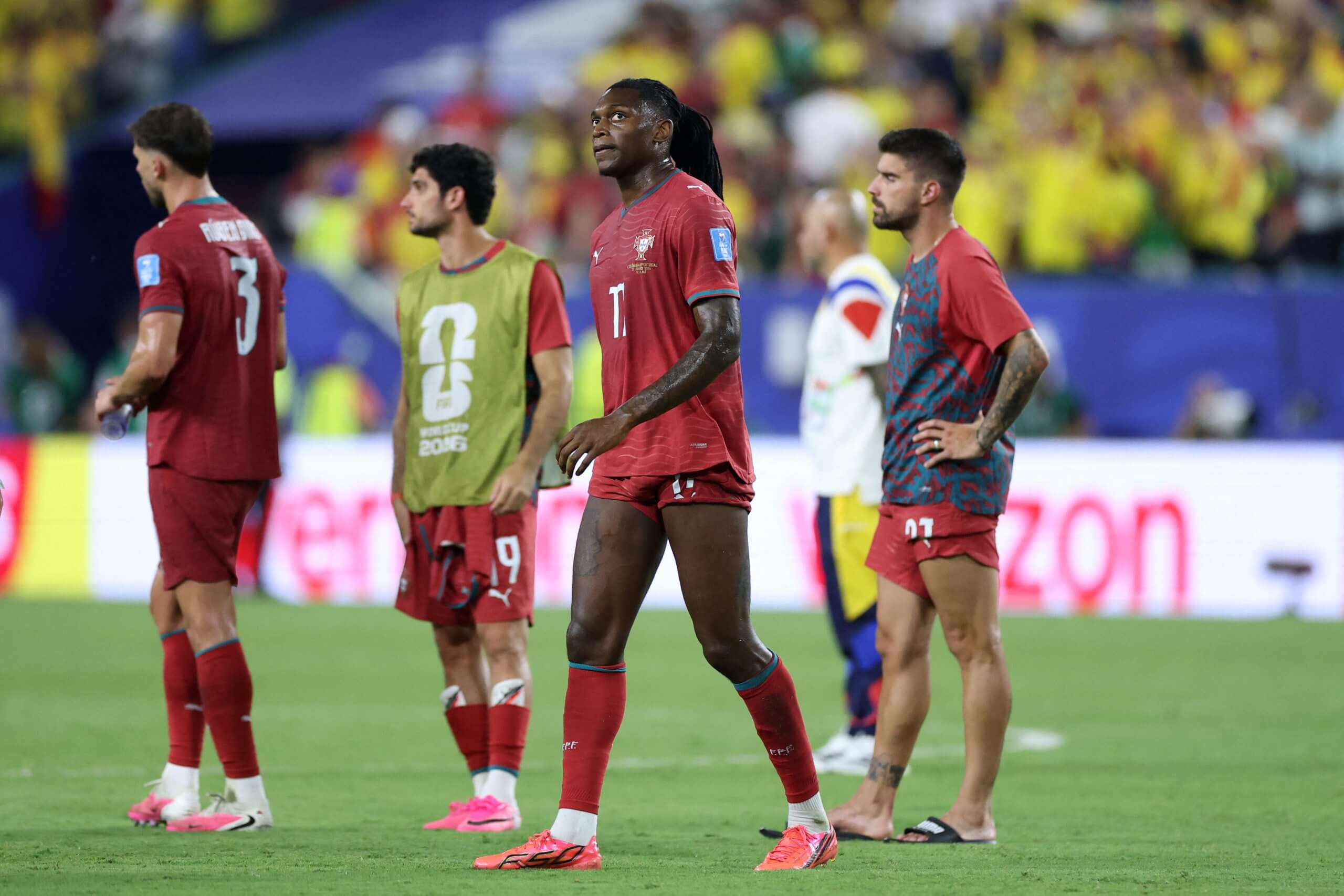
Rafael Leao after Portugal’s draw with Colombia (Photo: PATRICIA DE MELO MOREIRA / AFP via Getty Images)
According to Martin Turner, a sport and exercise psychologist with more than 15 years of experience working with various sporting clubs in the UK, the psychological dimension to short hiking is one of the greatest factors.
Football, he explains, is a sport of “open skills” (self-expression) and “closed skills” (controllable, static movements such as free kicks, penalties or corners). Adjusting one’s shorts can act as a kind of grounding exercise for the brain, a means of consciously tapping into our sporting subconscious.
“That routine or behaviour might not directly lead to better performance, but it changes the psychology of that performance,” Turner says.
Such idiosyncrasies often come from a human desire to wrest control in high-pressure situations. Turner points to the example of tribal communities, who, when going fishing, tend to have more religious rituals the further away from shore.
“When we have uncertainty and danger, we try to grasp toward things that we can control,” he explains. The result is the creation of routines, mantras and, sometimes in the case of athletes, subconscious clothing quirks.
Whether the success is a direct result of the routine or merely a byproduct of feeling less anxious and more confident matters little when it comes to performance, says Turner.
“What happens is they do it once, it works, they do it again, it works,” says Turner. “So they keep repeating it until it becomes a deeply ingrained routine that they don’t even think about anymore, but it helps ground them.”
The risk is when this grounding is disturbed. And not all shorts are created equal.
“When I’m around teams and we get the new kit for the season, it’s often a situation that can cause a lot of stress and strain. When players aren’t immediately comfortable, they get anxious. It can cause issues,” Turner says. A coping mechanism, he says, can be the hiking or tugging of a short leg.
Functionality is also important. Footballers crave the sensation of uninhibited movement, says Turner. Former England international and former Nottingham Forest left-back Stuart Pearce, for example, requested shorter shorts in the ultra-baggy era of the 1990s to feel more mobile. Fellow England international Joe Cole requested shorts smaller than his team-mates to give defenders less to cling onto, a tactic borrowed from Italy legend Paolo Di Canio.

Joe Cole requested smaller shorts so team-mates would have less to grab on to during matches (Photo: Jamie McDonald/Getty Images)
“It’s funny with shorts, as quite often not a lot of effort goes into designing them, yet we know players have preferences for length and the circumference of the shorts,” says Rob Warner, the former creative director and head of design at Puma and now founder of design consultant agency Spark Design Academy.
Warner, who has also worked with LuluLemon, Adidas and Belstaff, is among the few who has spent plenty of time focused on short design.
Two decades ago, Warner led the team that designed the patented kits for the 2006 World Cup, including that worn by eventual tournament winners Italy.
Kit-heads will recall the general design: a collar and sleeves taller at the front and back designed to deflect air around the body for optimum movement. The kit, explains Warner, was inspired by Puma’s iconic all-in-one footballing skinsuit designed for Cameroon before the 2004 Africa Cup of Nations, a feat of epic aerodynamic proportions and a slight bit of rule-bending (the International Football Association Board had banned unitards in the decade prior, but FIFA had yet to explicitly do so).
Yet, while the 2006 kit shirt has long been a point of fascination, Warner says the shorts have been vastly underappreciated. “We actually patented the shorts,” Martin says. “They had a similar aerodynamic design, longer at the back than the front.” The design wasn’t so much for air deflection, he says, but to provide a larger circumference for leg movement.
“So we could have quite a slim fit in shorts, which then still works for guys that have got bigger thighs.”
Players attempting to deal with heat might also be inclined to hike or roll. Technology has reached a stage where shorts, in theory, shouldn’t get too hot, says Warner, with companies such as Nike and Adidas both developing various types of waistband elastic raised on the back, so shorts material stands further away from the skin and so is less likely to cling to sweaty skin.
Of course, the impending extreme temperatures of this World Cup might challenge that technology and mobility players crave. And there is the understated role in players’ mentality that shorts play, too.
“You have to think about the psychology of wearing it,” adds Warner. “Think about Ronaldo stepping up to take his free kick. It speaks to him wanting to appear strong and powerful. Pulling his shorts up and getting to show off those incredible quads probably plays a part in it.”
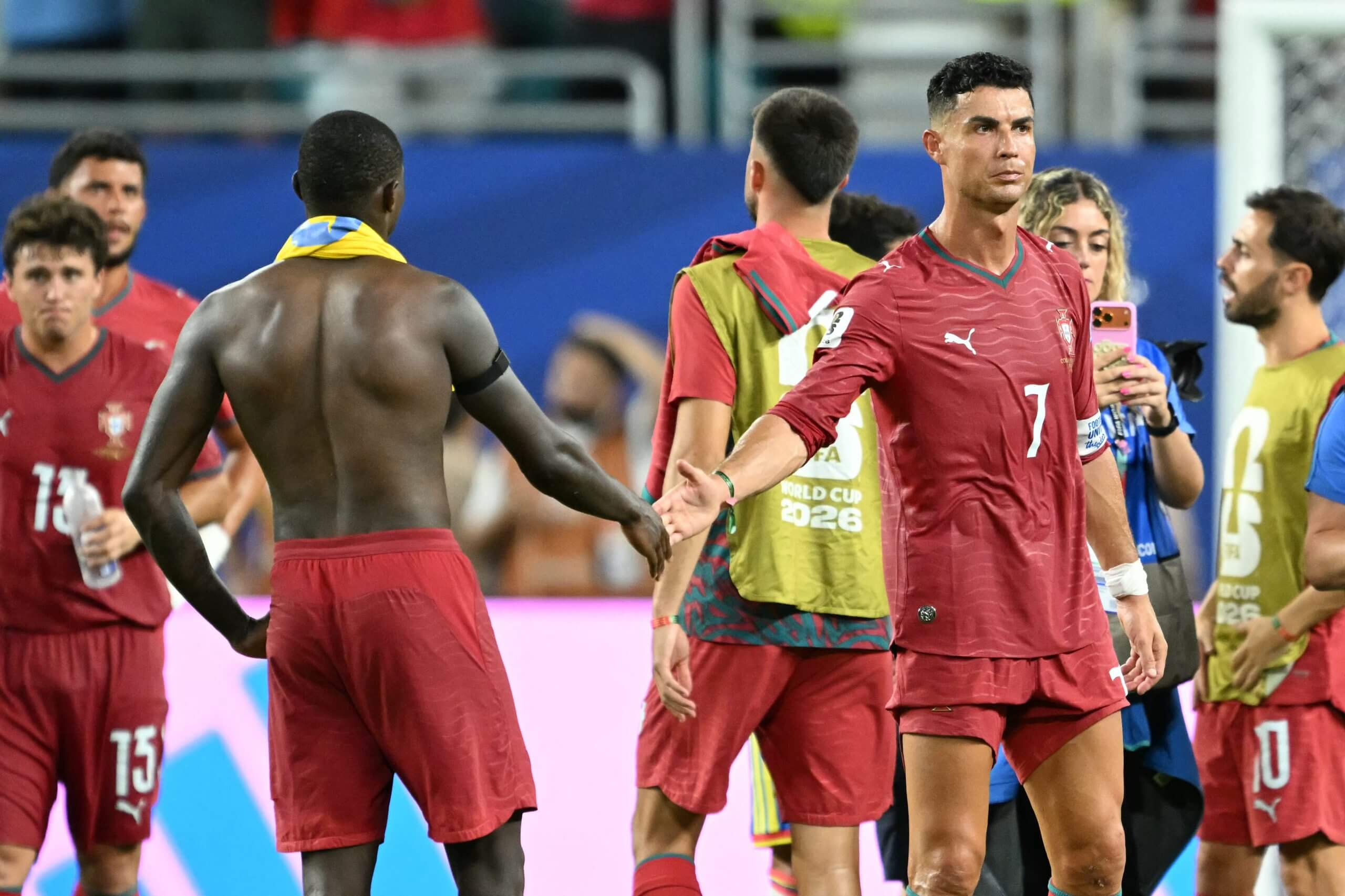
Ronaldo with his shorts hiked after Portugal’s draw with Colombia (Photo: CHANDAN KHANNA/AFP via Getty Images)
“Our physical appearance, whether we like it or not, is an important part of our self-confidence,” adds Turner. “If I’m on the field of play and I feel inauthentic or I can’t express myself, then I’m not going to get the best performance out of myself.”
Even the most elite footballers are impressionable beings with a basic human desire to look good and feel accepted, Turner says. This sheds some light on why the image of a footballer hiking up a short (such as Ronaldo) can become a viral sensation.
“Professionals may not like to admit it, but this stuff is often trend-led,” says Warner. A short (sorry) history of short trends explains this.
Football’s earliest decades were notable for trousers that hung to mid-calf, mimicking the fashion at the time. By the 1960s and ’70s, hem lengths scampered above the knee. A decade later, shorts weren’t so much short as thigh-skimming, body-hugging and sometimes (see: England internationals Peter Beardsley and Paul Scholes) entirely unbridled. “Almost to the extent of being impractical for performance,” says Warner. “But that was the style.”
The mid-to-late 1990s and early noughties brought a sharp shift in the zeitgeist. Thigh-baring hems were traded in for baggier fits, heavily influenced by the rise of hip hop culture. Kit manufacturer Umbro, Warner says, was also a key driver. It designed retro-fit kits for the first years of the nascent Premier League, paying homage to the British game’s roots, featuring laces in the collars and baggy shorts. Warner even recalls, around 2004, designing training trousers that hit just below the knee due to the in vogue “three-quarter length” trousers of the time.
Recent decades have brought impressive advancements in short technology – from bonding hemlines instead of stitching to heat-wicking technology to perforated drawcords knitted into waistbands. Players have options. Even so, while Rice boasts more than 25 modifications to his boots, Warner doubts shorts will become the next frontier of ultra-customisation. Instead, footballers will keep adapting where they want, a hike here, a tug there, perhaps even a code or two for good luck.