
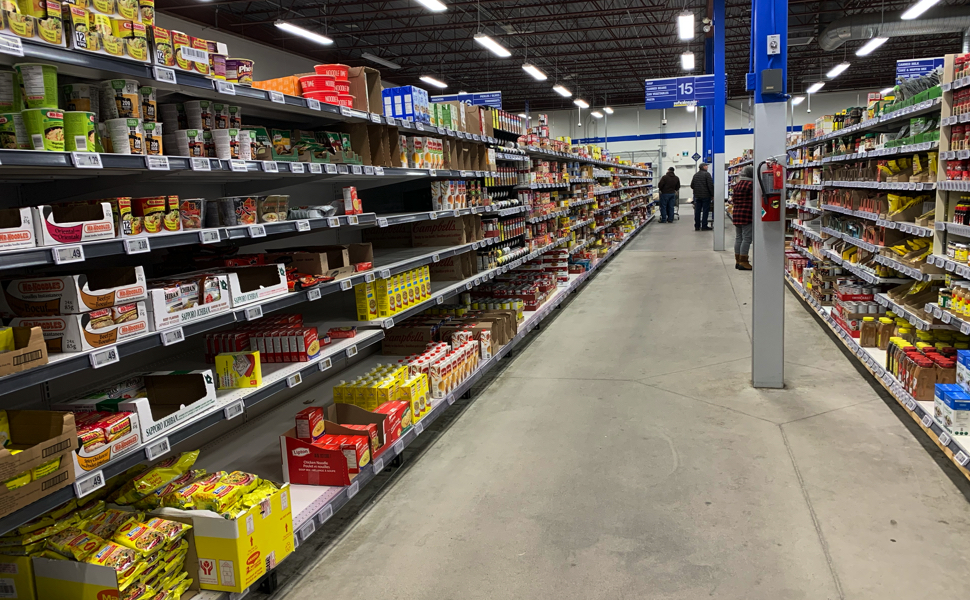
Eligible Canadians are scheduled to receive the first Canada Groceries and Essentials Benefit payment today, as the new benefit replaces the GST/HST credit.
Related Stories:
According to the Canada Revenue Agency (CRA), the Canada Groceries and Essentials Benefit, or CGEB, begins in July 2026 and is issued quarterly for those who qualify.
The benefit is not taxable and does not need to be reported on a tax return.
Payments issued on Jan. 5 and April 2, 2026, were made as GST/HST credit payments before the change.
The remaining two quarterly payment dates listed by the CRA for 2026 are today, July 3 and Oct. 5.
The January and April GST/HST credit payments were based on information from 2024 tax returns, while the July and October CGEB payments are based on information from 2025 tax returns.
Who may qualify
People can qualify for the CGEB even if they had no income during the year.
To qualify, a person must be a resident of Canada for tax purposes during the month before the CRA makes a payment and at the start of the month when the payment is made.
In most cases, they must also be at least 19 years old.
People under 19 may qualify if they have or had a spouse or common-law partner, or if they are or were a parent and live or lived with their child.
Whether someone receives a payment, and how much they receive, depends on adjusted family net income, marital status and the number of eligible children under 19.
If someone is receiving the Canada child benefit for a child, that child is automatically considered when the CRA calculates the CGEB amount.
Parents in shared custody situations may be eligible for half of the CGEB amount for that child.
A person is generally not eligible to receive the CGEB amount for a child who is legally, physically or financially under the responsibility of a child welfare agency.
How much people could receive
The CGEB is calculated based on adjusted family net income, marital status and the number of eligible children under 19.
For the July 2026 to June 2027 payment period, eligible recipients could receive up to $679 if they are single, up to $890 if they are married or have a common-law partner, and up to $234 for each eligible child under 19.
Those amounts are not necessarily what someone will receive in a single payment.
Payments are normally issued quarterly. If a quarterly amount would be less than $50, the CRA says the full amount is paid in July.
The benefit amount is recalculated every July based on information from the previous year’s tax return.
Income thresholds
People may be entitled to payments if their adjusted family net income falls below CRA income thresholds.
For the 2025 base year, the CRA lists the maximum income threshold for single individuals without children at $60,012.
For single parents, the 2025 threshold rises based on the number of children, from $68,912 with one child to $82,952 with four or more children.
For married or common-law individuals, the 2025 threshold is $64,232 with no children.
For married or common-law households with children, the 2025 threshold ranges from $68,912 with one child to $82,952 with four or more children.
How to receive the benefit
In most cases, people do not need to apply for the CGEB.
The CRA says people must file their tax return every year, even if they have no income to report.
The agency automatically checks eligibility when a tax return is assessed.
People who file late may see their payments stop temporarily.
If someone is later found to be entitled to missed payments, those amounts will be paid retroactively with the next scheduled payment.
New residents of Canada may need to apply for the benefit for the first year they become residents of Canada for income tax purposes.
Checking payment amounts
People who are entitled to the CGEB will receive a notice showing their annual entitlement amount and quarterly payment schedule.
The notice will be sent through a CRA account if the person has one. Otherwise, it will be sent by mail.
People with a CRA account can check their next expected payment date and amount under “Benefits and credits.”
Anyone who does not receive an expected payment should check their CRA account, make sure their personal information is up to date and review possible reasons payments may have stopped or changed.
If they still do not know why they have not received the payment, the CRA says they should wait 10 business days after the expected payment date before calling.
One-time GST/HST top-up
As part of the transition, the CRA issued a one-time GST/HST credit top-up starting June 5.
The payment is separate from the CGEB and applies to people who were entitled to the GST/HST credit in January 2026.
The CRA says the top-up was generally equivalent to twice the January 2026 GST/HST credit payment, if there were no changes to a recipient’s family situation.
The payment did not include related provincial or territorial program amounts.
It may still appear as a GST/HST credit payment while financial institutions update their systems.
Why payments may stop or change
Payments may stop or change if someone did not file a tax return, did not respond to a CRA letter, changed their address or banking information, had a change in marital status, no longer meets residency requirements or has income above the benefit threshold.
Payments may also be affected by a tax reassessment, a child turning 19, custody changes, a change in the number of eligible children, or the death of a recipient.
The CRA says benefit payments may be applied to outstanding tax balances, benefit overpayments or amounts owed to other federal, provincial or territorial government programs.
The CRA says people should keep their personal information up to date to avoid disruptions.