
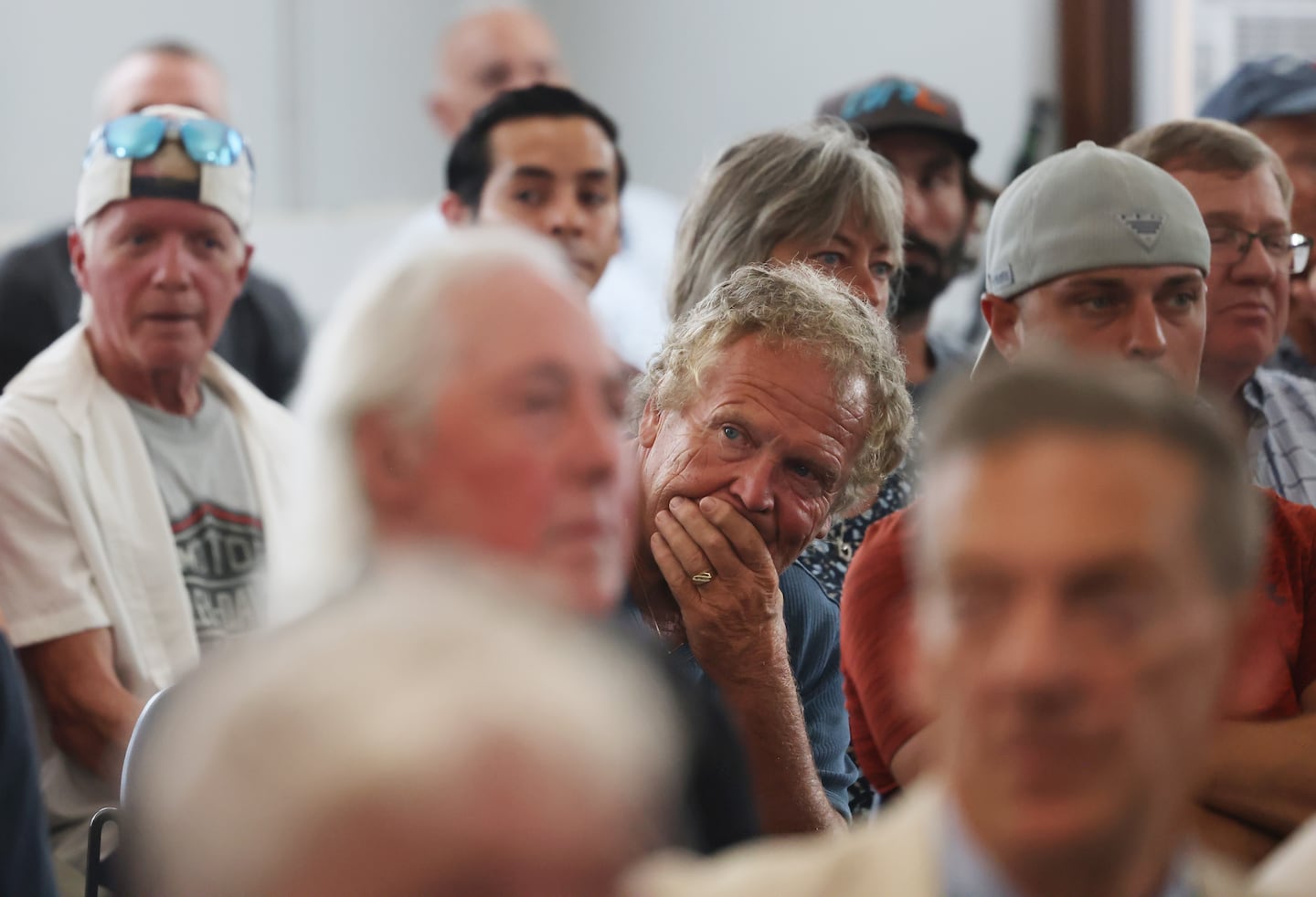
The sewage leak, which began on June 26 after a break in an aging sewer main that carries most of Haverhill’s wastewater to a treatment plant, was not halted until July 1, and dumped an estimated 8 to 10 million gallons of sewage into the Merrimack River each day. This triggered a 21-day closure of the clamming flats in the Great Marsh, stretching from Salisbury to Gloucester.
It could not have come at a worse time. That’s because July is peak season for clams, with high demand at the fried clam shacks that dot the coast, and high prices for diggers. For commercial clammers, it is akin to a toy store getting shut down during the Christmas shopping season.
But there is a sliver of hope that the flats could open Thursday. There is a provision that allows scientists to test the meat of the clams seven days after the contamination event has ended, which would be Wednesday. If the clams pass the test for male-specific coliphage, state officials said, they would put out the word on Thursday morning and have the clammers back on the flats for the low tide that afternoon.
But if the meat fails that test, it would default to the 21-day ban, which would start the date the leak was fixed and keep clammers out of work until at least July 22.
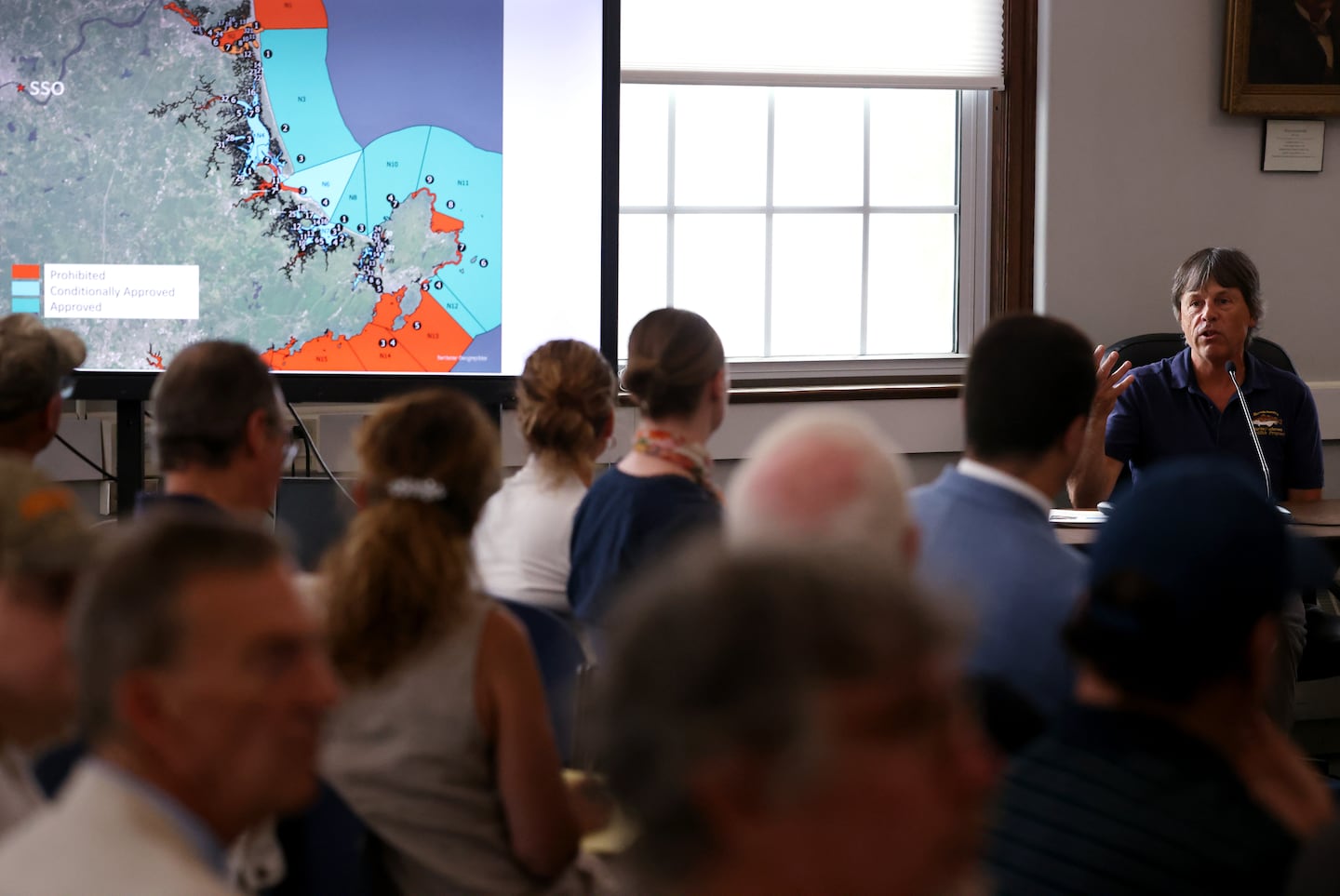 A state shellfish official presented information at the meeting.Jessica Rinaldi/Globe Staff
Given the impact to livelihoods, the meeting was understandably tense, even as it remained cordial. Elected officials and representatives from the state’s Division of Marine Fisheries explained the science of the closures and addressed the elephant in the room — Is anyone going to compensate the clammers for this man-made blow to their livelihood?
State Senator Bruce Tarr, who represents the impacted communities and ran the meeting, said he and the elected officials on the panel were exploring all options for some form of compensation. A clammer asked him to pledge that he would get them compensation; Tarr promised to do everything he could.
“There is an urgency to this meeting. People are not working during the time of year when clams are at a premium,” Tarr said. We’re exploring avenues to financial relief quickly.”
Kristin Kassner, a state representative who represents Ipswich and surrounding communities, said commercial shellfishermen have every right to be upset with what has happened to them.
“You didn’t break a ticking-time-bomb sewer,” she said. “This is the industry we’re known for at the busiest time of the year.”
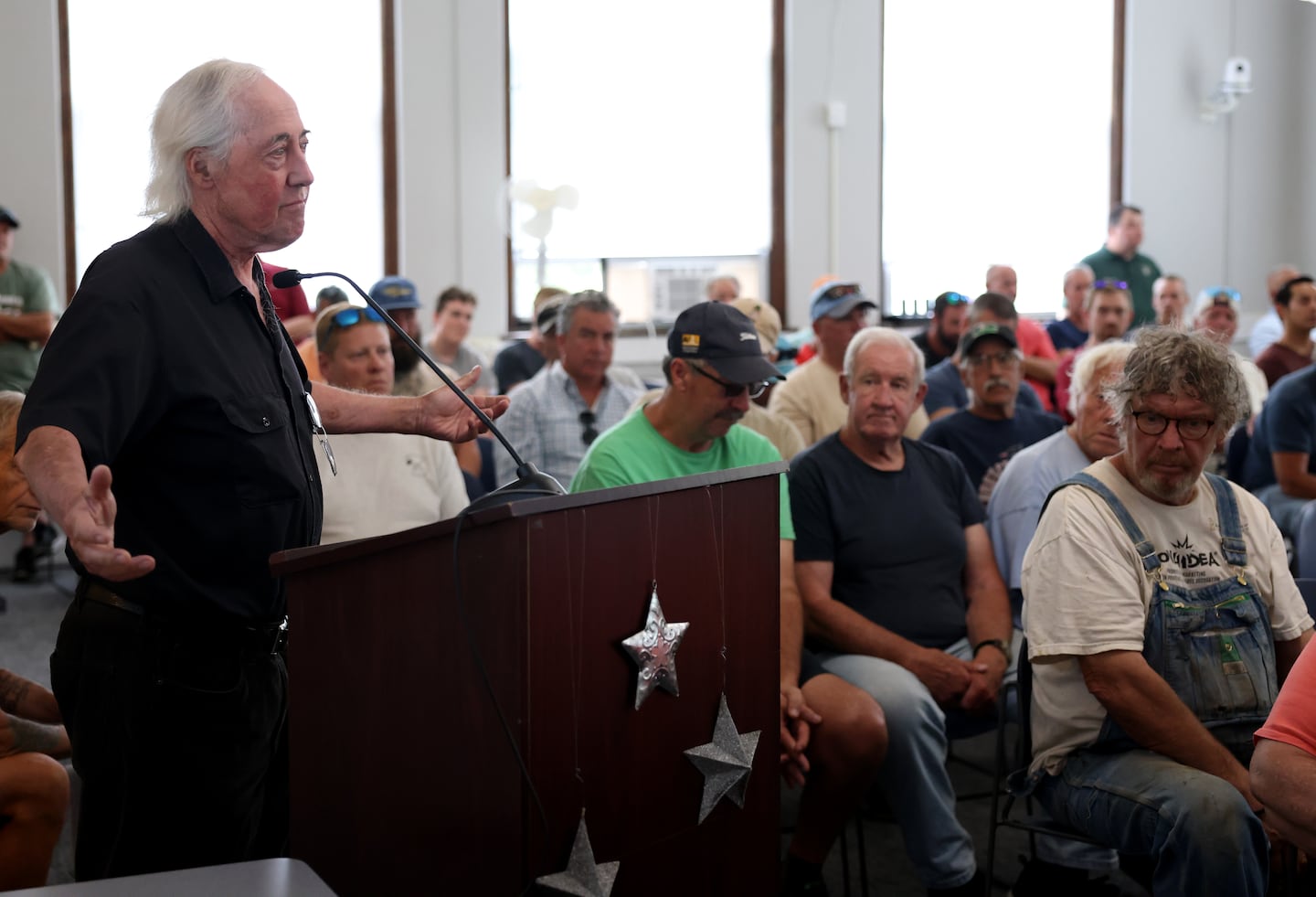 Michael Matheson, a clam digger, questioned officials during the meeting.Jessica Rinaldi/Globe Staff
And most profitable. Patrick Saunders, whose said his family has been clamming in Rowley for three centuries, said that while weather is always a factor for clammers — the flats close for five days after heavy rain — he could never remember anything like this man-made disaster.
“It’s so disappointing,” said Saunders, 33. “Around the 4th of July, prices go from $1.50 a pound to $3.50 or $4.00 a pound, so this is a huge blow to a way of life around here.”
The clammers that spoke at the meeting asked about the science, and potential compensation, but there was a general feeling of quiet helplessness about the entire matter. Everyone has had more than a week to process that this is a season that has been stolen by sewage.
“We get it,” said Daniel McKiernan, the director of the Massachusetts Division of Marine Fisheries. “The timing of this event is just awful.”
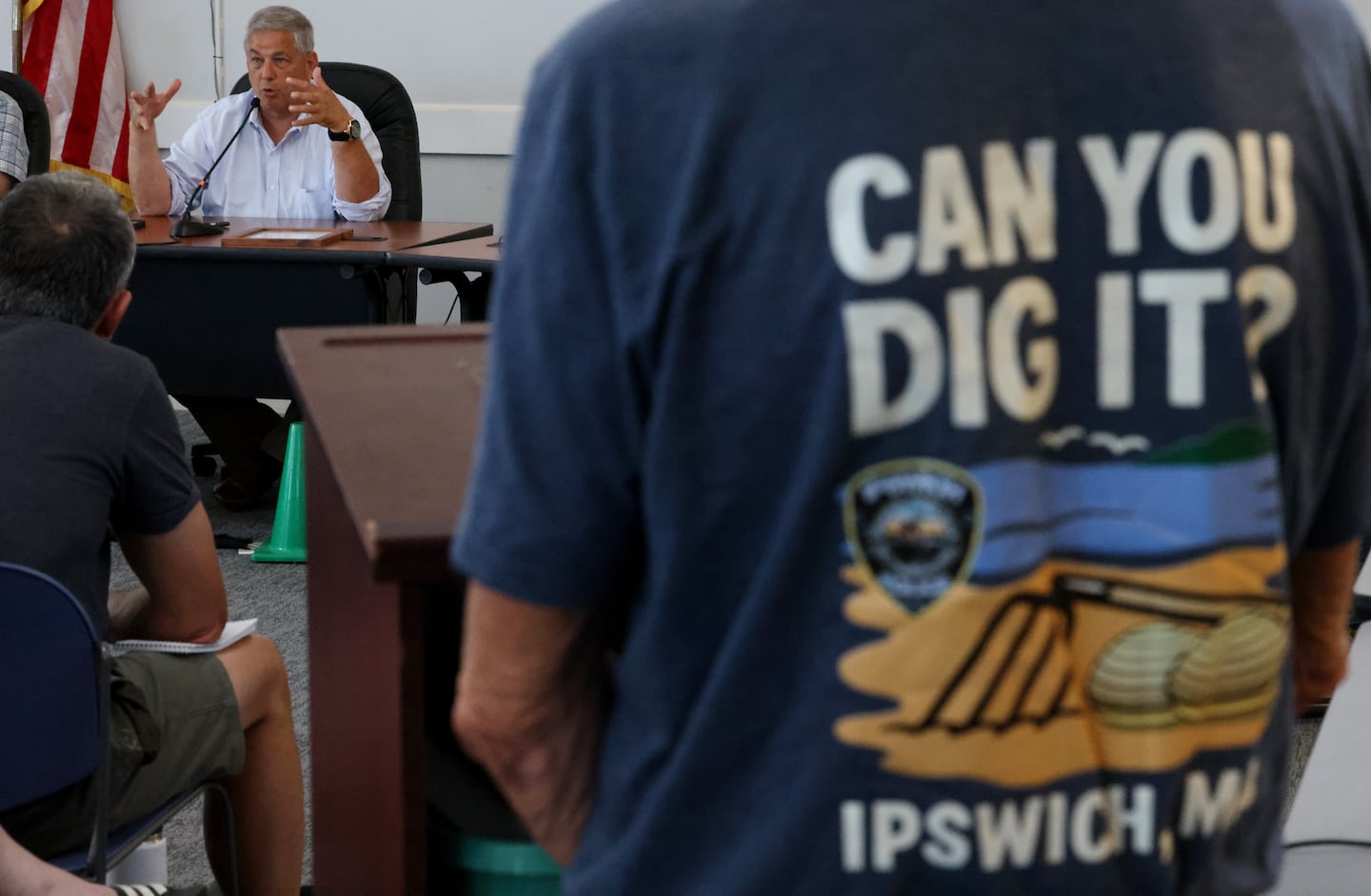 State Senator Bruce Tarr, left, spoke during the meeting.Jessica Rinaldi/Globe Staff
Billy Baker can be reached at billy.baker@globe.com. Follow him on Instagram @billy_baker.