
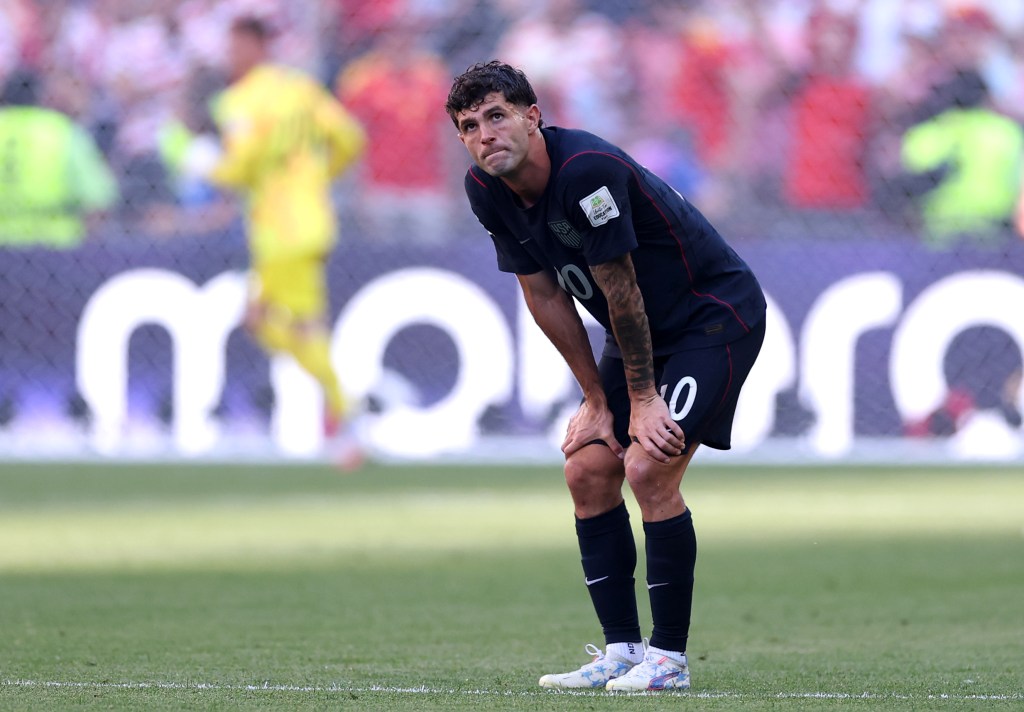
It started with energy, elation and hope. It ended in frustration, error and controversy.
The U.S. men’s national team played with confidence and captivated casuals and diehards alike for most of its 2026 FIFA World Cup run, but a 4-1 loss to Belgium in the Round of 16 on Monday night was a depressing and decrepit exit.
For a program that spent the last three decades-plus trying to inject soccer into the mainstream and prove it’s capable of battling with world powerhouses, this result did nothing to move the needle. In fact, when you look at the U.S.’s performances in knockout matches in isolation, they seem to be getting worse.
The Americans last reached the World Cup quarterfinals in 2002 by beating regional rivals Mexico. Since then, they’ve finished last in their group (2006), gone out in extra time in the Round of 16 (2010, 2014), failed to qualify for the tournament entirely (2018), and been eliminated in the Round of 16 in regulation (2022, 2026). Reaching the quarterfinals in 2002 is the U.S.’s best result since finishing third at the first World Cup in 1930; they failed to qualify from 1954-86, and a Round of 16 exit as hosts in 1994 is sandwiched between getting grouped in 1990 and 1998.
Four years ago in Qatar, the U.S. lost 3-1 to the Netherlands in the Round of 16. They looked better that day against the Dutch than Monday night, when the Belgians humbled the U.S. in front of a raucous crowd in Seattle. The homefield advantage was a nonfactor, as pretty much everything that could have gone wrong for the Americans did.
It was the way the U.S. lost that is most troublesome.
Despite all the talk of closing the gap with more established teams and having more American players at elite European clubs, the U.S. once again shot themselves in the foot in an elimination game. First came Belgium scoring inside nine minutes – the U.S. are 0-20-5 in World Cup games when going behind first – then came conceding just 61 seconds after Malik Tillman tied the game, followed by goalkeeper Matt Freese’s horrid howler early in the second half halting all momentum for a potential comeback.
Falling behind early and untimely lapses have doomed the U.S. in previous knockout round bids. Monday’s quagmire just featured more of the same.
Yet, for the players and the U.S. Soccer Federation, tomorrow is four years from now. The opportunity to host another World Cup is at least one generation of players away. Reaching beyond the quarterfinals will have to wait again.
But the gap between teams that reach the quarterfinals and those that don’t is not measured by winning just one more game in the Round of 16. Final score aside, the gulf in composure, tactics, mental toughness and class between the U.S. and Belgium was clear. And it would likely have been even greater had the U.S. faced fiercer opposition, like contenders France, England, Argentina or Spain.
That said, Belgium did not look too far behind that quartet Monday night. The Red Devils have been clamoring about their golden generation for over a decade, but its greatest talents – winger Jeremy Doku, lethal striker Romelu Lukaku and 35-year-old playmaking metronome Kevin De Bruyne – all started on the bench. It’s demoralizing when your opponent outclasses you despite having a metaphoric hand tied behind its back. And outclass the Americans is exactly what Belgium did, controlling the midfield, neutralizing their press and forcing horrendous errors.
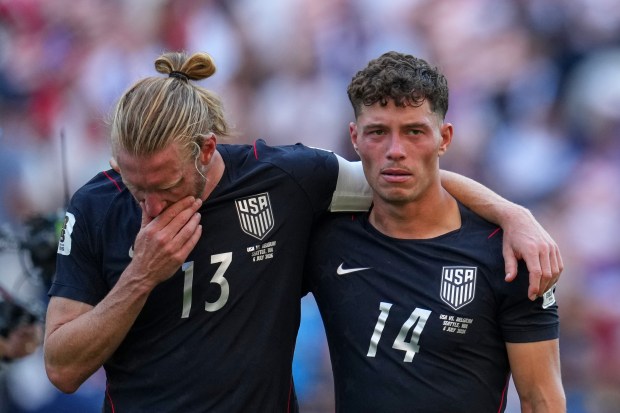 United States’ Sebastian Berhalter, right, and Tim Ream react after the United States lost a World Cup Round of 16 soccer match against Belgium in Seattle, Monday, July 6, 2026. (AP Photo/Abbie Parr)
In many ways, this looked like a whole new Belgium – or at minimum a major upgrade to the side that managed five points in the group stage via a single victory against New Zealand and ties against Egypt and Iran, what many would consider lesser opposition.
Hanging over the Round of 16 game was the FIFA Disciplinary Committee’s decision to delay the suspension of U.S. forward Folarin Balogun, who had been controversially red carded in the previous game, less than 48 hours before kickoff Monday. All that came with the decision – from President Donald Trump admitting to asking FIFA to investigate the suspension, to damage control by FIFA President Gianni Infantino, to Belgium’s football association being denied the clarity and the opportunity for a fair appeal – likely spurred the Belgians to make their best argument on the pitch.
The rules governing red cards are sacrosanct in the international game, and Belgium were joined by legions of federations, fans, pundits, heads of state and former referees in excoriating FIFA for the decision to let Balogun play. This controversy has legs beyond this tournament, and Infantino may need to mount a more vigorous defense when he’s up for re-election in 2027.
As for the U.S., Monday’s exit constitutes a missed opportunity – not due to being eliminated, but because of how they lost. Conversations are already underway about retaining Mauricio Pochettino as head coach, and few players on the current squad should feel secure about being part of the national team’s plans going forward.
In the next four years, new players will emerge and get tested during the qualification process for the 2030 FIFA World Cup, plus the 2028 Copa America and the 2027 and 2029 Concacaf Gold Cups. Maybe the next crop of players can fare better four years from now under World Cup lights.