
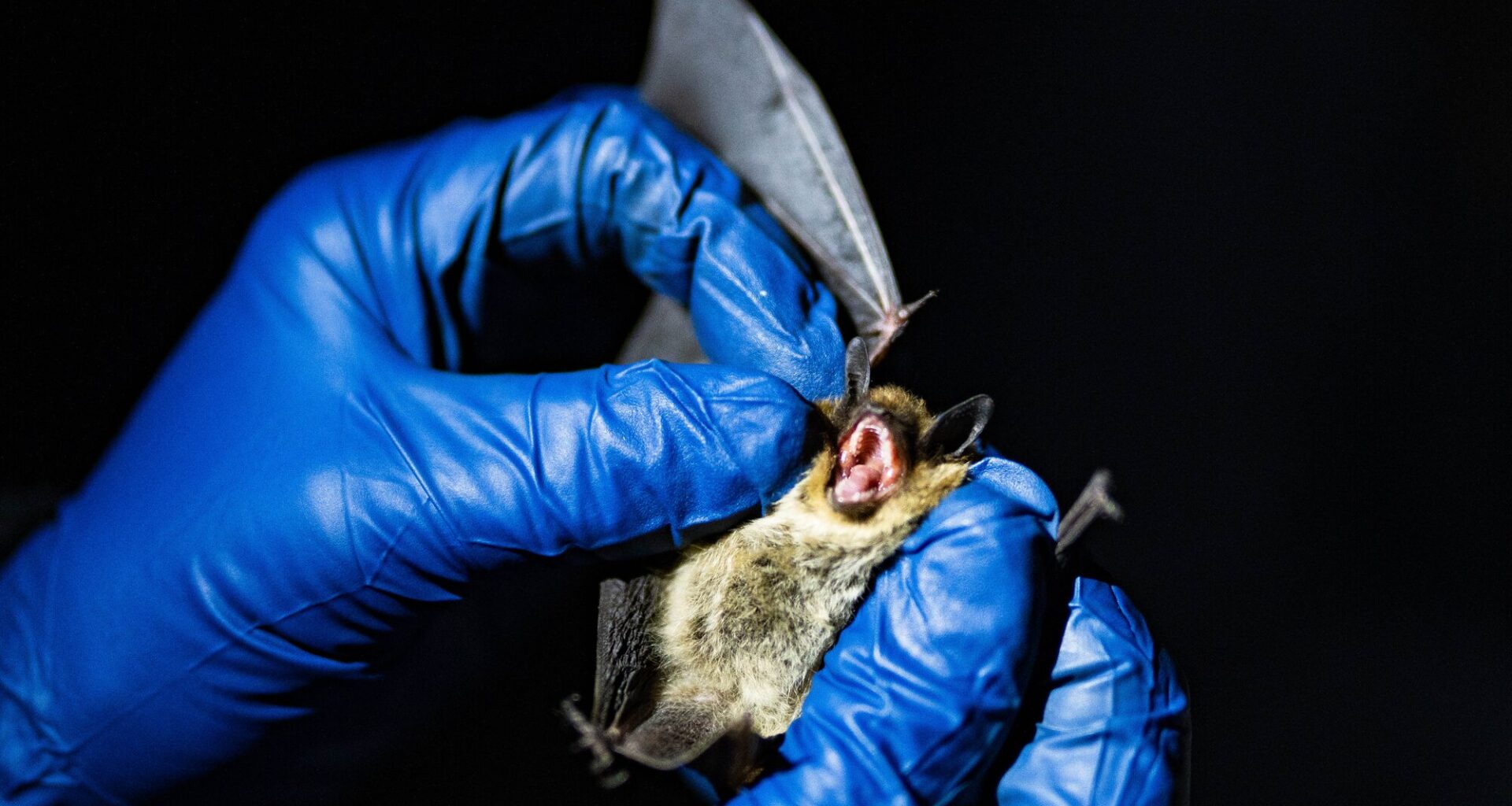
Some caves have indeed been closed to the public year-round, like the Premonition Cave in the Flat Tops Wilderness. Others are seasonally closed during hibernation. But all caves on National Forest land require registration, a permit and adherence to the Fish and Wildlife Service’s white-nose syndrome decontamination protocols.
“Hand in hand with that exploration goes conservation. I think when you love something so much, you want to see it perpetuate. You don’t want to see it loved to death,” Zedalis said. “Cavers love bats… I think we would do anything to make sure that we don’t lose the species.”
The same elusive nature that makes bats hard to find and survey in Colorado might just save them from white-nose syndrome, too.
Because bats in the state are naturally distributed over a wider area in smaller groups, the disease might not spread as quickly to as many bats. Researchers are hopeful that the outbreak won’t be as severe in the West, where the warmer and drier climate is less friendly to white-nose syndrome. The slower spread could give bats the chance to develop immunity to the disease.
“The fungus really likes a sweet spot of temperatures and humidities to grow in and back East, the caves match those perfectly. But out West, a lot of the roosts that our bats use don’t really match those profiles perfectly. And so it’s possible that just the ecology of the Western bats will be enough to maybe help them, but we’re going to need time to see if that plays out or not,” Neubaum said.
The USGS National Wildlife Health Lab has also developed a vaccine that researchers have begun deploying among bats.
Comparing the apparent rates of sick bats after white-nose syndrome reached the Northeast to Colorado, it appears possible that the spread may be slower out West.
There is no official tally of total bats infected with white-nose syndrome in the state, but Neubaum estimated that the total number of confirmed cases of the fungus to be in the couple hundred. Some bat populations out East had already been decimated within four years of the arrival of Pseudogymnoascus destructans. Colorado’s outbreak could be worse than is known, though, because of the difficulty surveying populations.
Given that Colorado’s bat species are vulnerable to white-nose syndrome, it’s possible that there will be population declines, and because bats only have one pup per year, any species regrowth would take a long time.
Any declines in Colorado’s bat populations could have implications for the state’s $47 billion agriculture industry, to which bats contribute a huge amount of pest control. Nationwide, it’s estimated that bats save agricultural producers at least $4 billion annually.
A single, nursing female little brown bat can eat up to 4,500 insects in a single night.
“Worst-case scenario, we could have 10 species [that] need to be listed on the Endangered Species Act…or that they may even go extinct,” Neubaum said. “We’re hopeful that our bats will develop that resistance too over time. It’s really just a question of how much their populations decline before that occurs.”