 Iran has been trying to assert control over the Strait of Hormuz – how have ships been getting through?published at 19:10 BST 8 July
19:10 BST 8 July
By Thomas Copeland
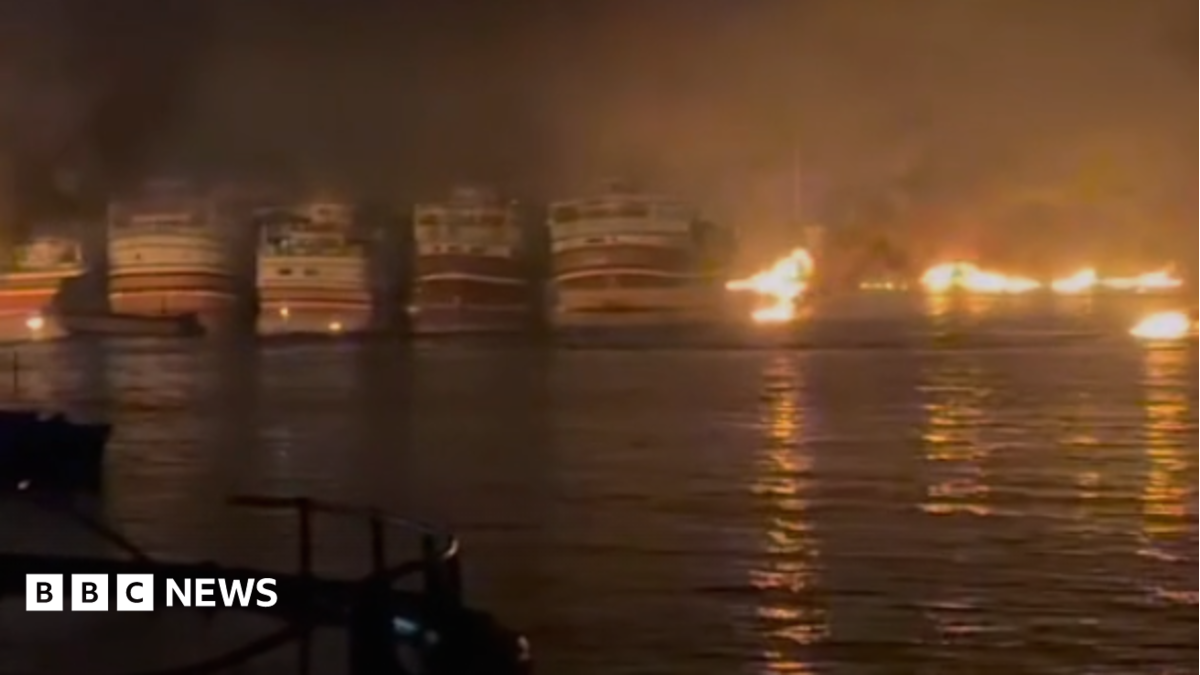
As a reminder, Tuesday’s US strikes on Iran followed attacks by Iran on three tankers in the Strait of Hormuz.
Iran has been trying to assert control over the Strait of Hormuz and has demanded that ships take a government-approved route.
Since a deal to end the war with the US was signed on 17 June, Iran has been blamed for five strikes on ships using other routes instead.
This includes a route recommended by the US through Omani waters and also an International Maritime Organization lane through the middle of the strait.
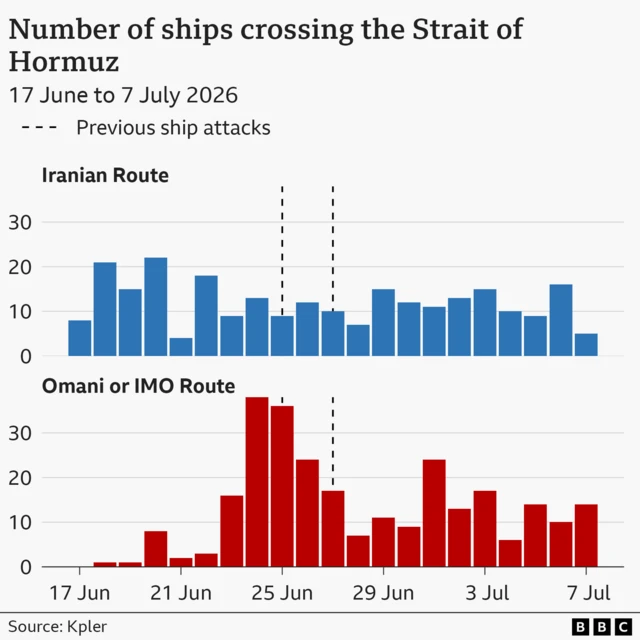
The numbers of ships carrying cargo, oil or gas through these non-Iranian routes steadily grew to a peak of 38 on 24 June, according to data from maritime intelligence firm Kpler.
Then Iran attacked two ships and traffic through the non-Iranian routes slumped.
But these transits have continued at a lower level, despite Iran’s threats, averaging about 13 a day between 30 June and 7 July.
We’ll be keeping a close eye on the data to see what impact yesterday’s three ship attacks will have.