
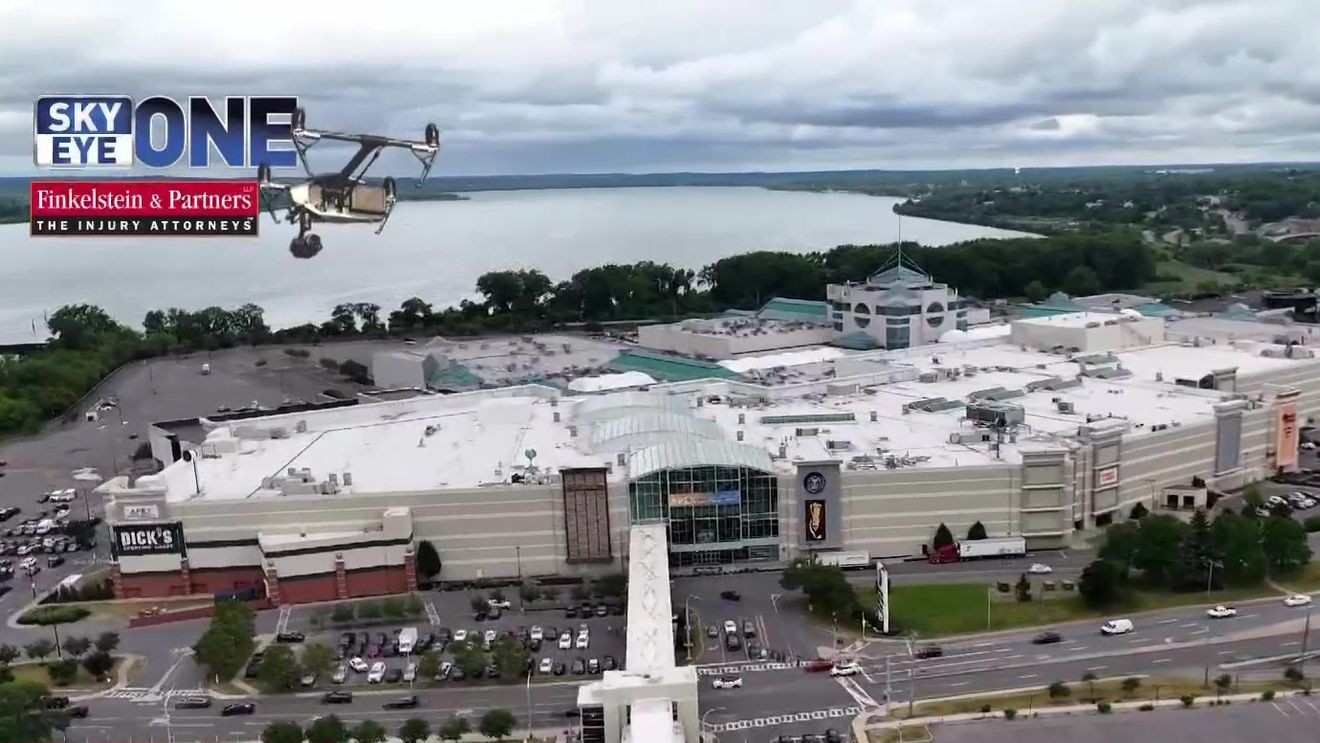
SYRACUSE, N.Y. — When Destiny USA first opened, it was described as “bigger, better and newer.” The Central New York crowd descended upon the Carousel Mall on its opening day. CNY Central was live inside Carousel Mall on its chaotic opening day:
All roads lead to carousel,” then-NBC3/CNY Central Anchor John Nicholson said. “Like a giant magnet, the mall is pulling people in.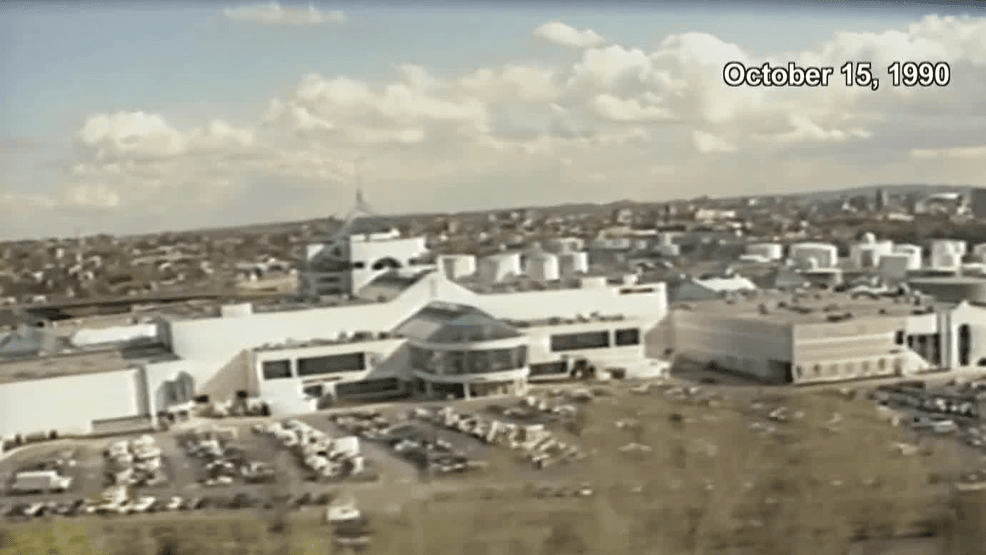
Then Carousel mall on its opening day: October 15, 1990. (Photo by CNY Central)
“Few people thought it was for real,” said then-investigative reporter Jim Kenyon. “But developer Robert Congel made believers out of a lot of people.”
Looking back, the mall was not just “a mall.” It completely changed how Syracuse’s Inner Harbor area would develop. “It is a part of this larger story of the revitalization of the city that we’re still working through now,” OHA Historian Bob Searing said.
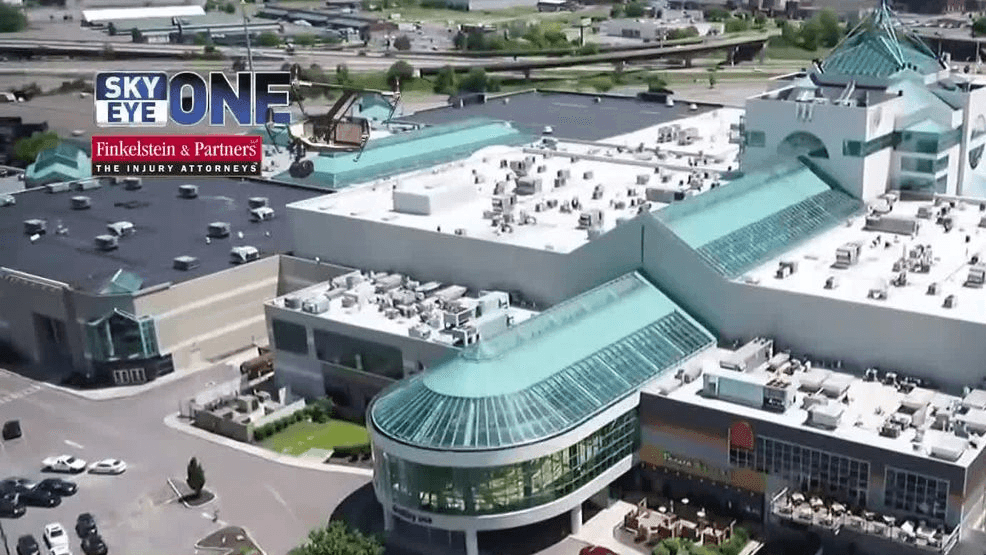
Destiny USA now. (Photo by CNY Central)
New York State’s largest mall tells a different story in 2026, now in serious financial trouble.
Facing more than $730 million in debt, the mall has three options:
Settle out of court,Chapter 11 bankruptcy,Or keep it alive for now, with hopes that a company like Micron could breathe new life into the mall.
That $730M in debt is made up of two parts:
About $483M in mortgage loansAbout $250M in PILOT (payment in lieu of tax) bondsOption one: Settle out of court
The mall’s owner, Pyramid Management Group and a financial servicer are now attempting to sell part of the debt. Prior to the sale, Pyramid was offered a deal: pay $70M of the $483M in mortgage loans and the entirety of that $483M (then around $464M) would disappear.
That plan would fail in December 2025. Pyramid claimed they could not refinance their bonds to come up with the money needed.
This is a very complex debt structure.
Syracuse Professor of Finance Erasmo Giambona says he has never seen a debt structure with so many parties involved.
“We know there was a failed attempt in December, so one could think you could revisit that attempt,” Giambona explained. “Bring the numbers down, where the CNBS holders actually receive less than that 70.5 million dollars. And this could potentially be reorganized out of court.”
Now for the question on many Central New Yorkers’ minds: will the mall go dark? Probably not. That scenario would threaten Syracuse’s economy given that annually, about $280M is spent at the mall.
Option two: Chapter 11 bankruptcyOne could potentially foresee Chapter 11 bankruptcy.
Giambona says the court process could mean around $30M in administrative and legal fees. It is important to know that Chapter 11 does not necessarily mean the property will be liquidated. Instead, the bankruptcy court acknowledges that the parties will not be able to settle out of court. That is a process that could hurt some creditors and may force the mall to change hands. “It could take years,” Giambona explained.
Decades of tax breaks and now questionable debt management leave some wondering if the mall is doomed to fail.
Now, you know the thing that concerns me is that you have I feel like people rooting for the mall to fail. And I don’t understand that impulse.
Be it in court or out of court, the mall’s debt needs to be resolved; but actually growing it into the regional economic engine many hoped it would be might take an outside force (and option three): Micron.
Option three: Micron revitalizes the area
There’s also a reasonable case to be made that Micron could save the mall. An economic engine bringing thousands of workers to a community ready to expand just might revive Destiny USA in ways we could never even imagine.
“Hopefully we’ll see some sort of sophisticated investor with an understanding of real estate,” Giambona said. “One that could come in and leverage this sort of property in connection to what we are observing with Micron coming to town and an economic expansion of the area.”