
TAHLEQUAH, Okla. –
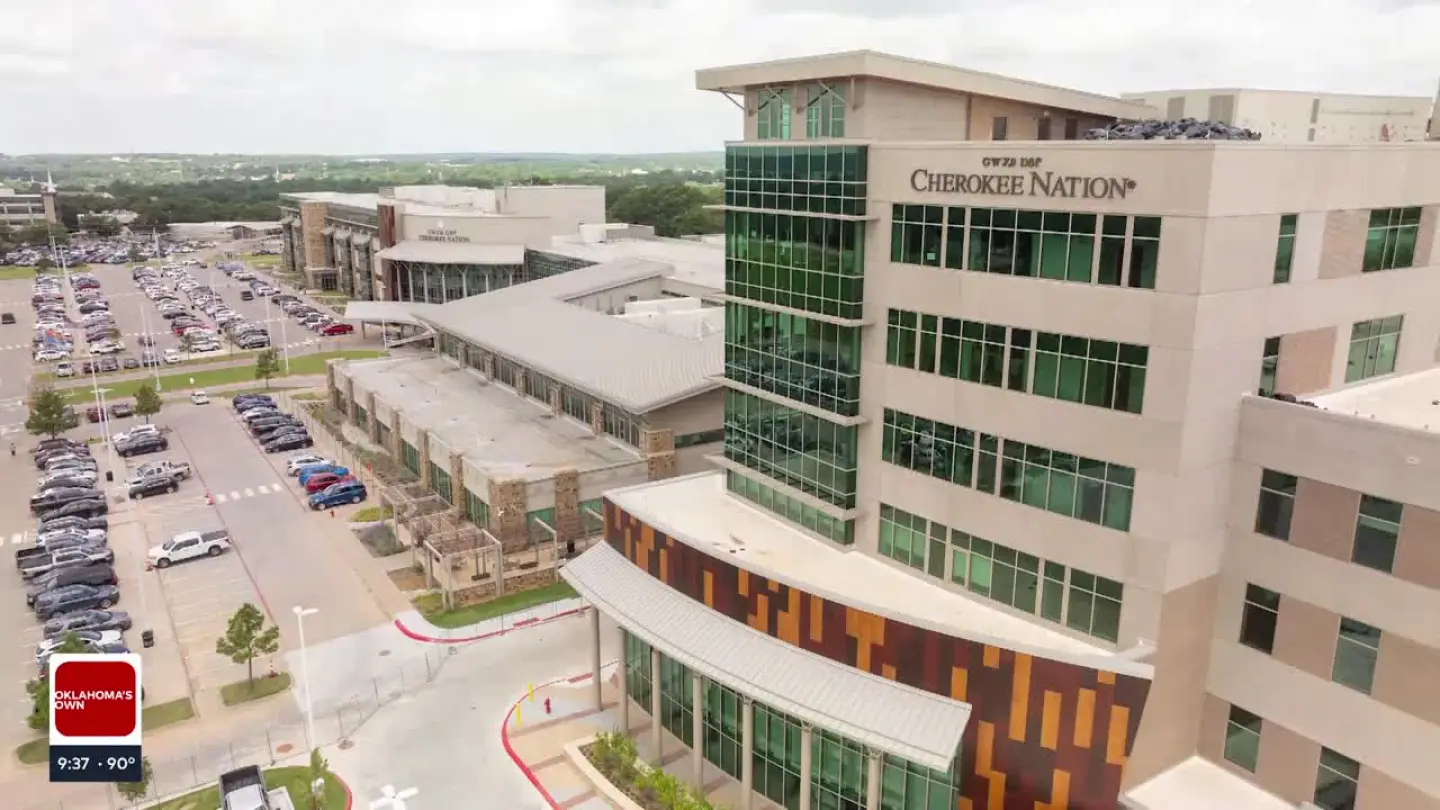
The Cherokee Nation celebrated the completion of a new $470 million W.W. Hastings Hospital in Tahlequah, after three years of construction on the new cornerstone of the Cherokee healthcare system.
The new hospital has 127 beds, adding neonatal intensive care, an expanded emergency room and surgery center, a catheterization lab, with nuclear medicine to be added soon. The hospital has 700 employees, who will begin taking patients in the new building on Saturday at 6 a.m.
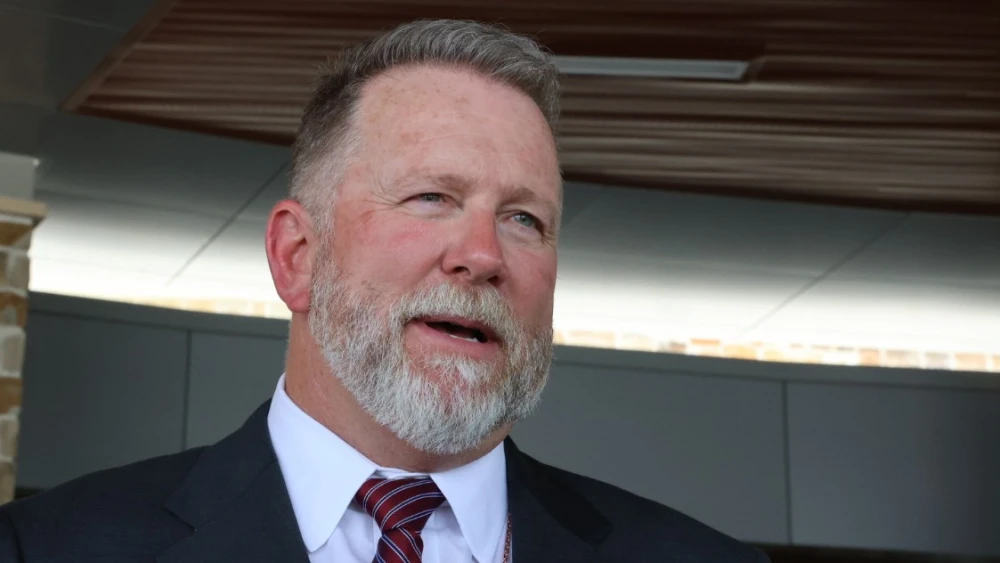
Dr. Stephen Jones, Cherokee Health Service CEO
PHOTO: Emory Bryan, News on 6
Dr. Stephen Jones, the CEO of Cherokee Health Services, said, “We’ve been working on this transition for over a year, practicing, and now it’s game time. So all this practice culminates to Saturday morning, 6 a.m. Patients start getting transferred. And that’s when these doors will start being open for business. And we’re looking so forward to it.”
Situated on the east end of the Cherokee Health Services campus, Hastings is the largest tribal hospital in the United States, anchoring a growing healthcare ecosystem that includes new clinics in outlying communities across the Cherokee Nation. The tribe will break ground in August on a new $400 million clinic in Claremore, after assuming operations of the former Indian Health Service facility there.
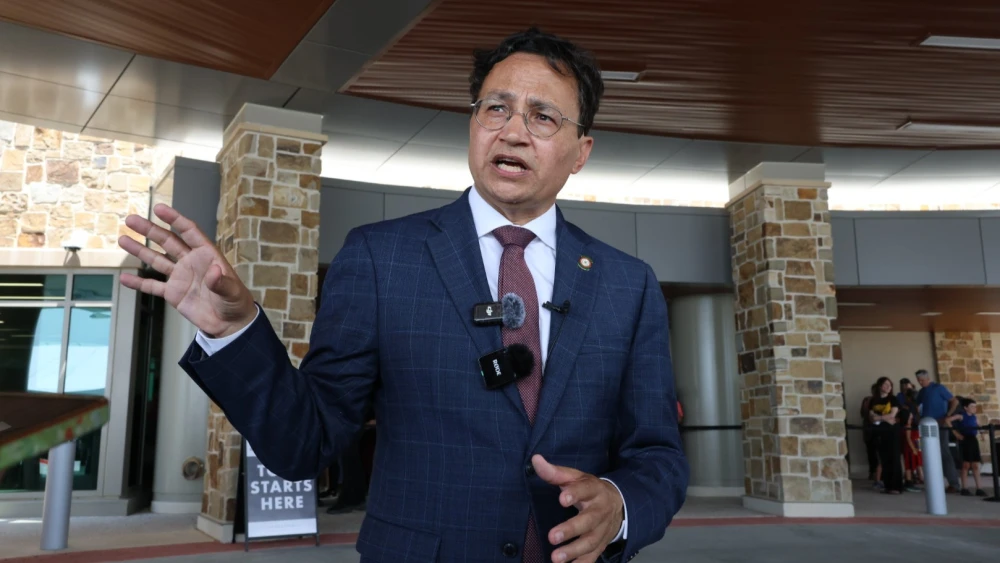
Cherokee Nation Principal Chief Chuck Hoskin, Jr. speaks to media at opening of W.W. Hastings Hospital
PHOTO: Emory Bryan, News on 6
Principal Chief Chuck Hoskin Jr. said the building was only possible because Cherokees carefully matched the surge of federal money for COVID relief with business income to build a healthcare system patients want to use—and thus help sustain it.
“We are operating the finest health system in Indian country. We are setting the standard,” he said. “The federal dollars don’t pay for the level of construction that you’re seeing. If we waited around for the federal government to take care of us, you wouldn’t see this campus. But we’re the Cherokee Nation. We’re very ambitious. And we’ve matched that ambition with our own resources.”
Dr. Jones said the expanded facility in Tahlequah would open up new opportunities for surgical and obstetric residencies.
“What we’re building here is a pipeline of workforce development,” he said. “We’ve already got a medical school. We’re bringing a nursing school here. We’re growing our workforce in the same process that we’re growing our capital improvements.”