
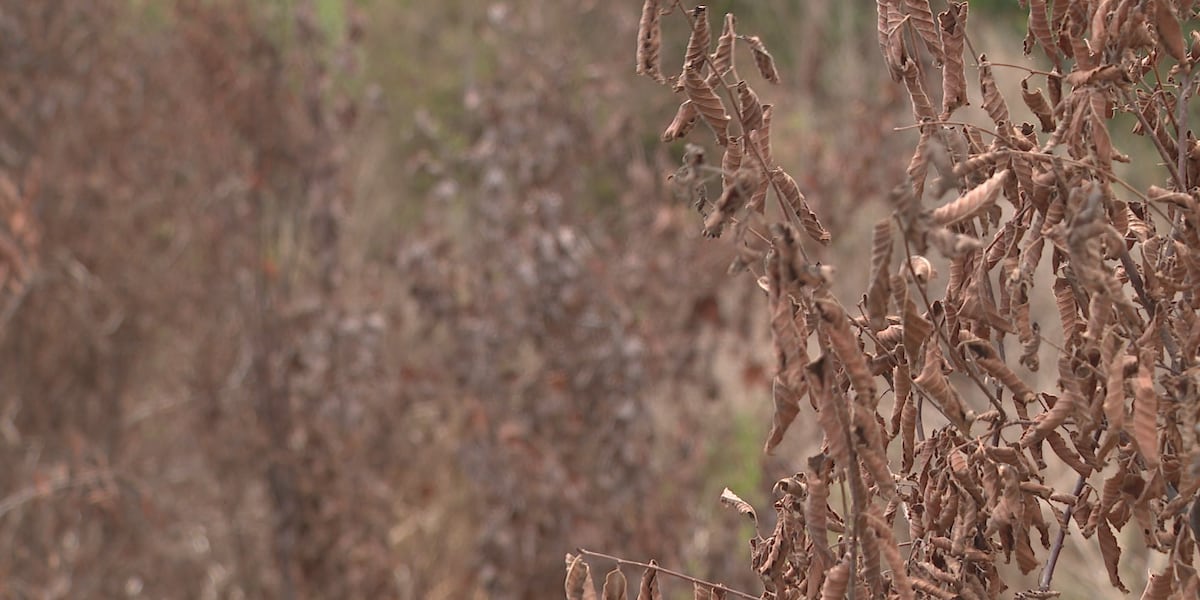
SOUTHEASTERN N.C. (WECT) – Drought conditions across southeastern North Carolina are worsening, with weeks of high heat and low rainfall drying out soil and vegetation, according to the U.S. Drought Monitor.
For the first time this century, parts of Brunswick and southern Columbus counties have reached the highest drought classification on record.
“For the first time this century, portions of Brunswick and Southern Columbus County are in level four drought,” said Gannon Medwick, WECT’s chief meteorologist. “That’s ‘exceptional drought’. That’s the highest level there is.”
Cape Fear Public Utility Authority said it is seeing a significant spike in water demand, up about 10% compared to last year, with irrigation identified as a major driver.
CFPUA is not currently under mandatory restrictions, but is asking customers to follow voluntary water conservation measures to protect essential services including fire protection and medical care.
“The most effective way that anyone can reduce their impact on overall water usage is with scheduling irrigation,” said CFPUA spokesperson Cammie Bellamy.
Bellamy added that small changes in outdoor water use can have a broad effect.
“Even just a little bit of help, especially with your outdoor water use, irrigation can have really big impacts across our system,” Bellamy said.
The utility is asking customers to follow these voluntary steps:
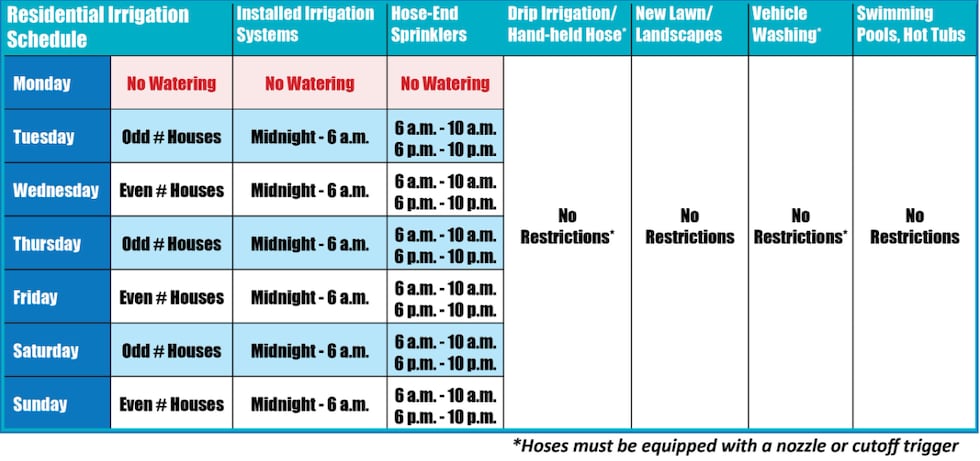 Stage 1 Voluntary Water Restrictions- CFPUA(CFPUA)
CFPUA said customers who do not follow voluntary restrictions could face mandatory ones if conditions continue to deteriorate. With little rain in the forecast, officials said conditions are likely to worsen before they improve.
Some customers in Brunswick County have already been hit with mandatory water restrictions. Brunswick County Public Utilities issued a stage two mandatory irrigation schedule last week, with the threat of a total lawn watering ban if the drought doesn’t ease.
Copyright 2026 WECT. All rights reserved.