
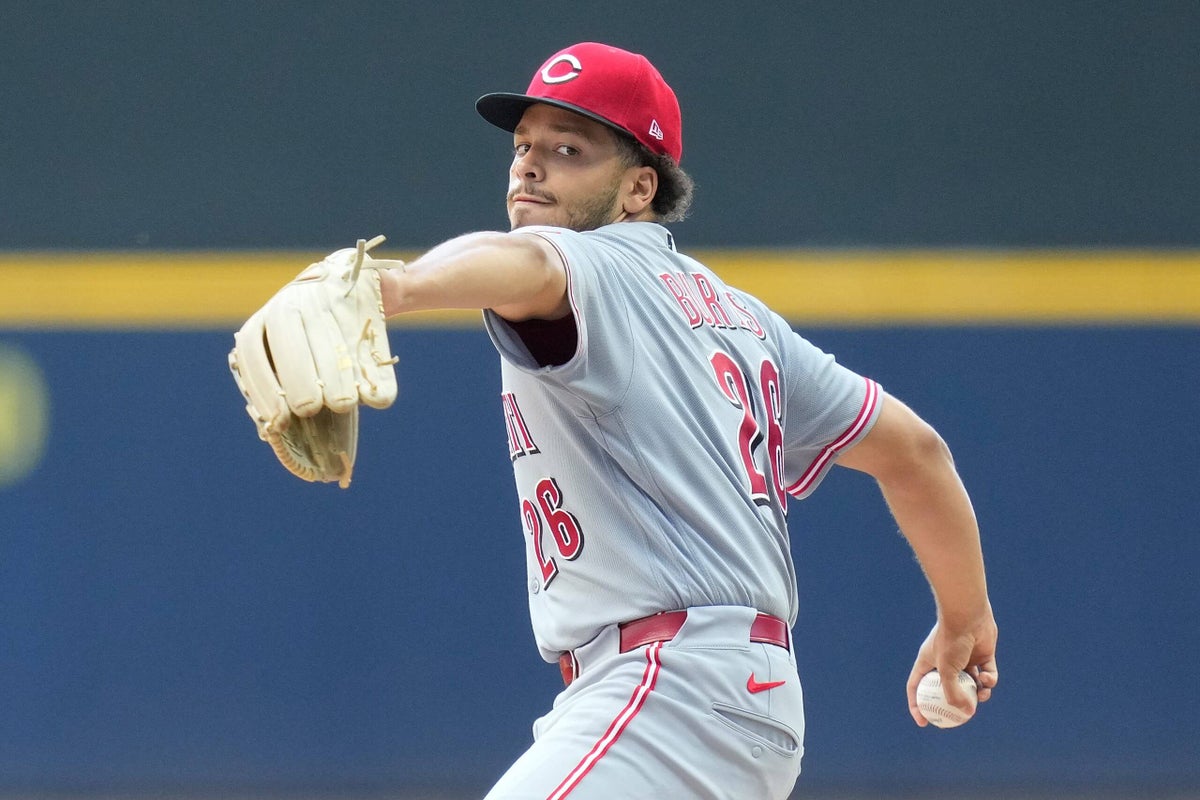
CINCINNATI — Two years ago, the choice seemed clear: With the second pick in the MLB Draft, the Cincinnati Reds would take whichever of the top two players the Cleveland Guardians didn’t take — Oregon State’s Travis Bazzana or Georgia’s Charlie Condon.
The Guardians selected Bazzana with the first pick, so the Reds took … Chase Burns?
Two years later, the selection looks more reasonable — Burns is an All-Star and one of the favorites for the National League Cy Young Award. Condon, taken with the third pick by the Colorado Rockies, will be in Philadelphia this weekend as part of the MLB Futures Game.
After struggling early in his pro career, Condon is having a breakout season in Triple-A, while Burns’ timeline was accelerated and he’s having a breakout season at the big-league level.
“For us, if you’ve got a chance to take a No. 1 starter, go after that guy,” Nick Krall, the Reds’ president of baseball operations, said. “We liked him where we (were drafting). Our scouts liked him. Our analytics department liked him. There was a chance to get a guy who was an anchor to your staff, and you can never have too many of those guys.”
Picking 18th this season, the Reds don’t have the advantage of heading into the draft this year knowing they’ll get one of two players.
“The differences between the players get smaller and smaller the further you go down on the draft board,” Joe Katuska, the team’s director of amateur scouting, said. “It will often turn into the types of players we generally go after and the type of players we feel we can develop, we tend to lean toward those guys.”
Regardless, Katuska said the process is pretty simple: The team will end up taking the player it thinks is the best fit, not necessarily a pitcher, but the team does value starting pitchers highly.
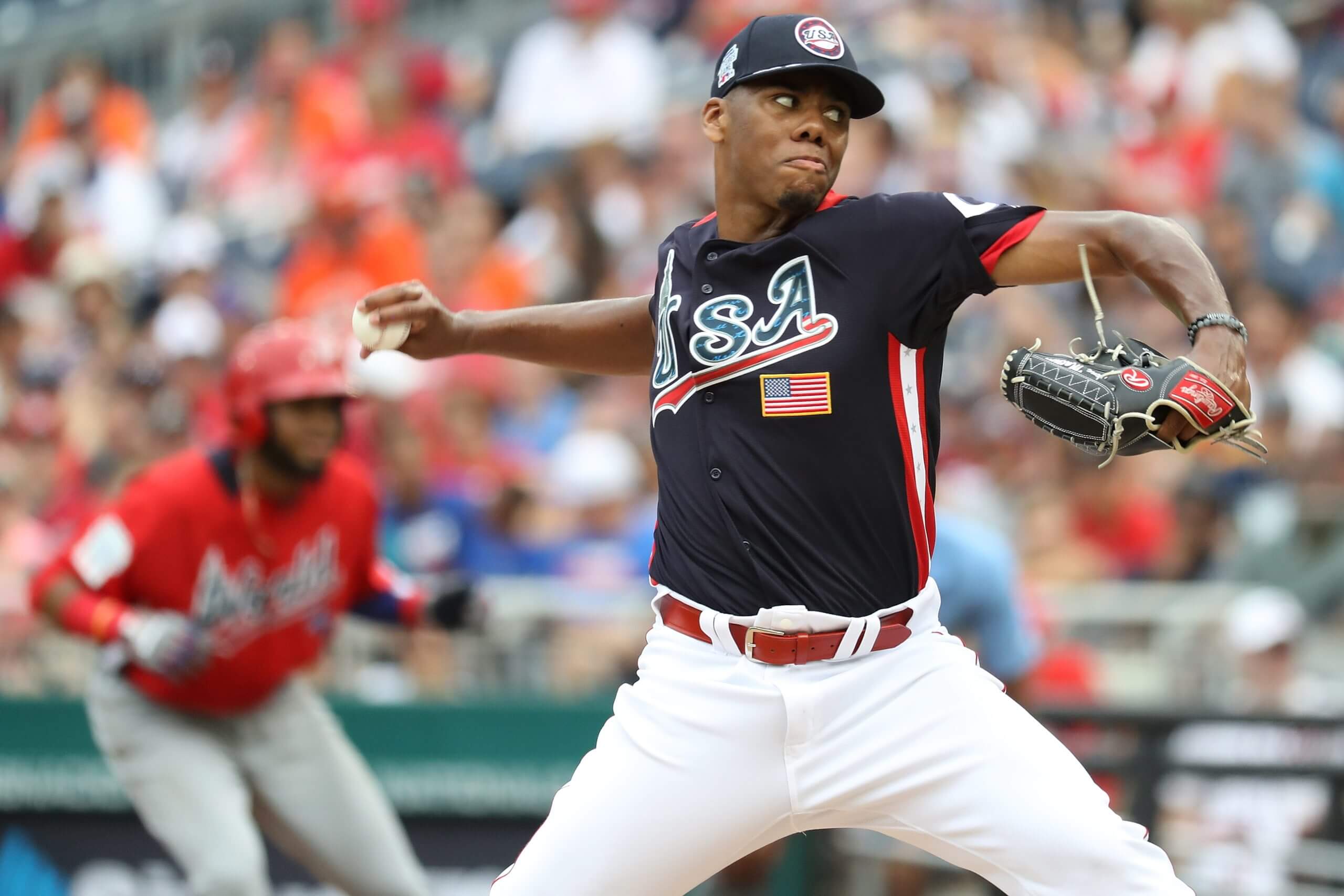
Hunter Greene pitches against the World Team during the All-Star Futures Game at Nationals Park on July 15, 2018. (Rob Carr / Getty Images)
“I think everyone knows our philosophy at this point — it’s starting pitching profiles, it’s up-the-middle (position players),” Katuska said. “That’s all the stuff we’re looking for — start with athletes and pure hitters that are playing up the middle and build it out from there. That doesn’t mean you have to come from one of those buckets.”
The Reds have built their rotation through the draft. In addition to Burns, Hunter Greene (2017 first round), Andrew Abbott (2021 second round), Nick Lodolo (2019 first round) and Rhett Lowder (2023 first round) were acquired through the draft. The only pitcher in the team’s regular rotation who wasn’t was Brady Singer, a first-round pick of the Kansas City Royals in 2018; the Reds traded their first-round pick from that year’s draft, Jonathan India, to Kansas City for Singer before the 2025 season.
The Reds took high school shortstop Steele Hall with the ninth pick last year after they took Burns and Lowder with their first pick the previous two seasons.
That said, the team took a pair of corner infielders — Cam Collier and Sal Stewart — in 2022, Katuska’s first year in his current role.
Collier was seen as one of the best hitters in the class, even though he was one of the youngest players in the draft. With the compensation pick for losing Nick Castellanos to free agency, the team took high school third baseman Stewart, who will join Burns at the All-Star Game in Philadelphia next week.
In the end, though, every draft is different. In 2016, the Reds had the second pick and took the best college hitter on the board, Nick Senzel. With the Reds picking second again in 2017, the Minnesota Twins passed on making Greene the first high school right-hander taken first, leaving him available for Cincinnati.
This year’s draft, Katuska said, is deep in high school pitching — not necessarily at the top, but from the middle of the first round through the second round and competitive balance rounds. In addition to the 18th pick, the Reds have four more picks on the first day: Nos. 58, 70, 94 and 122.
The Reds haven’t taken a high school pitcher with their first pick since Greene in 2017. The last two prep pitchers the Reds took with their first pick before Greene were Robert Stephenson (2011) and Homer Bailey (2004).
Just because the Reds haven’t taken a prep arm in the first round in nearly a decade, it doesn’t mean they won’t.
“If they are the most talented player there, we are comfortable taking that player,” Katuska said. “We have to show that we’ve done all the work on it, for sure. But if that player lines up in the position where we think they’re the best player we can get with that pick and it’s how we maximize the total draft class, then yes, we would take a high school pitcher with the first pick.”