
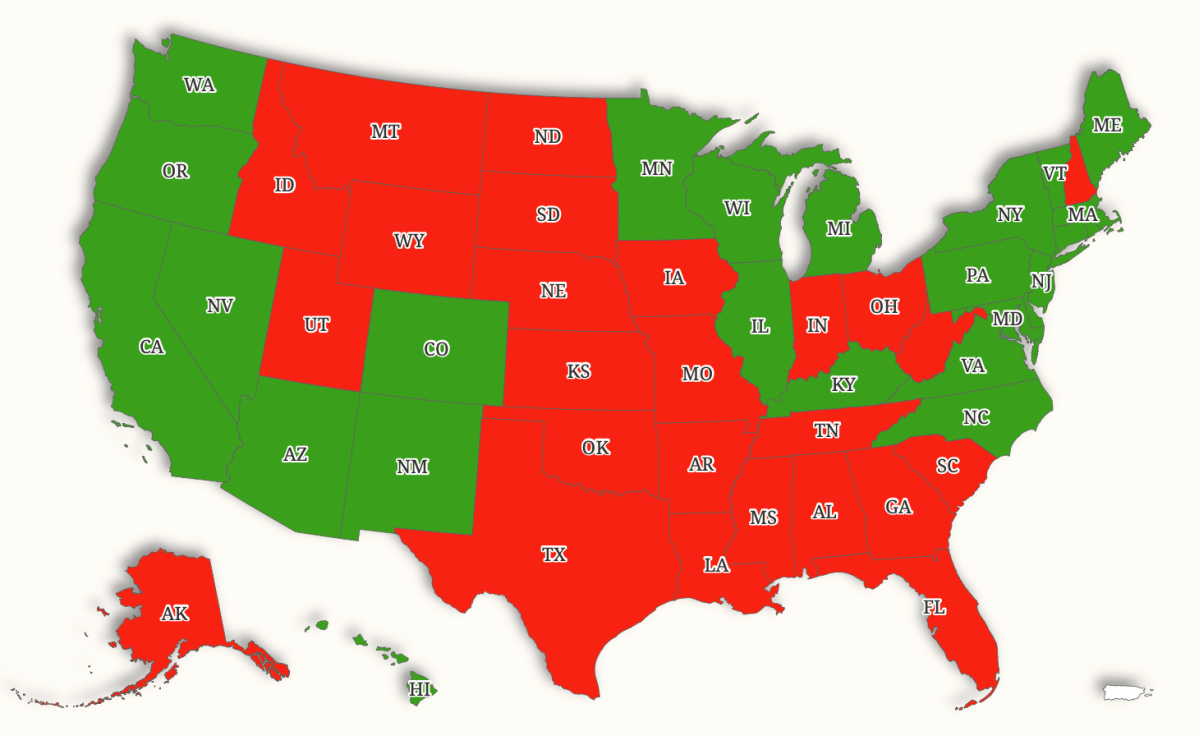
A coalition of 25 states and Washington, D.C., is suing the Trump administration over new Medicaid work requirements they say could cause eligible low-income Americans to lose health coverage and unlawfully limit protections for vulnerable recipients.
The legal challenge targets an interim final rule released by the Centers for Medicare & Medicaid Services (CMS) in June that would require many adults with Medicaid expansion coverage to prove they are working, studying, volunteering or completing other approved activities for at least 80 hours a month in order to keep their health insurance.
Why this map matters politically
The lawsuit highlights a familiar fault line in American politics: the tension between expanding access to government benefits and imposing conditions on their use.
Read More on News
What makes this challenge notable is that many of the plaintiff states are not simply Democratic strongholds but electoral bellwethers whose voters have swung between the parties in recent cycles.
Of the 26 jurisdictions involved in the lawsuit, 20 voted for Kamala Harris in 2024—California, Colorado, Connecticut, Delaware, the District of Columbia, Hawaii, Illinois, Maine, Maryland, Massachusetts, Michigan, Minnesota, New Jersey, New Mexico, New York, Oregon, Rhode Island, Vermont, Virginia and Washington—while six voted for Donald Trump: Arizona, Kentucky, Nevada, North Carolina, Pennsylvania and Wisconsin. Six of those states—Arizona, Michigan, Nevada, North Carolina, Pennsylvania and Wisconsin—are commonly classified as presidential battlegrounds
With several of the states involved expected to remain highly competitive in future federal elections, the battle over Medicaid work requirements could become an important proxy for a wider debate over the role of government, health care access and economic responsibility in the post-Trump era.
Why it matters to health coverage
The lawsuit, filed on June 29 in a Massachusetts federal court, asks the court to block parts of the rule. States argue the policy will create administrative obstacles that could cause eligible Americans to lose health coverage, even if they meet the work requirements. Newsweek has contacted the CMS for comment via email outside of regular working hours.
More than 67 million people across the U.S. are enrolled in Medicaid, the government health insurance program for people with low incomes and limited resources. The new CMS rule does not apply to every enrollee, but it could affect millions of adults who receive coverage through Medicaid expansion programs created under the Affordable Care Act.
The Trump administration’s move follows a broader tightening of work requirements across public assistance programs. Work requirements have long been part of federal benefit programs such as the Supplemental Nutrition Assistance Program (SNAP) and Temporary Assistance for Needy Families (TANF).
States Challenge New Eligibility Requirements
Under the rule, most states must have the new requirements in place by January 1, 2027. Certain Medicaid applicants and beneficiaries who are not enrolled in Medicare, and who receive coverage through the adult expansion group, will have to complete 80 hours per month of qualifying activities to enroll in Medicaid or maintain coverage.
States will be required to check whether beneficiaries meet the requirement both when they first apply for Medicaid and when they renew their coverage. If compliance cannot be verified, beneficiaries must be given a 30-day window to prove they qualify or show they are exempt before their coverage can be denied or terminated.
The lawsuit is led by California Attorney General Rob Bonta, Massachusetts Attorney General Andrea Joy Campbell, and New Jersey Attorney General Jennifer Davenport.
Full lists of states in the lawsuit:
Battleground states are Arizona, Michigan, Nevada, North Carolina, Pennsylvania and Wisconsin. Official 2024 presidential election results were compiled by the Federal Election Commission from certified state election returns.
The lawsuit argues that the new Medicaid work requirements will make it harder for some vulnerable people to keep their health coverage.
The states say the federal rule narrows exemptions for people with serious health conditions, including people with disabilities, cancer patients and those with complex medical needs. They argue these individuals could lose coverage because of new paperwork and reporting requirements, even if they are already working or should qualify for an exemption.
The lawsuit cites previous Medicaid work requirement programs, which found that administrative barriers caused some eligible people to lose coverage. The states argue the new rules could increase the number of uninsured people, put more pressure on hospitals and other healthcare providers, and increase emergency care costs.
The states also argue the rule creates administrative challenges for state Medicaid agencies, which must update systems, notify beneficiaries and implement the new requirements under tight deadlines. They say the latest CMS rule comes after states had already begun preparing for changes based on earlier guidance included in the One Big Beautiful Bill Act, which mandated the work requirements on its passage in July 2025, creating confusion and additional costs.
“The Trump Administration’s attempt to impose new, burdensome requirements on Medicaid recipients threatens access to healthcare for our most vulnerable residents and families,” said Massachusetts Attorney General Andrea Joy Campbell. “Congress made clear that people with serious medical conditions should not lose coverage. We are asking the court to block these unlawful provisions to protect Medicaid recipients and prevent needless strain on Massachusetts’ healthcare system.”
CMS Administrator Dr. Mehmet Oz said when the final rule was published in June that the requirements will help “Americans build skills and independence through work, education, job training, or community service, creating new opportunities for themselves and their families.”
Who Would Have to Meet the Work Requirements?
The rule applies to those who have Medicaid expansion coverage. It covers adults between the ages of 19 and 64 who are not entitled to or enrolled in Medicare and who receive Medicaid through the adult expansion category or certain demonstration programs that provide minimum essential coverage.
To keep their benefits, affected enrollees must complete at least 80 hours each month of approved activities. That can be done by working for at least 80 hours, performing the same amount of community service, participating in approved work programs, attending an educational program at least half-time, or combining those activities to reach the required total.
Who Is Exempt?
CMS said the work requirement will not apply to several categories of Medicaid recipients. These are:
Pregnant individuals and those eligible for postpartum Medicaid coverage.Former foster youth.American Indians and Alaska Natives.Veterans with a total disability rating.Parents, guardians, caregiver relatives, or family caregivers responsible for a child age 13 or younger.Caregivers for a disabled individual.People who are medically frail or whose health significantly limits their ability to comply.Individuals meeting TANF work requirements.Members of households receiving SNAP benefits who are subject to the program’s work requirements.Participants in drug or alcohol rehabilitation or treatment programs.Inmates of public institutions.