
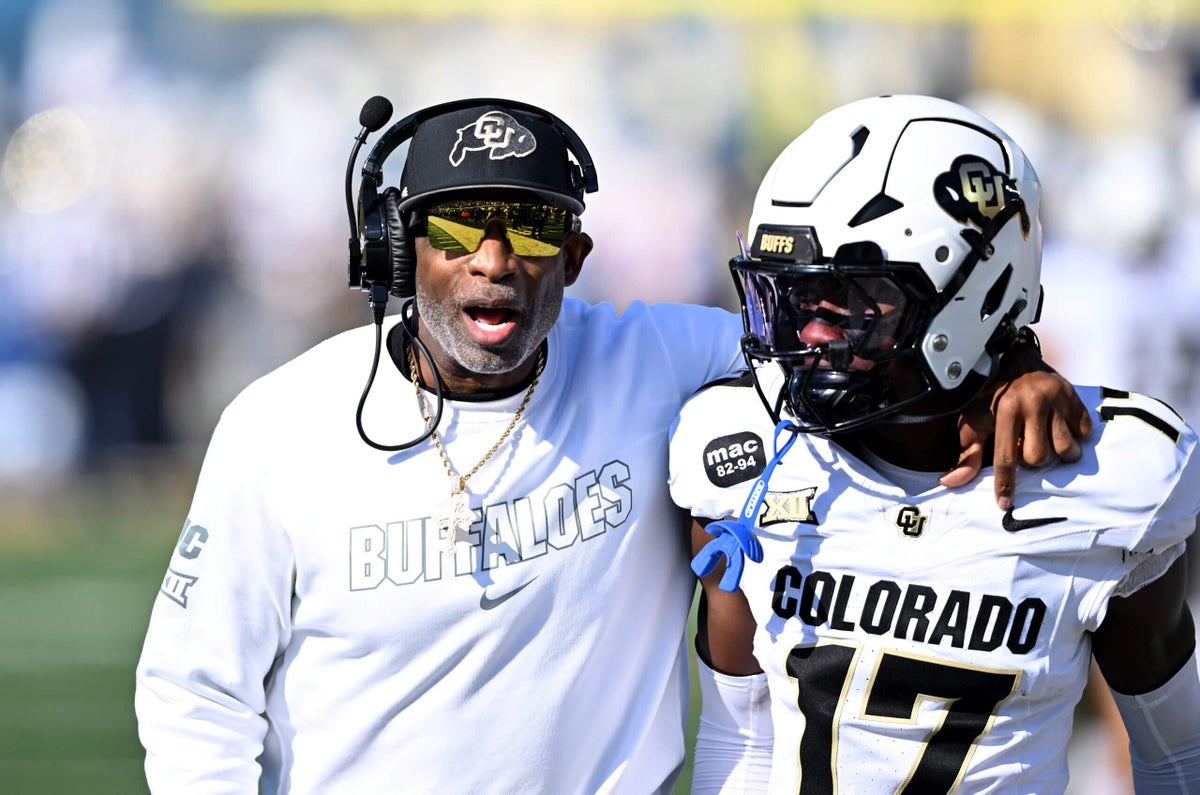
FRISCO, Texas — Deion Sanders sat quietly in the back of a makeshift office in the bowels of the Dallas Cowboys practice facility, listening proudly as his players fielded questions about where Colorado football stands entering the 2026 season. The half-dozen players Sanders chose to send to the Big 12’s media days in Dallas earlier this month were an interesting mix: four transfers from programs ranging from Notre Dame to Northwest Missouri State; a former top-50 high school recruit Sanders had signed; and a defensive back who came to Colorado as a walk-on.
It was the walk-on, Colorado native Ben Finneseth, whose words seemed to best capture the Buffaloes’ message as Sanders enters his fourth year, following another program reboot after a 3-9 season. Finneseth, who arrived at CU in 2021, has actually been part of the Colorado program longer than Sanders. He was a Buffs team captain for their lone win in the miserable 1-11 2022 season that preceded Sanders’ hiring.
Sanders has leaned heavily on the transfer portal since arriving in Boulder in December 2022, but this time the Buffs have opted to pursue more players with extensive playing experience at all levels of college football. The portal moves — which The Athletic ranked as the nation’s No. 18 transfer class — along with new playcallers on both sides of the ball, have folks at Colorado convinced the program is back on the upswing.
Finneseth noted that many of the new Buffs didn’t come from “blueblood” programs or necessarily carry a Power 4 pedigree.
“What I saw from this spring is a lot of guys that want to prove that they can play at this level,” Finneseth said. “They’re hungry. We brought in guys that are pissed off because they weren’t recruited out of high school. They came in with a competitiveness and a work ethic. The cohesive mindset of all the players is the biggest difference that we’ve had compared to last season.”
Sanders said the Buffs changed what they were looking for in the portal, placing more emphasis on leadership and on finding players who know how to bounce back from adversity.
The Buffs struggled mightily in 2025 after star QB Shedeur Sanders and Heisman Trophy-winning two-way phenom Travis Hunter left for the NFL. Colorado had finished in the Top 25 a season earlier for only the second time in the previous two decades, but almost as quickly as it had come together, it appeared to fall apart.
The 58-year-old Sanders also wasn’t his usual self last year. After battling bladder cancer and undergoing surgery, the Pro Football Hall of Famer was frail when he appeared at last year’s Big 12 media days. Weeks later, he said he had to wear special shorts under his pants as his body adapted to a new bladder, adding that he “depends on Depends” and that “if you see a port-a-potty on the sideline, it is real.” Sanders hadn’t been around his team for three months last offseason and lacked the energy or spark that had enabled him to transform listless programs at Jackson State and CU into winners.
“I got that thang back, I got that swagger back, I got that dog back, I got that charisma back,” Sanders said. “I was 15 pounds down, but I’m now ready. I’m back, baby! I cannot wait to get back on that sideline. I’m excited about this season.”
The Buffs, who lost seven of their last eight games last year, ranked No. 115 in yards per play on offense and No. 118 in defense. In addition to adding more than 60 new players to the roster, Sanders also has a new offensive coordinator in former Sacramento State head coach Brennan Marion and a new defensive coordinator in Chris Marve, a former DC at Virginia Tech, with Sanders calling it the best coaching staff he’s ever had in his career.
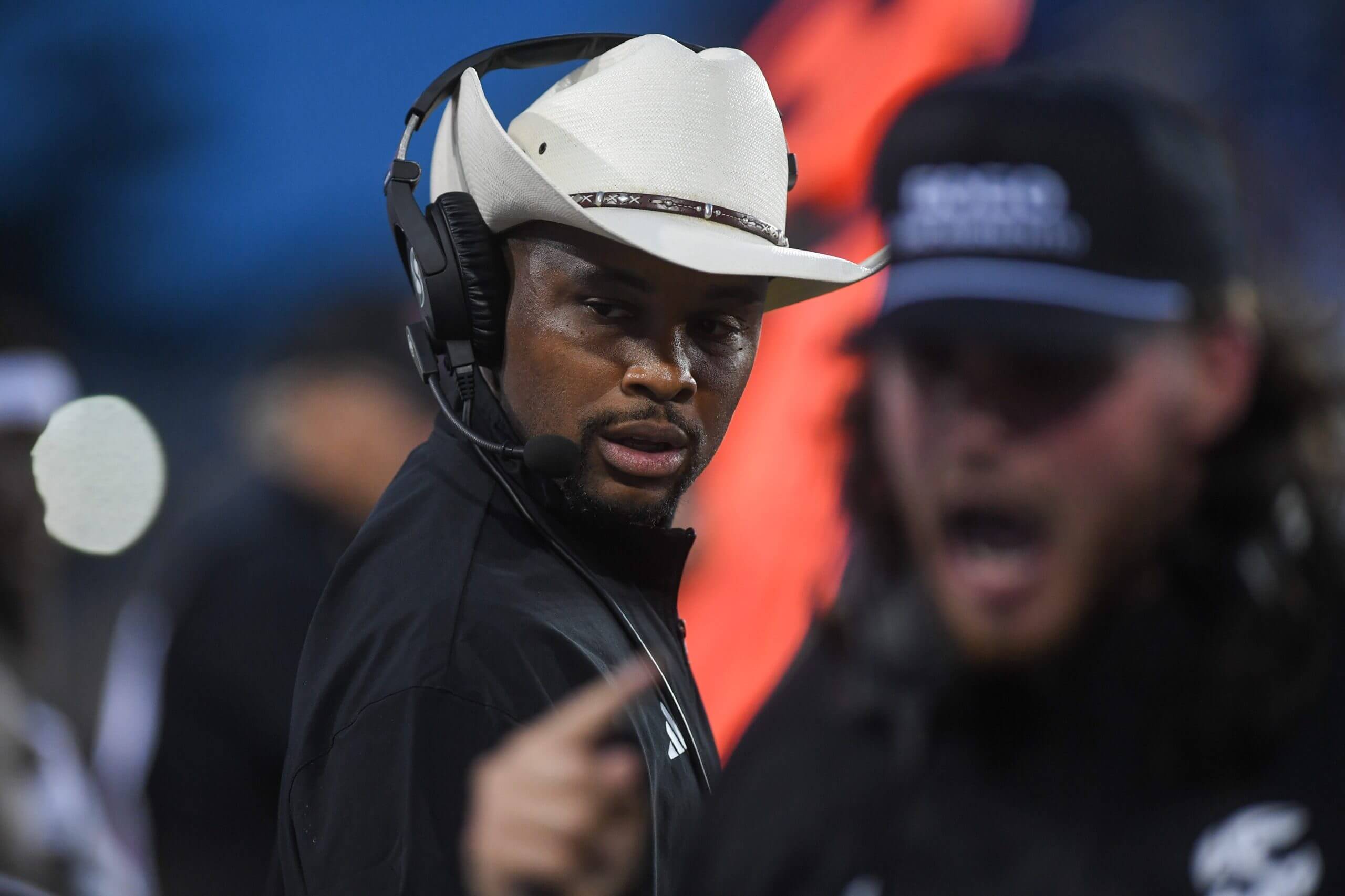
Brennan Marion created the “Go-Go” offense, which has had success at previous stops. (Samantha Laurey / Imagn Images)
The 38-year-old Marion is one of the most intriguing coordinator hires of the college football offseason. Prior to his one year at Sac State, where he helped the Hornets go from 3-9 to 7-5, he had a profound impact on Barry Odom’s turnaround at UNLV. His “Go-Go” offense broke school records for points per game, and it jumped from No. 88 the year before he arrived to No. 7 in the country in his second year. Sanders is hoping Marion can jolt what has been a woeful running game that finished dead last in the nation his first two seasons and ranked No. 104 last year.
The Go-Go scheme, which he cooked up back in his days running the offense at FCS programs William & Mary and Howard, relies on a two-back misdirection attack with lots of window dressing that has the triple-option coming off every run but also threatens the field vertically with the pass.
Before his time at UNLV, Marion spent one season in 2022 at Texas as wide receivers coach and passing game coordinator. That season, Texas’ second-to-last in the Big 12, gave him an interesting perspective on this turnaround job.
“Obviously, being in the Big 12 before when I was at Texas, I know other than Texas Tech, it hasn’t drastically changed as far as the players,” Marion told The Athletic. “Our O-line is better than what we had at Texas other than we don’t have (No. 9 pick in the 2025 draft) Kelvin Banks. Offensive line-wise, we’re better than we were at Texas. We’re bigger. We’re more physical. This will be the best offensive line that I’ve ever had.”
The Buffs did lose offensive tackle Jordan Seaton, who left for a lot more money to join LSU, but CU was able to spread some of the money it didn’t spend on the five-star recruit to four other experienced transfer tackles from the Big Ten, SEC and ACC, including Bo Hughley (Georgia), Jayven Richardson (Missouri), Leon Bell (Cal) and Taj White (Rutgers). In addition, CU added Ohio State transfer Jayvon McFadden, center Demetrius Hunter, who started 25 games for Houston, and guard Jose Soto, who started 12 games last year at Sac State.
Marion also said he feels like Colorado is about the same receiver-wise as what he had at Texas.
“I think we have four or five NFL receivers here,” he said.
Danny Scudero, a 5-9, 180-pound transfer from San Jose State, tore up the Mountain West last season, catching 88 passes for 1,291 yards and 10 TDs. “He’s super smart,” Marion said of the former outfielder who didn’t start playing football until his junior year of high school. “He’s a 4.5 guy, but he is really quick. He understands all the option routes, can play inside or outside and can run the ball out of the backfield.”
Kam Perry, another dynamic smaller receiver who put up huge numbers at the Group of 6 level, averaged 23 yards per catch on 44 receptions at Miami of Ohio, where he made first-team All-MAC. “He’s unguardable one-on-one,” Marion said.
Former Texas receiver DeAndre Moore, who started 18 games in three seasons with the Longhorns and caught 11 touchdowns, is probably the most polished receiver in the group.
The one major difference between what Marion had at Texas and what CU has now is at running back. “We don’t have a Bijan Robinson,” he said, “but we have guys that can definitely get the job done.”
The key to whether Sanders can get the Buffs back to being a bowl team — something that has happened only three times in the past 18 seasons — is whether they can get strong play from 18-year-old QB Julian Lewis, a four-star recruit who graduated high school a year early and struggled in limited action last season.
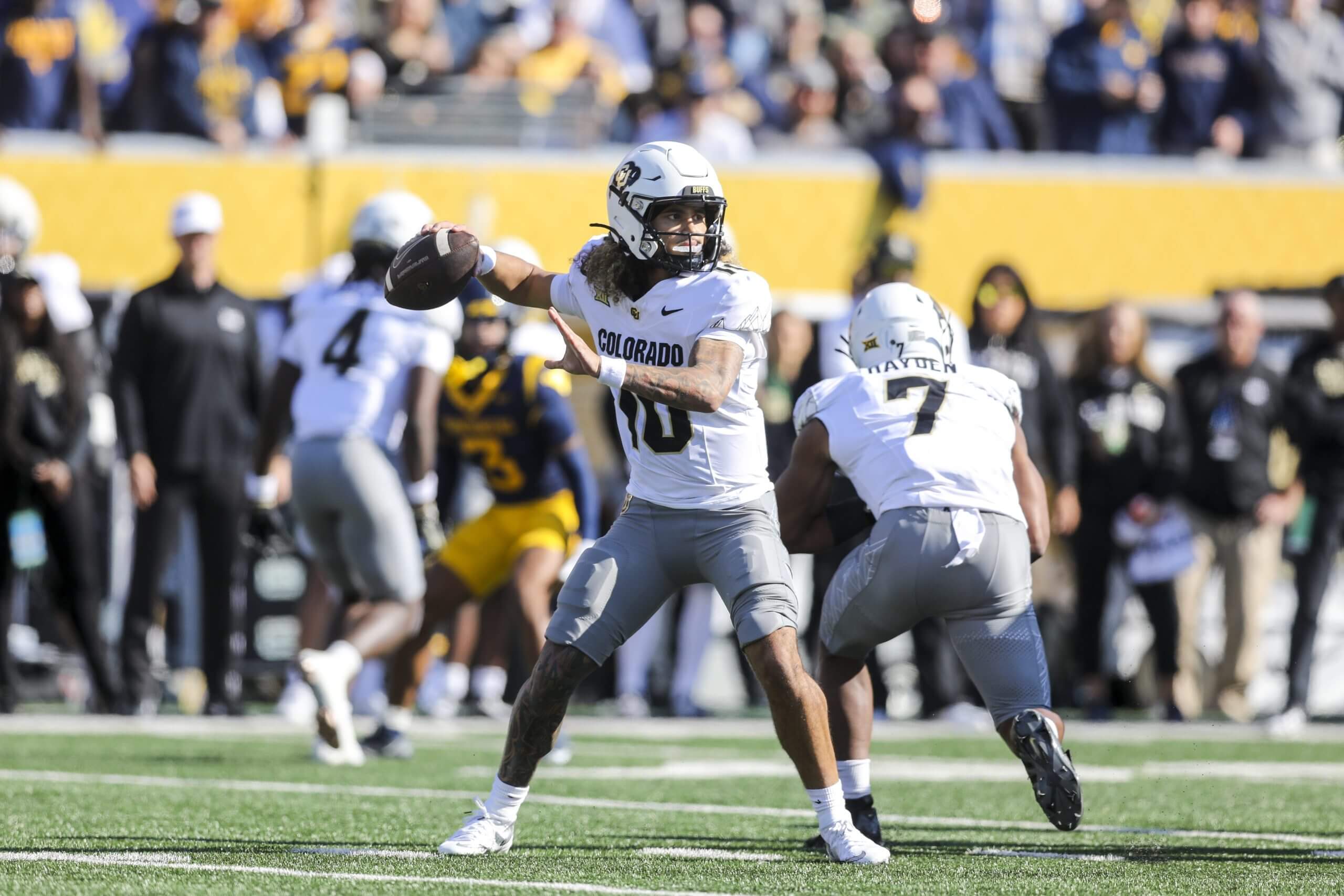
Julian Lewis will likely start for Colorado this season after playing in limited snaps the previous year. (Ben Queen / Imagn Images)
“JuJu is about at the same point where Quinn (Ewers) was at then (in his second year of college),” Marion said. “Obviously, he has to stay healthy but he reminds me of Quinn in terms of the arm talent and the personality. They’re very similar. He’s about 6-1, 185, not a big kid by any means. Moves well enough to get himself out of a jam, and he can make any throw. That dude has an NFL arm for sure. He can really throw the ball. We’ve seen him throw it off his back foot, where he couldn’t step up, and threw it 60 yards.”
Lewis likes the new system, he said. “It’s completely different from last year. It’s a lot more plays where you kind of know where to go before the play starts; coach Marion preaches the pre-snap stuff and you know where the ball is probably going to go,” but added that he probably won’t be running as much as Marion’s other QBs did in the Go-Go offense.
Colorado’s defense, worst in the Big 12 last season, went from leading the conference in sacks in 2024 with 39 to just 13 a year ago. Santana Hopper, a defensive tackle transfer from Tulane who had 10.5 TFLs last year, should be a big help, as should former New Mexico State DT Ezra Christiansen (11.5 TFLs). Linebacker Gideon ESPN Lampron (yes, ESPN is actually his middle name) proved to be a tackling machine at Bowling Green last year, making 119 stops to go with 17.5 TFLs, and also figures to help improve what was the country’s second-worst run defense.
Despite all the experience and productivity the Buffs added from other programs, the other Big 12 coaches weren’t that impressed. Colorado, along with Kansas, UCF and Iowa State, were the only teams in the league without a player voted onto the preseason all-conference team. It’s a dubious distinction that Sanders relishes.
“People are always going to have an opinion,” Sanders said. “If my kids and my coaches and our staff don’t understand who they are, we have a problem. Just because our guys were snubbed off a poll that’s probably not going to be consistent with the end of the season, we don’t give a darn. Our kids know who, what, when, where, and how they are. They know what they got to do and how they got to work. It just gives them that extra umph inside of ’em, and I’m thankful and appreciative of that.”