
SOUTH CAROLINA (WPDE) — July 13-19 is Snake Week, a time to celebrate and learn more about South Carolina’s legless locals.
South Carolina is home to 38 species of snakes, with only six considered venomous.
Snakes play an important role in maintaining balance in the ecosystem by serving as both predators and prey.
They help keep rodent populations under control, which can also reduce ticks that may carry diseases affecting people and pets, including Lyme disease and Alpha-gal syndrome.
Snakes also serve as a food source for a variety of birds, mammals and even other snakes.
Here is a list of all snakes found in South Carolina.
Non-Venomous: Eastern Worm SnakeScarlet SnakeNorth American RacerCoachwhipRing-necked SnakeMud SnakeRainbow SnakeRough Earth SnakeEastern Hog-nosed SnakeSouthern Hog-nosed SnakePrairie KingsnakeScarlet KingsnakeEastern KingsnakeEastern MilksnakeBlack Swamp SnakeGlossy SwampsnakePlain-bellied WatersnakeSouthern WatersnakeFlorida Green WatersnakeNorthern WatersnakeBrown WatersnakeRough GreensnakeRed CornsnakeEastern RatsnakeEastern Pine SnakeQueensnakePine Woods LittersnakeDekay’s BrownsnakeRed-bellied SnakeSoutheastern Crowned SnakeEastern RibbonsnakeCommon GartersnakeSmooth Earth SnakeVenomous:
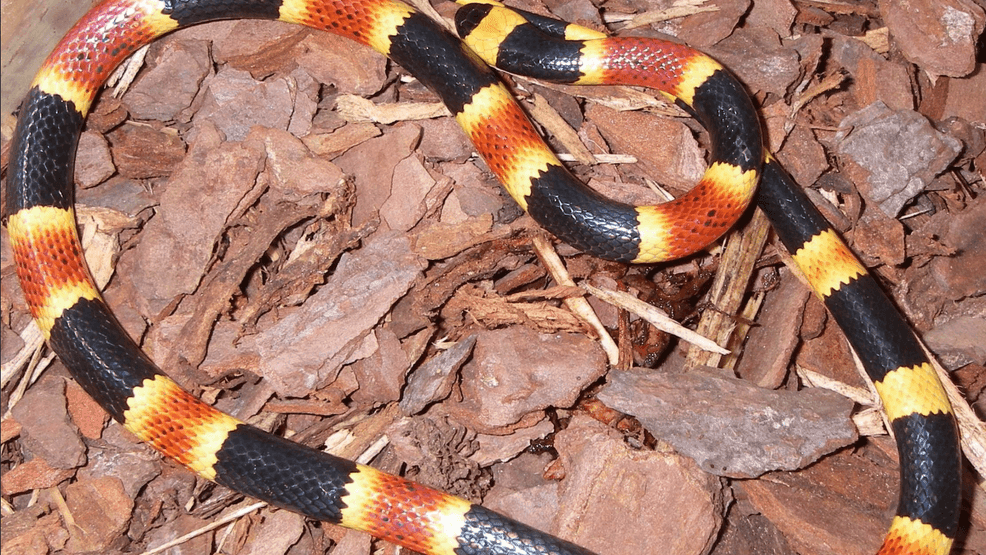
Eastern Coralsnake
Common in Georgetown, Charleston and Beaufort
This highly venomous snake is one of the most colorful in the Southeast. It typically grows 18–30 inches long and has distinctive red, yellow, and black bands. Its red bands are usually bordered by yellow, inspiring the rhyme, “red touches yellow, can kill a fellow.”
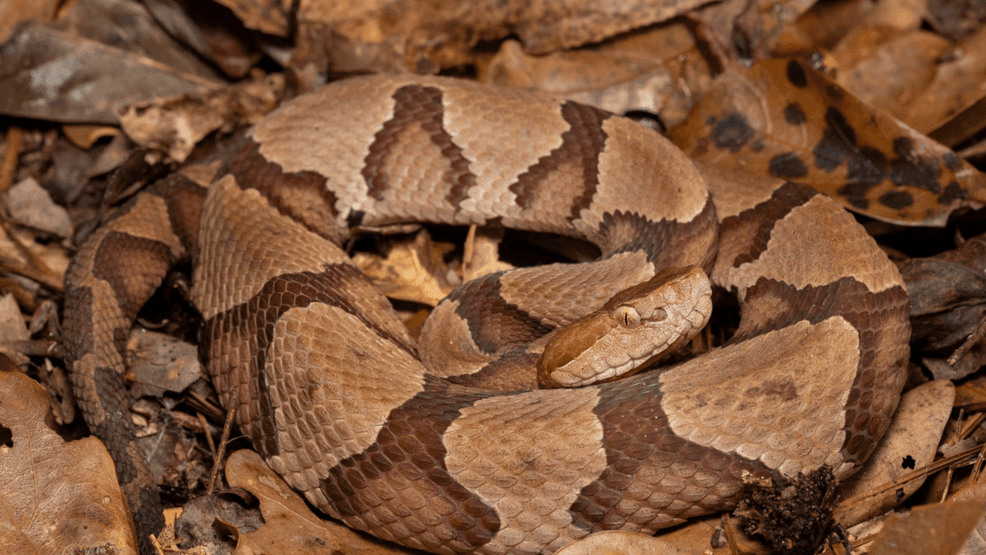
Eastern Copperhead
Copperheads are heavy-bodied venomous snakes that typically grow 20–40 inches long. They range from tan to dark brown and have distinctive hourglass-shaped bands and a broad, copper-colored triangular head. Copperheads also have heat-sensitive pits near their nostrils that help them detect warm objects. Copperheads are responsible for the highest number of venomous snake bites in South Carolina.
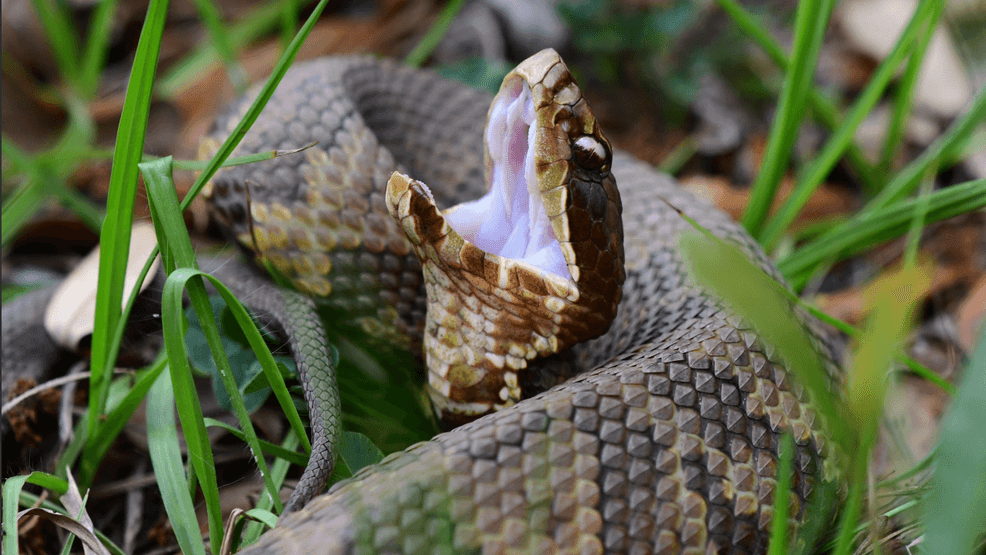
Northern Cottonmouth (Water Moccasins)
More common from the Midlands to the Coast
Cottonmouths, also known as water moccasins, are heavy-bodied venomous snakes that typically grow 24–48 inches long. Adults are usually dark brown or nearly black. They have a large, distinct head, a dark band through the eye, heat-sensing facial pits, and a bright white mouth that gives them their name. These snakes will rarely strike at the potential predator unless they are stepped on or grabbed.
Eastern Diamond-backed Rattlesnake
Common in Charleston, Berkeley, Colleton, Beaufort, Jasper, Hampton and Allendale
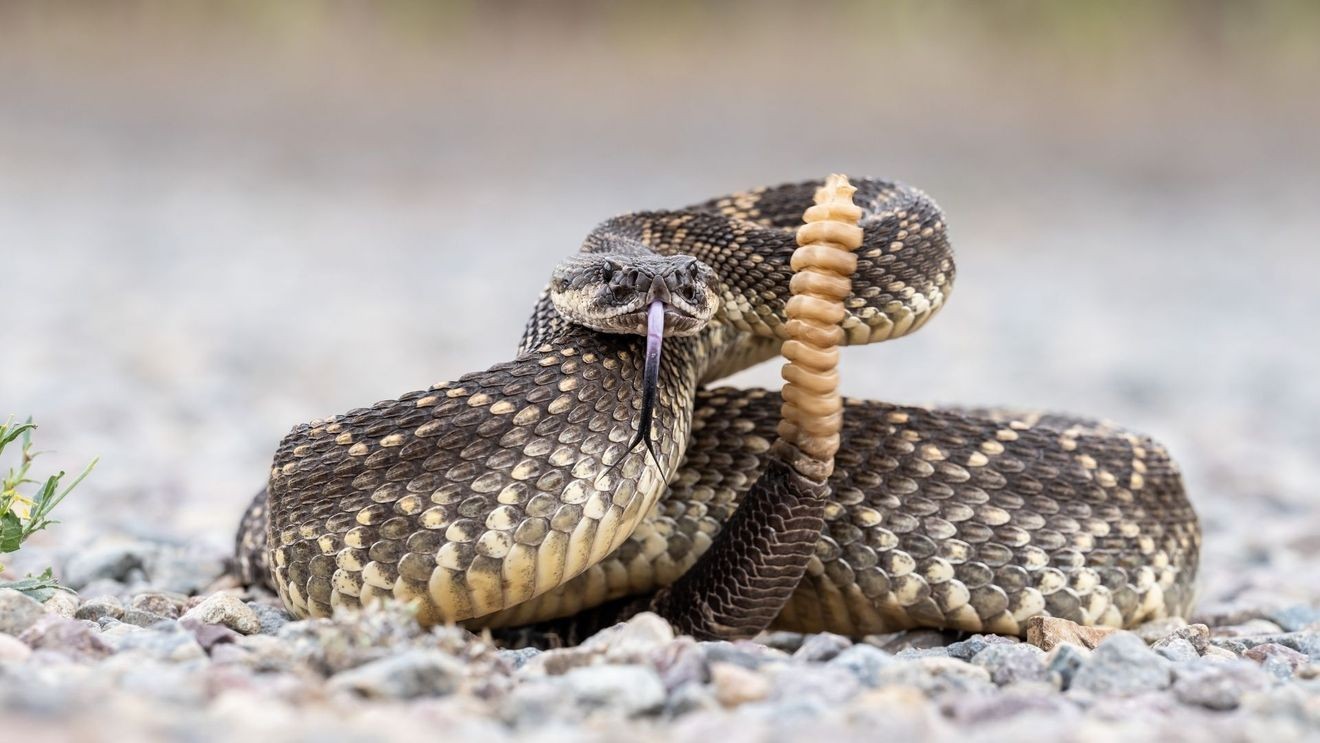
The Eastern diamondback rattlesnake is the largest venomous snake in North America and can grow over six feet long. It has a heavy body, tan to light brown coloring, and distinctive dark diamond-shaped patterns along its back. It also has a broad head, light stripes near the eyes, and a well-developed rattle at the end of its tail. Although listed as “least concern” by the IUCN, this snake has significantly declined across its range and may no longer be found in North Carolina or Louisiana. Habitat loss, fragmentation, and human-caused deaths are major threats, and the species is currently being reviewed for federal endangered species protection.
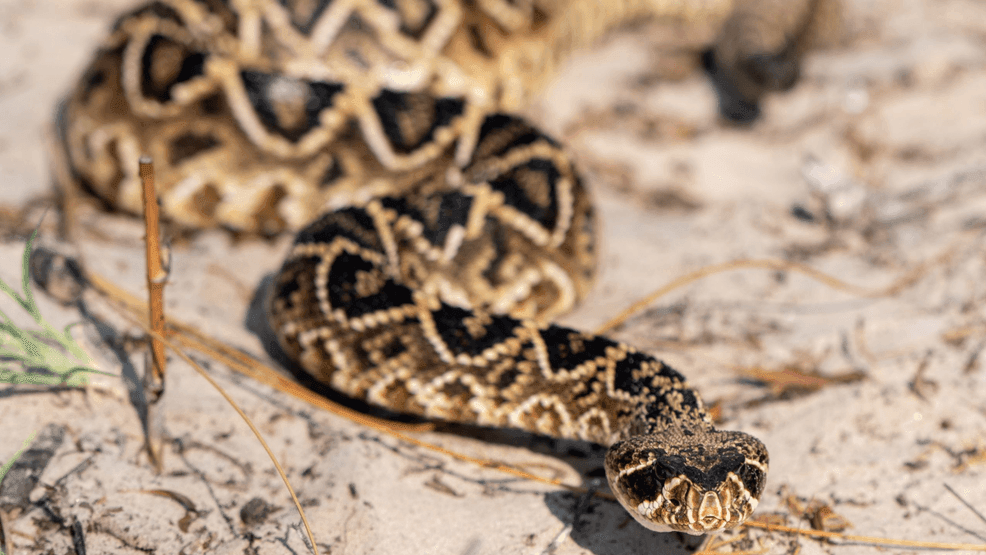
Eastern Diamond-backed Rattlesnake
Timber Rattlesnake (Canebrake)
The Timber Rattlesnake, also called the Canebrake Rattlesnake in coastal areas, is a large venomous pit viper that typically grows 30–60 inches long. It is usually yellowish-brown to gray with dark chevron-shaped markings, though some can appear nearly black. It has a dark tail with a large rattle, elliptical pupils, and a broad head distinct from its neck.
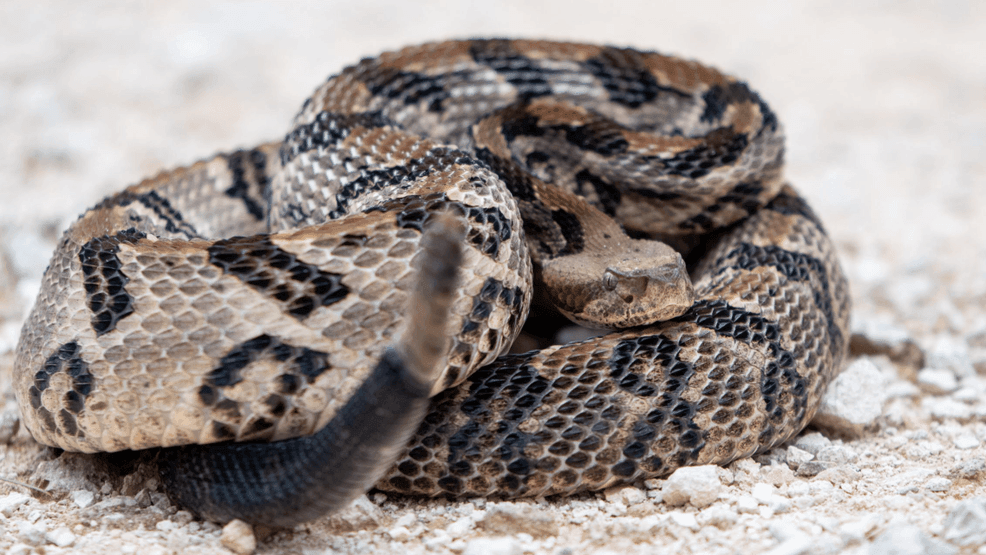
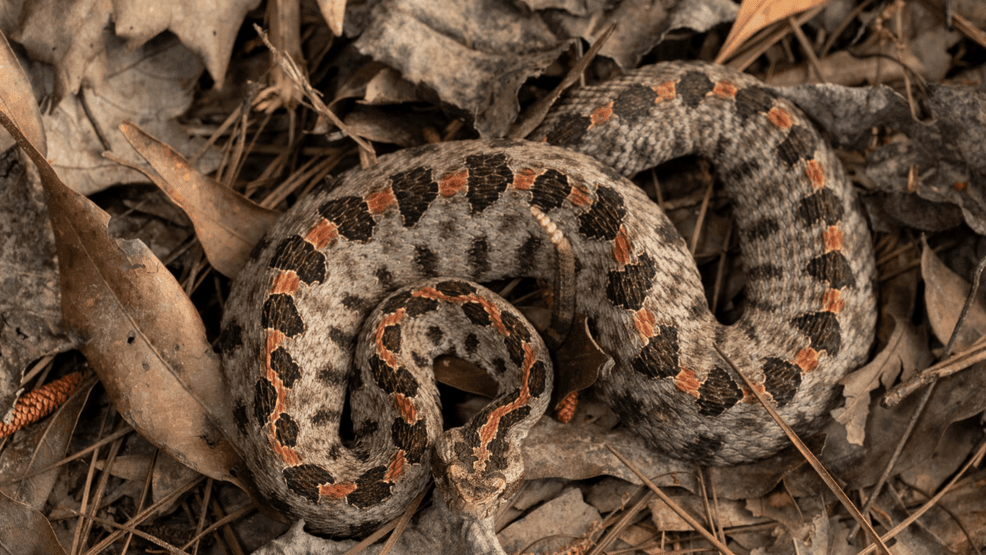
Pygmy Rattlesnake
More common in Chesterfield, Berkeley, Jasper, Barnwell, Aiken, Lexington, Richland and McCormick
This small venomous rattlesnake typically grows 14–22 inches long. It has a stout gray, tan, or pinkish body with dark blotches and often a reddish or orange stripe along its back. Its yellowish tail ends in a small rattle, and it has a broad head, a dark stripe near the eye, and heat-sensing facial pits.
 MORE: Florence Co. animal rescue steps in to help dogs from Georgetown hoarding case
If you see or find a snake in the wild, give it plenty of space. If a snake is inside your home, contact your local animal control and do not attempt to handle it yourself.
For more information, click here.