
Feeling hotter than usual? It’s not just your imagination.
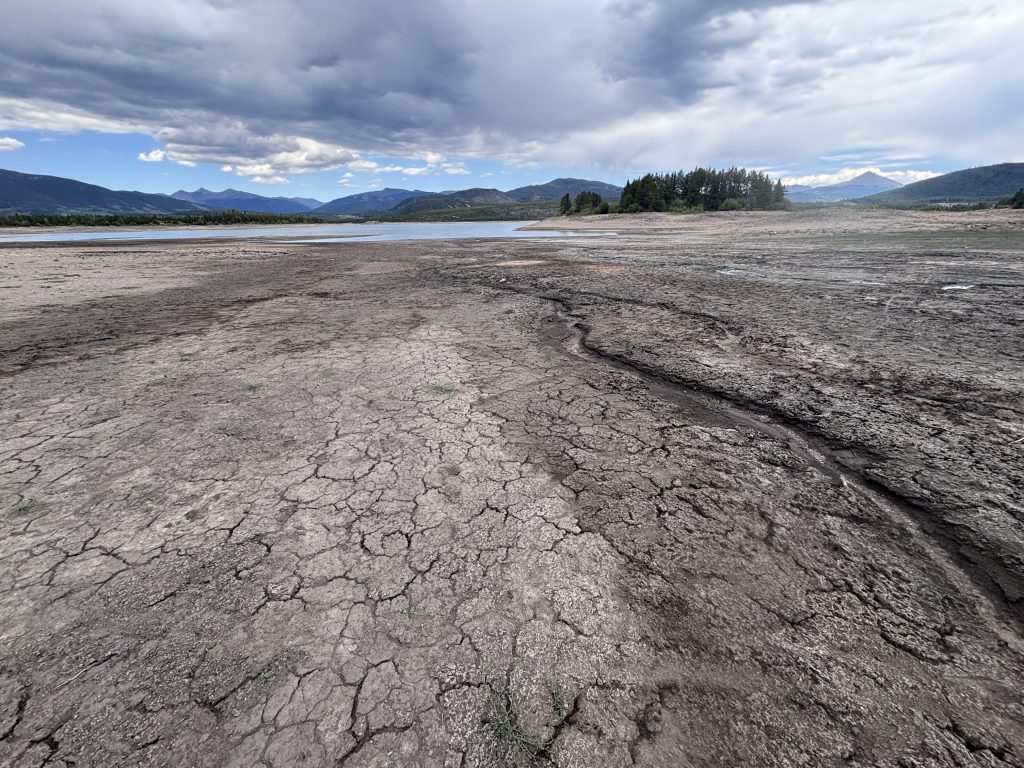
Climate change is making summers in Colorado and the West hotter, fueling more intense heatwaves like the one this past weekend and exacerbating problems like extreme drought and water shortages, according to experts.
“It’s definitely not just a feeling that recent summers have been consistently warmer than historical averages,” said Colorado State Assistant Climatologist Peter Goble.
As a result of human-caused climate change, summers statewide have warmed by roughly 2.5 degrees Fahrenheit on average since 1980, according to the Colorado Climate Center. There is an overwhelming scientific consensus that the burning of fossil fuels has released heat-trapping gases into the atmosphere, warming the planet.
In Colorado, no summer in the past 17 years has been cooler than the 20th-century average, Goble said. On the back of the hottest winter and the worst snowpack on record, he noted that the above-average warmth and record-breaking heatwaves are worsening the drought and fire risk by drying things out even quicker.
The heat dome that centered over the West and parts of the northern U.S. this past weekend, sending temperatures soaring 10 to 15 degrees above normal, was made more likely by climate change, according to the nonprofit Climate Central.
Climate Central’s daily attribution tool, the Climate Shift Index, applies the latest peer-reviewed forecasting methodology to map the influence of climate change on temperatures across the globe every day. Across Colorado’s Western Slope, the tool shows that the hot weather this week was made at least five times more likely by climate change.
“The latest heat dome is now making the drought even worse by further drying soils, stressing water resources, and pushing already record-low mountain stream flows even lower,” said Climate Central climate scientist Zachary Labe. “This is the kind of compounding extremes we expect in a warming climate, as climate change makes summer heat more intense.”
Mountain West set records amid heat dome
As a ridge of high pressure set up along the Northern Rockies last weekend, Salt Lake City experienced its hottest temperature in 150 years and Montana also hit its all-time high record, according to the National Weather Service.
While Colorado did not see all-time records broken, National Weather Service forecaster Kris Sanders said places on the Western Slope came close and several mountain towns broke daily high records.
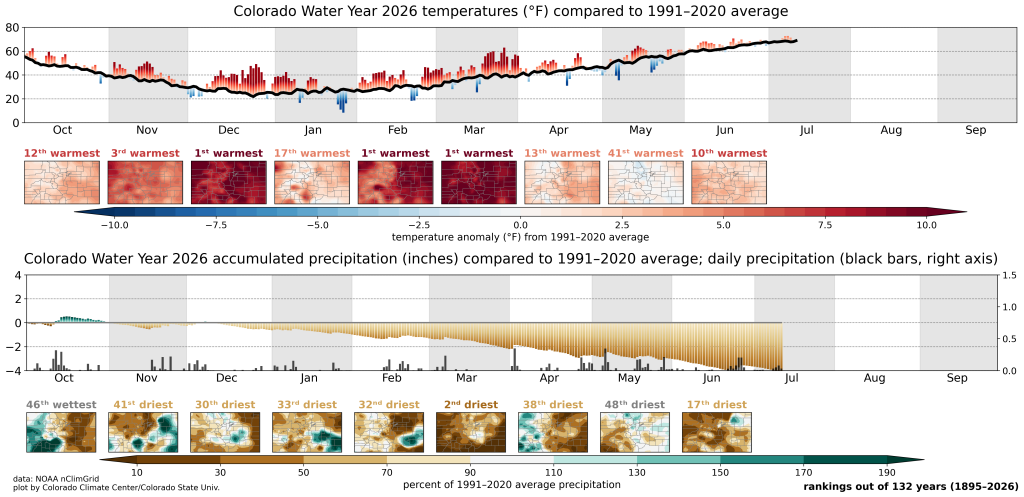 A graphic from the Colorado Climate Center shows how above-average temperatures and below-average precipitation since October have led to the extreme drought conditions across the state. Climate change is making hot temperatures that intensify droughts more common, according to the Colorado Climate Center.Colorado Climate Center/Courtesy illustration
At a weather station in Steamboat with over 120 years of data, Sanders said temperatures hit 98 degrees on Monday, setting the record for the daily high and coming within two degrees of the all-time warmest temperature ever recorded there.
The weather station at the Aspen/Pitkin County Airport set daily temperature records every day from Saturday through Monday, peaking at 91 degrees on Monday, just one degree shy of the all-time record of 92 degrees, he said.
The Eagle County Regional Airport also reportedly broke daily high records as temperatures peaked at 95 and 97 degrees on Saturday and Sunday, respectively.
In Dillon, temperatures hit 88 degrees on Monday, just shy of the 89 degrees, which would tie the highest temperature ever recorded there.
Monsoon hope ahead?
As the heat continues to worsen drought and wildfire risk in Colorado, Goble said that a possible shift in the weather patterns has him “relatively hopeful” that the state will see a “wet surge of monsoonal moisture.”
If forecasts don’t change, he said Colorado could see rainier conditions spread across the state as the monsoon season begins to kick into gear over the next two weeks, driven by a strong El Nino pattern.
“El Nino tends to be correlated with wetter-than-normal late summers and falls, and that’s not a perfect correlation,” Goble said. “I like to use the analogy of it’s kind of like playing a game of poker with a couple extra aces and kings in the deck. Your odds of drawing a good hand are increased, but you can still draw a really crummy hand.”
While wetter weather could help tamp down on the extreme fire risk and exceptional drought conditions on the Western Slope, Goble warned that it would take an amount of precipitation that would result in “catastrophic flooding” to end the drought this summer.
Instead, he said Colorado will have to hope for a “banner winter” with well-above-average snowfall — or a couple near-average winters in a row — to pull itself out of drought and refill its reservoirs. But even that wouldn’t be enough to solve the larger Colorado River crisis.
With climate change, Goble said Coloradans can expect more summers that are just as hot — or hotter — than this summer and should prepare for that reality.
“Heat and drought certainly are detrimental to many sectors of our state’s economy — agriculture and recreation and tourism being right up there at the top of the list,” he said. “And both of those risks are getting more frequent and intense with climate change.”