
A group of approximately 22 bottlenose dolphins was moving through dangerously shallow water off Orleans Tuesday afternoon, continuing a stranding event that has stretched into a second day on Cape Cod.Dr. Sarah Sharp, lead veterinarian for the International Fund for Animal Welfare, said some of the dolphins were beginning to touch the sandy bottom near Skaket Beach as the tide continued to fall.The latest strandings came one day after dozens of dolphins became stranded in the same general area, marking what the IFAW called the largest known bottlenose dolphin stranding in Massachusetts.Rescuers steer dolphins toward deeper waterThe dolphins, each weighing 600 to 700 pounds and measuring 9 to 10 feet long, were in about two feet of water roughly a half-mile offshore.“Some of them were starting to ground out, meaning their bellies were hitting the bottom,” Sharp said. By 3 p.m., they had moved into a safer location, but rescuers remained concerned ahead of low tide around 6 p.m.“These animals have been making some interesting decisions yesterday and today that don’t necessarily play out well for a while, unfortunately,” Sharp said. Dolphins earlier stranded from Brewster to WellfleetReports began around 5 a.m. Tuesday, when groups of dolphins became stranded at several locations between Brewster and Wellfleet. IFAW said all the animals refloated as the tide rose.Two dolphins were fitted with satellite tags so rescuers can monitor their movements and determine whether separated groups reunite.Because bottlenose dolphins are too large and numerous to transport in IFAW’s rescue vehicle, teams may have to care for them where they strand.“These are hard days on the team, but harder on the dolphins,” Sharp said.Monday’s stranding involved dozens of dolphinsTuesday’s response followed a large stranding Monday morning between First Light Beach and Ellis Landing in Brewster.IFAW said rescuers found approximately 34 bottlenose dolphins, including five or six that had died. The surviving animals refloated and moved north toward Wellfleet Harbor. Teams later used boats and drones to guide a group of approximately 50 dolphins south and away from the harbor’s shallow water.Why Cape Cod is a stranding hot spotBottlenose dolphins usually live farther offshore, but IFAW said the species has increasingly been spotted closer to Cape Cod in recent years. The inner Cape, particularly the curved coastline around Wellfleet and Eastham, is considered a global hot spot for mass strandings. Large tidal swings and broad, shallow flats can make it difficult for dolphins to navigate back into deeper water once the tide begins to recede. What to do if you see a stranded dolphinAnyone who encounters a stranded or distressed dolphin or other marine mammal should keep a safe distance, keep pets away and contact trained rescuers through IFAW’s Marine Mammal Rescue and Research stranding hotline. People should not pour water on an animal, cover its blowhole or try to move it unless directed by experts.IFAW said it would provide additional information as the response continued.
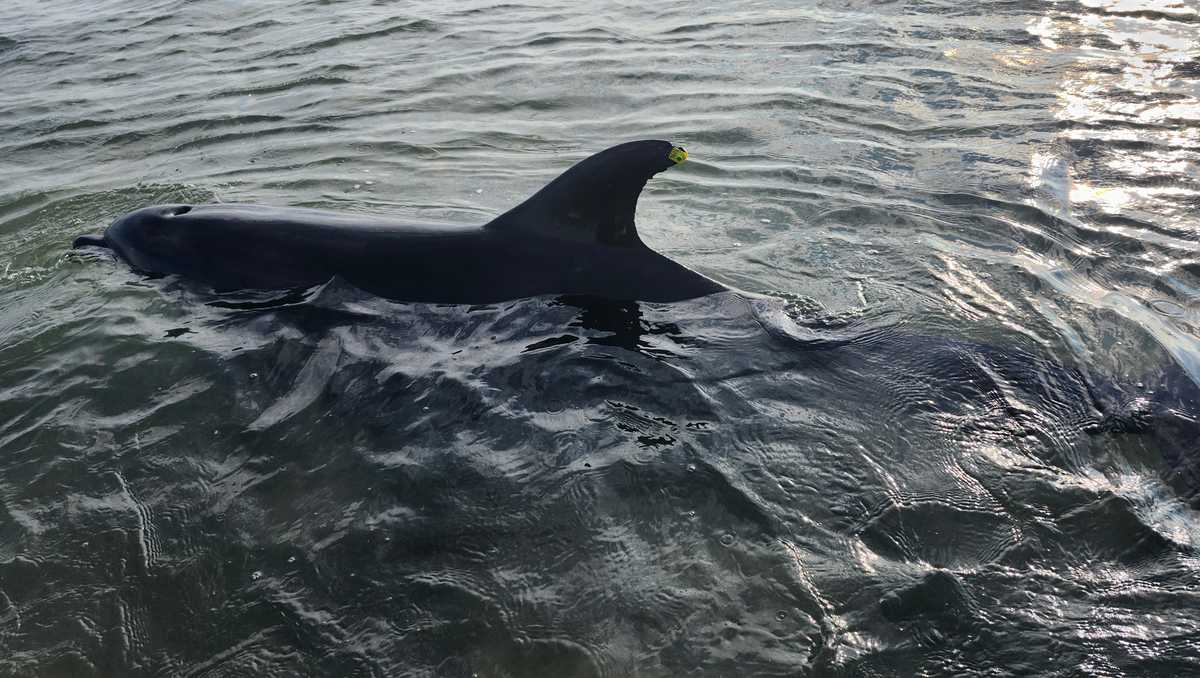
A group of approximately 22 bottlenose dolphins was moving through dangerously shallow water off Orleans Tuesday afternoon, continuing a stranding event that has stretched into a second day on Cape Cod.
Dr. Sarah Sharp, lead veterinarian for the International Fund for Animal Welfare, said some of the dolphins were beginning to touch the sandy bottom near Skaket Beach as the tide continued to fall.
The latest strandings came one day after dozens of dolphins became stranded in the same general area, marking what the IFAW called the largest known bottlenose dolphin stranding in Massachusetts.
IFAW
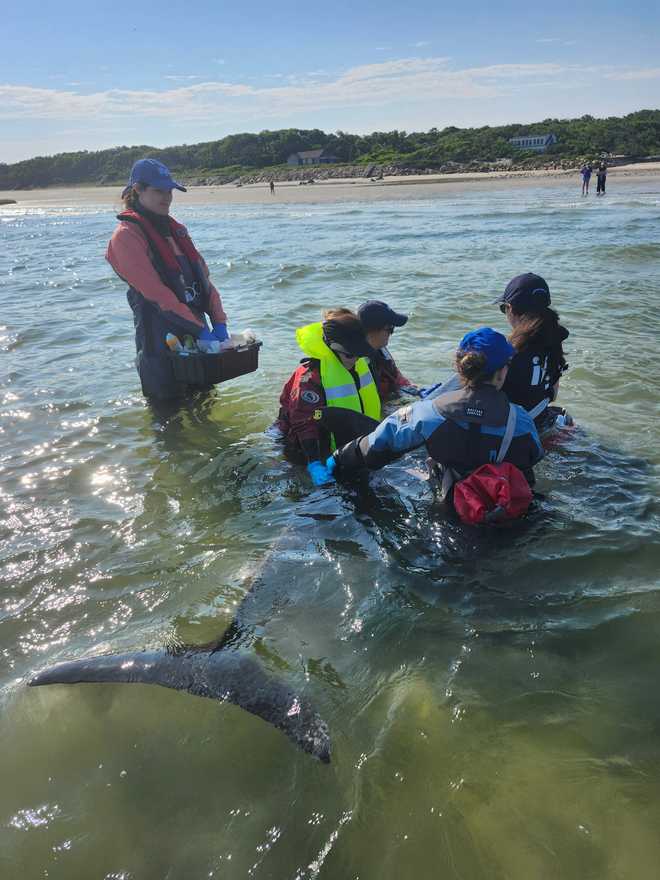
Rescuers help stranded dolphins on Tuesday, July 14
Rescuers steer dolphins toward deeper water
The dolphins, each weighing 600 to 700 pounds and measuring 9 to 10 feet long, were in about two feet of water roughly a half-mile offshore.
“Some of them were starting to ground out, meaning their bellies were hitting the bottom,” Sharp said. By 3 p.m., they had moved into a safer location, but rescuers remained concerned ahead of low tide around 6 p.m.
“These animals have been making some interesting decisions yesterday and today that don’t necessarily play out well for a while, unfortunately,” Sharp said.
IFAW
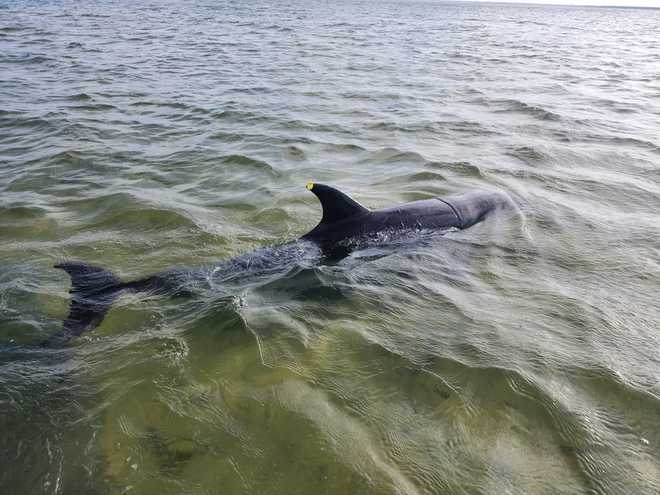
One of the dolphins stranded on Cape Cod
Dolphins earlier stranded from Brewster to Wellfleet
Reports began around 5 a.m. Tuesday, when groups of dolphins became stranded at several locations between Brewster and Wellfleet. IFAW said all the animals refloated as the tide rose.
Two dolphins were fitted with satellite tags so rescuers can monitor their movements and determine whether separated groups reunite.
Because bottlenose dolphins are too large and numerous to transport in IFAW’s rescue vehicle, teams may have to care for them where they strand.
“These are hard days on the team, but harder on the dolphins,” Sharp said.
Monday’s stranding involved dozens of dolphins
Tuesday’s response followed a large stranding Monday morning between First Light Beach and Ellis Landing in Brewster.
IFAW said rescuers found approximately 34 bottlenose dolphins, including five or six that had died. The surviving animals refloated and moved north toward Wellfleet Harbor. Teams later used boats and drones to guide a group of approximately 50 dolphins south and away from the harbor’s shallow water.
Why Cape Cod is a stranding hot spot
Bottlenose dolphins usually live farther offshore, but IFAW said the species has increasingly been spotted closer to Cape Cod in recent years.
The inner Cape, particularly the curved coastline around Wellfleet and Eastham, is considered a global hot spot for mass strandings. Large tidal swings and broad, shallow flats can make it difficult for dolphins to navigate back into deeper water once the tide begins to recede.
What to do if you see a stranded dolphin
Anyone who encounters a stranded or distressed dolphin or other marine mammal should keep a safe distance, keep pets away and contact trained rescuers through IFAW’s Marine Mammal Rescue and Research stranding hotline. People should not pour water on an animal, cover its blowhole or try to move it unless directed by experts.
IFAW said it would provide additional information as the response continued.