
Back to the breaking news in *** story we’ve been following. 11 local cases of cyclosporiasis confirmed by the Allegheny County Health Department. They are among the thousands of cases the CDC has confirmed across 34 states. The main symptom from this parasite is diarrhea. I talked with two local physicians about what you need to know about the Cyclospora parasite. Cyclospora parasites live in humans. When Cyclospora outbreaks occur, it’s usually because there’s been irrigation of *** field that might be growing lettuce or something with water that’s been contaminated with human feces. Is it possible that Cyclospora is in the produce in the Pittsburgh and Western Pennsylvania area? It’s definitely possible that cyclospora is in the produce in the Western Pennsylvania or in other parts of the country. The thing is we don’t actually know what the vehicle is, so it’s hard to even say where it is and where it isn’t, but we do know that it seems to be concentrated in places like Michigan, but there are probably other places where this contaminated produce has landed. The medical director at Allegheny General Hospital’s emergency department tells me most healthy people with *** strong immune system who get this bug should start to feel better in *** couple of days, but if your symptoms continue, if you’re at that point where you’re having persistent diarrhea for weeks, you need to be being evaluated at that point. Um, by health, *** healthcare professional, because at that point you’re, you’re at *** substantial risk for dehydration, and frankly there could be something else going on that has nothing to do with *** parasite. He adds, perfecting your hand washing will help keep you healthy every day, but especially as we go into seasons where we’re sharing more food, uh, things like right now we’re having cookouts and barbecues, and there’s, you got picklesberg and these things like that. We, we just, you know, just keep in mind that Uh, hand hygiene, while always important, it’s particularly important when you’re dealing with many people eating from similar sources. So I asked both of these Pittsburgh doctors how we should be washing our produce. They say you can run it under cold water and you can physically scrub your produce to dislodge some of the germs, and some people do use *** vinegar mixture, but there’s *** lot of sort of nooks and crannies in your vegetables and your fruits, so they both repeat with the NIH, the CDC, and the FDA. say no washing can guarantee you have no parasites on your produce. What does kill the parasites on fruits and veggies? Cooking or boiling. They also tell me this hand sanitizer does not kill this parasite, but washing your hands with soap and water for 30 seconds does.
Cyclosporiasis outbreak: CDC tracking cases in 31 states, including Pennsylvania

Updated: 8:19 PM EDT Jul 14, 2026
The Centers for Disease Control and Prevention is tracking cases of cyclosporiasis, a parasitic infection, in 31 states, including Pennsylvania. Cyclosporiasis is an intestinal illness caused by the parasite Cyclospora. The illness can come from eating unwashed produce and cause watery diarrhea, fatigue, dehydration, nausea, and vomiting.According to CDC data, more than 840 cases have been reported in the United States since May 1. Data shows 11 to 30 cases have been reported in Pennsylvania.The CDC said in Pennsylvania, cases are reported voluntarily. Officials said on Wednesday that 11 cases have been identified in Allegheny County. Cyclospora infections are seasonal, with cases rising in spring and summer. The cyclosporiasis season runs from May 1 to Aug. 31.READ MORE: What we know about past outbreaks linked to cyclospora, the parasite that can lead to “explosive diarrhea””When Cyclospora outbreaks occur, it’s usually because there’s been irrigation of a field that might be growing lettuce or something with water that’s been contaminated with human feces,” Dr. Amesh Adalja told Pittsburgh’s Action News 4. Adalja continued, saying, “It’s definitely possible that Cyclospora is in the produce in the in western Pennsylvania or in other parts of the country. It’s hard to even say where it is and where it isn’t. But we do know that it seems to be concentrated in places like Michigan, but there are probably other places where this contaminated produce has landed.”FDA investigations of foodborne illness outbreaks have recorded 21 cases related to Cyclospora outbreaks since 2013. The most common food items are fresh herbs and leafy vegetables found in salad mixes.The parasite has been found in fresh produce such as:ParsleyCilantroSnow peasMesclun lettuceSpinachSalad mixesRaspberries, blueberries and blackberries According to the CDC, common symptoms include watery diarrhea (most common), loss of appetite, weight loss, cramping, bloating, increased gas, nausea, and fatigue. Less common symptoms include vomiting, body aches, headache, low-grade fever, and other flu-like symptoms.For most people, cyclosporiasis lasts for days, but some with persistent or severe infections may need antibiotics to clear it.”If you’re at that point where you’re having persistent diarrhea for weeks, you need to be evaluated at that point by a health care professional, because at that point, you’re at substantial risk for dehydration. And frankly, there could be something else going on that has nothing to do with a parasite,” Dr. Brent Rau, medical director of Allegheny General Hospital’s emergency department, said.Rau also highlighted the importance of hand hygiene, particularly during social gatherings involving shared food. “But especially as we go into seasons where we’re sharing more food, things like, right now, we’re having cookouts and barbecues and there’s you got pickles burg and these things like that, we just, you know, just keep in mind that, hand hygiene, while always important, is particularly important when you’re dealing with many people eating from similar sources,” Rau said.Stay with Pittsburgh’s Action News 4 for updates. Download the WTAE app to stay connected with breaking news. Sign up for our email newsletters to get breaking news in your inbox.NAVIGATE: Home | Weather | Local News | National | Sports | Newscasts on demand |
The Centers for Disease Control and Prevention is tracking cases of cyclosporiasis, a parasitic infection, in 31 states, including Pennsylvania.
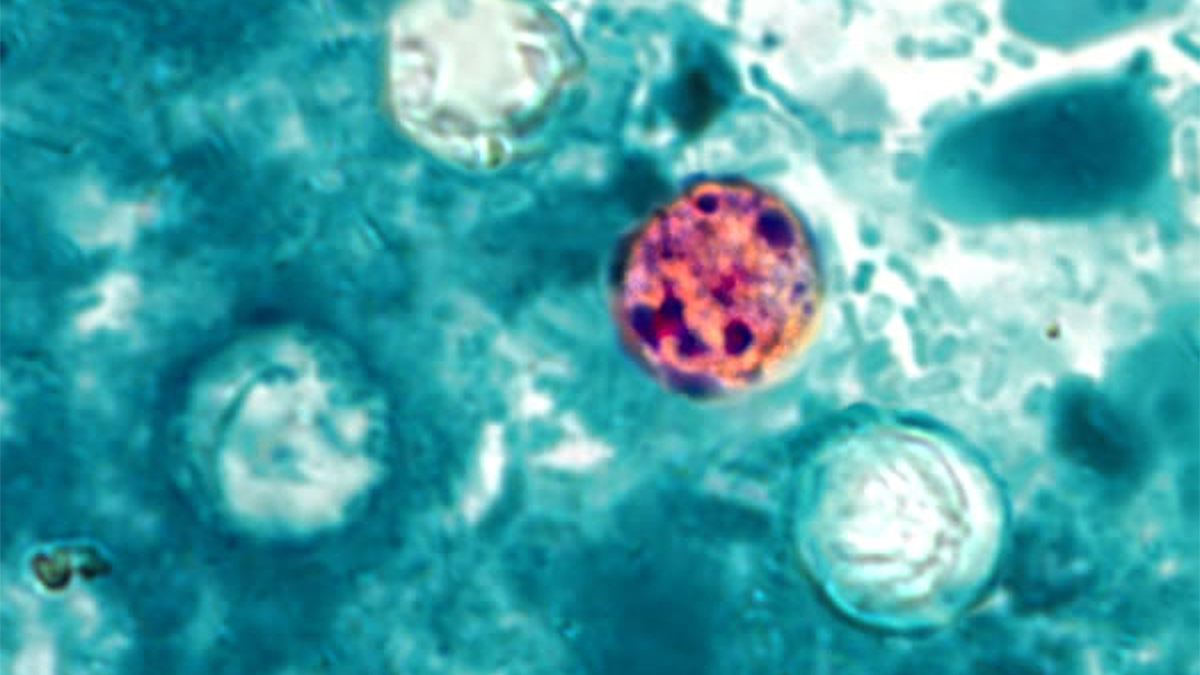
Cyclosporiasis is an intestinal illness caused by the parasite Cyclospora. The illness can come from eating unwashed produce and cause watery diarrhea, fatigue, dehydration, nausea, and vomiting.
According to CDC data, more than 840 cases have been reported in the United States since May 1. Data shows 11 to 30 cases have been reported in Pennsylvania.
The CDC said in Pennsylvania, cases are reported voluntarily.
Officials said on Wednesday that 11 cases have been identified in Allegheny County.
Cyclospora infections are seasonal, with cases rising in spring and summer. The cyclosporiasis season runs from May 1 to Aug. 31.
“When Cyclospora outbreaks occur, it’s usually because there’s been irrigation of a field that might be growing lettuce or something with water that’s been contaminated with human feces,” Dr. Amesh Adalja told Pittsburgh’s Action News 4.
Adalja continued, saying, “It’s definitely possible that Cyclospora is in the produce in the in western Pennsylvania or in other parts of the country. It’s hard to even say where it is and where it isn’t. But we do know that it seems to be concentrated in places like Michigan, but there are probably other places where this contaminated produce has landed.”
FDA investigations of foodborne illness outbreaks have recorded 21 cases related to Cyclospora outbreaks since 2013. The most common food items are fresh herbs and leafy vegetables found in salad mixes.
The parasite has been found in fresh produce such as:
ParsleyCilantroSnow peasMesclun lettuceSpinachSalad mixesRaspberries, blueberries and blackberries
According to the CDC, common symptoms include watery diarrhea (most common), loss of appetite, weight loss, cramping, bloating, increased gas, nausea, and fatigue. Less common symptoms include vomiting, body aches, headache, low-grade fever, and other flu-like symptoms.
For most people, cyclosporiasis lasts for days, but some with persistent or severe infections may need antibiotics to clear it.
“If you’re at that point where you’re having persistent diarrhea for weeks, you need to be evaluated at that point by a health care professional, because at that point, you’re at substantial risk for dehydration. And frankly, there could be something else going on that has nothing to do with a parasite,” Dr. Brent Rau, medical director of Allegheny General Hospital’s emergency department, said.
Rau also highlighted the importance of hand hygiene, particularly during social gatherings involving shared food.
“But especially as we go into seasons where we’re sharing more food, things like, right now, we’re having cookouts and barbecues and there’s you got pickles burg and these things like that, we just, you know, just keep in mind that, hand hygiene, while always important, is particularly important when you’re dealing with many people eating from similar sources,” Rau said.
Stay with Pittsburgh’s Action News 4 for updates. Download the WTAE app to stay connected with breaking news. Sign up for our email newsletters to get breaking news in your inbox.
NAVIGATE: Home | Weather | Local News | National | Sports | Newscasts on demand |