
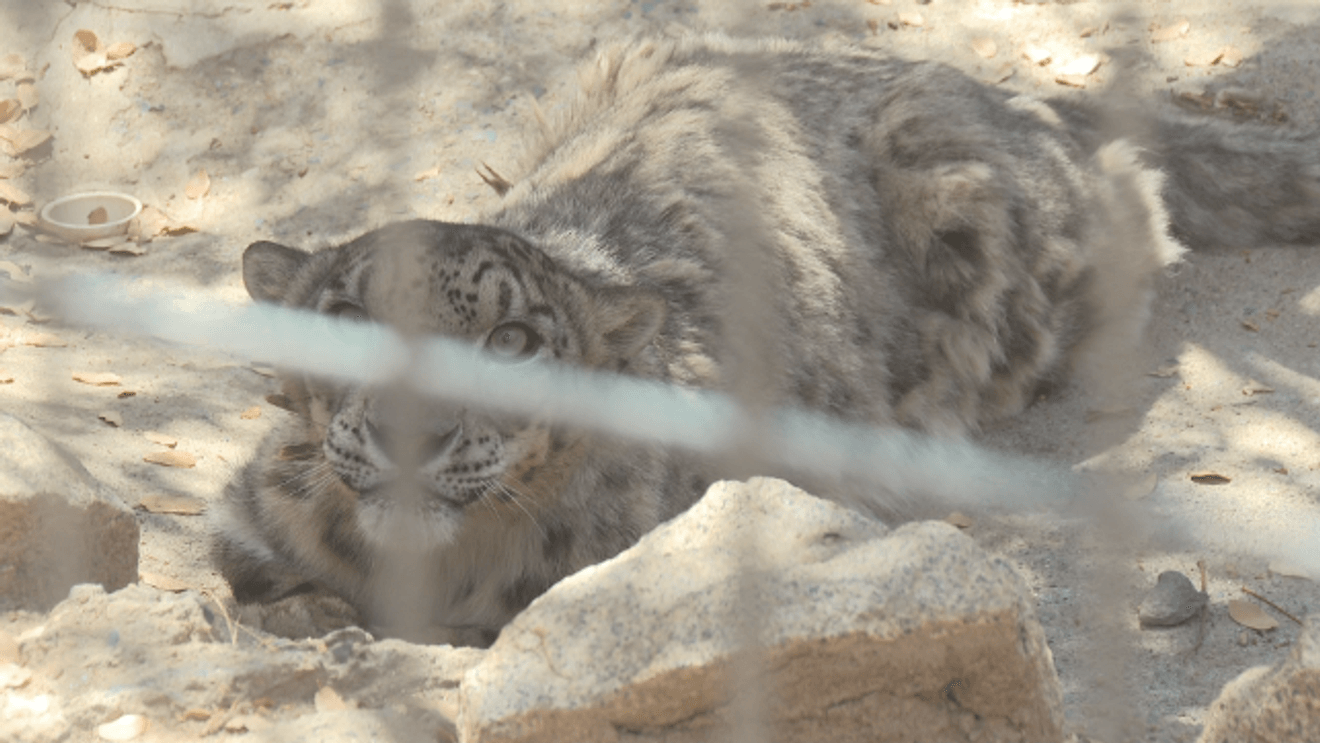
DUNLAP, Calif. (FOX26) — A nonprofit big cat sanctuary in Fresno County is on high alert after two of its snow leopards were diagnosed with Valley fever, a fungal disease that can affect both animals and humans.
At Project Survival Cat Haven in Dunlap, founder Dale Anderson said staff are closely monitoring their animals after the latest cases, including a snow leopard named Jackson.
Jackson recently began showing symptoms that concerned his caretakers.
“Jackson started acting weird, not wanting to eat and then losing weight,” Anderson said. “So we took him in and got him checked, and sure enough, he had Valley fever.”
The diagnosis was especially concerning because Jackson first contracted Valley fever four years ago and has remained on antifungal medication ever since.
“We can’t seem to get it beat,” Anderson said. “But you can see his behavior is perfectly normal. He eats regularly, acts like a normal cat. He just carries that little bit of Valley fever with him.”
According to the Centers for Disease Control and Prevention (CDC), Valley fever is a lung infection caused by Coccidioides, a fungus that lives in soil throughout the southwestern United States, including California, as well as parts of the Pacific Northwest and Mexico.
People and animals become infected by breathing in fungal spores released into the air when soil is disturbed.
The disease has also affected people connected to the sanctuary.
Anderson recalled an inspector who repeatedly sought medical care after experiencing fatigue and a loss of appetite.
“Our inspector was having symptoms. He was run down, not wanting to eat,” Anderson said.
He went to the doctor many different times, and nobody could figure out what was going on.
After remembering the cats at the sanctuary, the inspector asked to be tested for Valley fever.
“Sure enough, he had Valley fever,” Anderson said.
The CDC says the risk of infection is highest during dry periods that follow rainy seasons, when fungal spores are more easily carried by dust.
Symptoms of Valley fever can include:
Persistent coughLow-grade feverChest painWeight lossFatigue
For Anderson, the disease has had heartbreaking consequences before.
He said the sanctuary previously lost a lion after months of unexplained illness.
“We were trying to figure out what was going on,” Anderson said. “He just kept losing weight and not eating. Finally, we had to euthanize him. After the necropsy, we found out he had Valley fever.”
That experience has made staff much more vigilant.
“Now it’s pretty high on our radar list as far as things to look for,” Anderson said.
There is currently no vaccine to prevent Valley fever. The CDC recommends avoiding dusty areas when possible, staying indoors during dust storms, wetting soil before digging, and limiting exposure to disturbed soil for people at higher risk of severe illness.