
Favorite Hole
No. 7, par 4, 293 yards
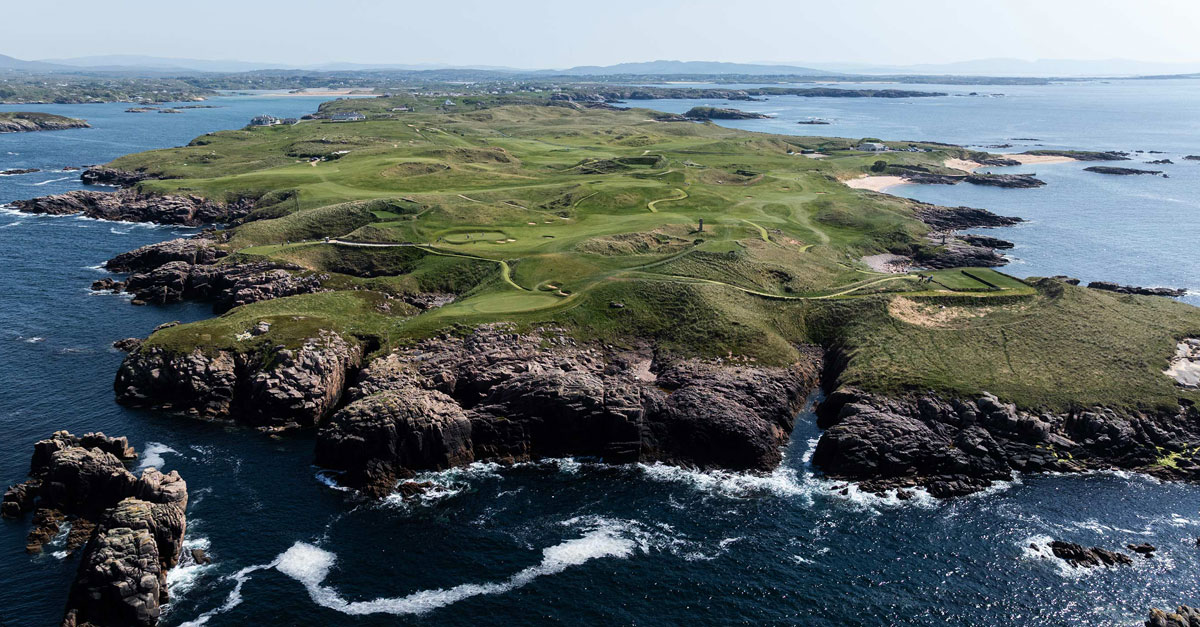
The view from the clifftop tee on this fever dream of a par 4 is stunning but baffling. Across a small beach, the fairway sits on a left-to-right diagonal, disappearing into a trough before reemerging to climb a tall dune. The green is tucked into a hollow on the other side of the dune, with the top of the flagstick visible to those who know to look for it.
First-time players will have little idea where to aim. But after a couple of rounds, a set of options comes into focus. The safe route is to the left, short of a pot bunker 200 yards from the back tee. The intermediate play is a 210- to 230-yard shot to the hidden portion of the fairway, which leaves a blind pitch to the elevated punchbowl green. (A recently added tongue of fairway on the right marks this line.) The crazy-but-fun option is to grab driver and go for the flag, risking a lost ball for the chance of an eagle putt.
If you play this wild hole the same way twice, you’re a far more consistent and self-restrained golfer than I am.
{{cruit-island-favorite-hole-7-gallery}}
Overall Thoughts
I love great golf architecture. But sometimes I crave golf courses with less architecture.
Today’s top golf architects are masters of detail. They and their shapers think through every aspect of every hole, molding each bunker and contour just so. Even when they leave a natural feature intact, they do so with intention. Often this process yields brilliant courses — beautiful, intricate mazes with many potential solutions.
But there’s something pleasing, too, about a golf course laid out with less intention, less mastery of detail.
Cruit Island was planned by a golf pro with few other design credits and built by amateurs with no access to proper equipment. And it’s not hard to find shortcomings in their work. The greens are rudimentary, either just sitting on the ground or built up bluntly on one side to counteract a slope. The small, round bunkers are oddly placed, almost irrelevant to strategy. The number of blind shots is overwhelming. Only one of the course’s seven par 4s — the second — provides a full view of the fairway from the tee. On a windy day, get ready to spend time looking for lost balls.
Yet Cruit Island offers delights that a more professionally designed course on the same property wouldn’t. The holes are irregular and mysterious, giving little guidance to the player. The unsmoothed terrain produces weird bounces, awkward lies, and obstructed sightlines. Because of its sometimes-inconvenient naturalness, Cruit Island has an air of adventure usually reserved for much older links courses. It feels like a tour of landforms rather than a set of problems devised by an architect.
I don’t mean to undersell Michael Doherty’s contributions to the course. His routing, for instance, is well executed: the green sites are excellent and varied, and each hole registers as unique. On great land, routing is half the battle, and Doherty proved himself up to the task.
But it’s exactly because he didn’t try to do much more that Cruit Island will stick in my memory.
1 Egg
Cruit Island earns its Egg mostly for its wonderful land, but Michael Doherty’s fine routing and the club’s suitably minimalist presentation of the course also deserve praise. If you’re planning a Northwest Ireland golf trip, this club and its 80-euro 18-hole international rate should be on your itinerary.
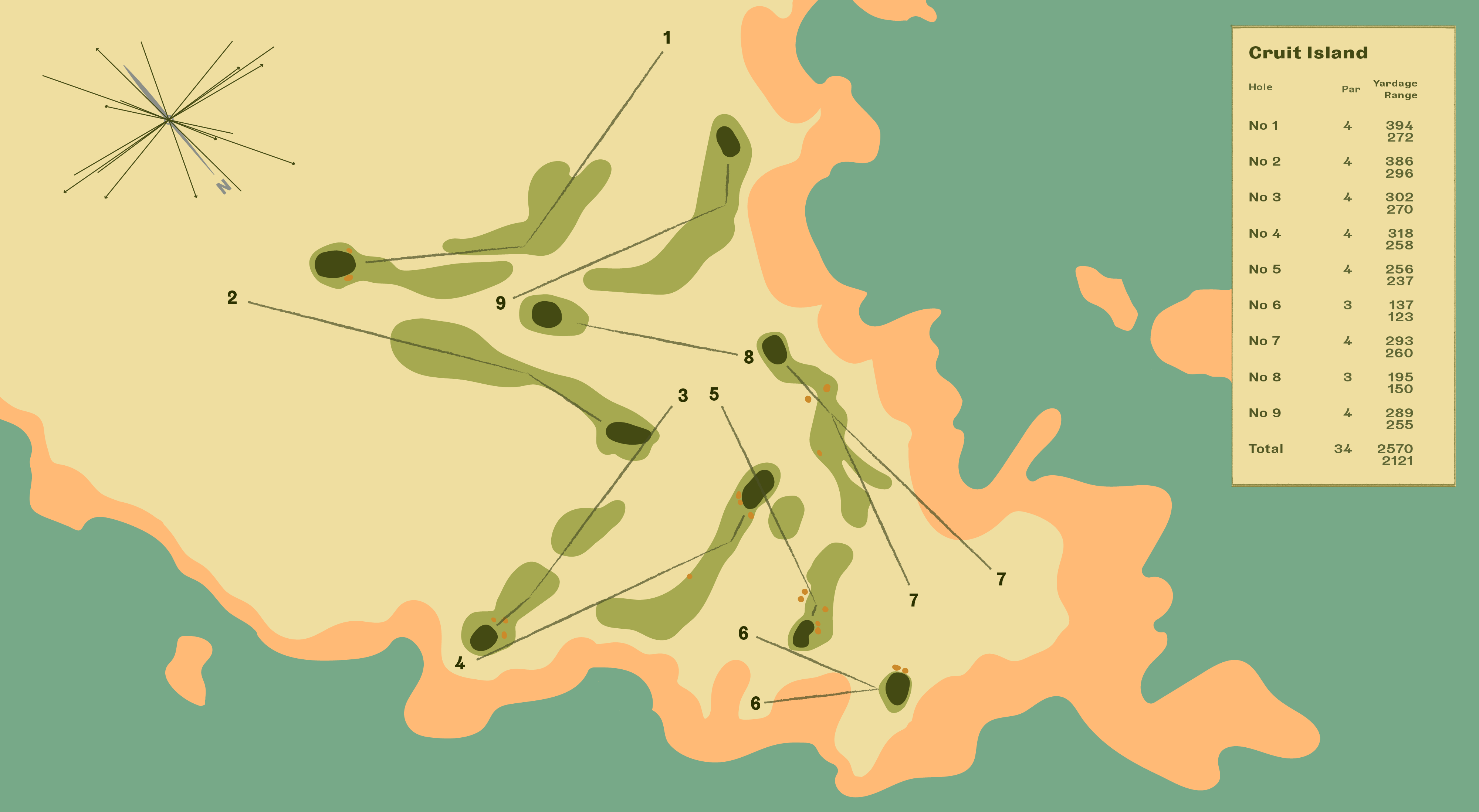 Illustration by Matt Rouches
Browse the Course Tour below for notes on every hole at Cruit Island Golf Club.