
A new White House blueprint for scientific research is drawing mixed reactions from Massachusetts scientists, with some praising its focus on innovation and others fearful it presages a shift away from the longstanding research partnership between the federal government and universities.
The 120-plus-page report, “Science: A New Golden Age,” released Tuesday, would drastically reshape the country’s approach to science funding by making large investments in artificial intelligence, robotics, and private-public partnerships. It also proposes additional spending in science and technology education, programs for early-career scientists, and backing unconventional ideas through a “golden ticket” program that rewards higher-risk research.
Those involved in industry partnerships on AI say the recommendations validate their work. Other scientists, however, raised concerns about changes they said could further kneecap a research system that has long been held up as a model around the world.
“These folks in this administration have figured out ways to write stuff that kind of looks good on the surface if you skim it,” said Victor Ambros, a Nobel Prize winner and professor of natural sciences at the University of Massachusetts Chan Medical School. “But it’s cleverly designed to advance an agenda.”
A ‘teardown’ of the system
Billed as “the first comprehensive rethinking of the U.S. science and technology enterprise in over 80 years,” the plan comes amid a broader push by the Trump administration to expand its efforts to slash federal funding for disfavored topics and academic institutions. In May, the administration proposed letting political appointees decide on research funding, mandating each grant and contract align with White House priorities, and allowing the executive branch to disregard external scientific reviews and end funding at will.
On Friday, The New York Times reported that the Trump administration had canceled more than 200 grants from the Energy Department last year solely because the recipient was located in a state that voted for Kamala Harris in the 2024 election.
The new White House report aims to prioritize the “individual scientist over legacy institutions” and focus on fields such as the biological sciences — including genomics and neuroscience — quantum information science, and nuclear energy.
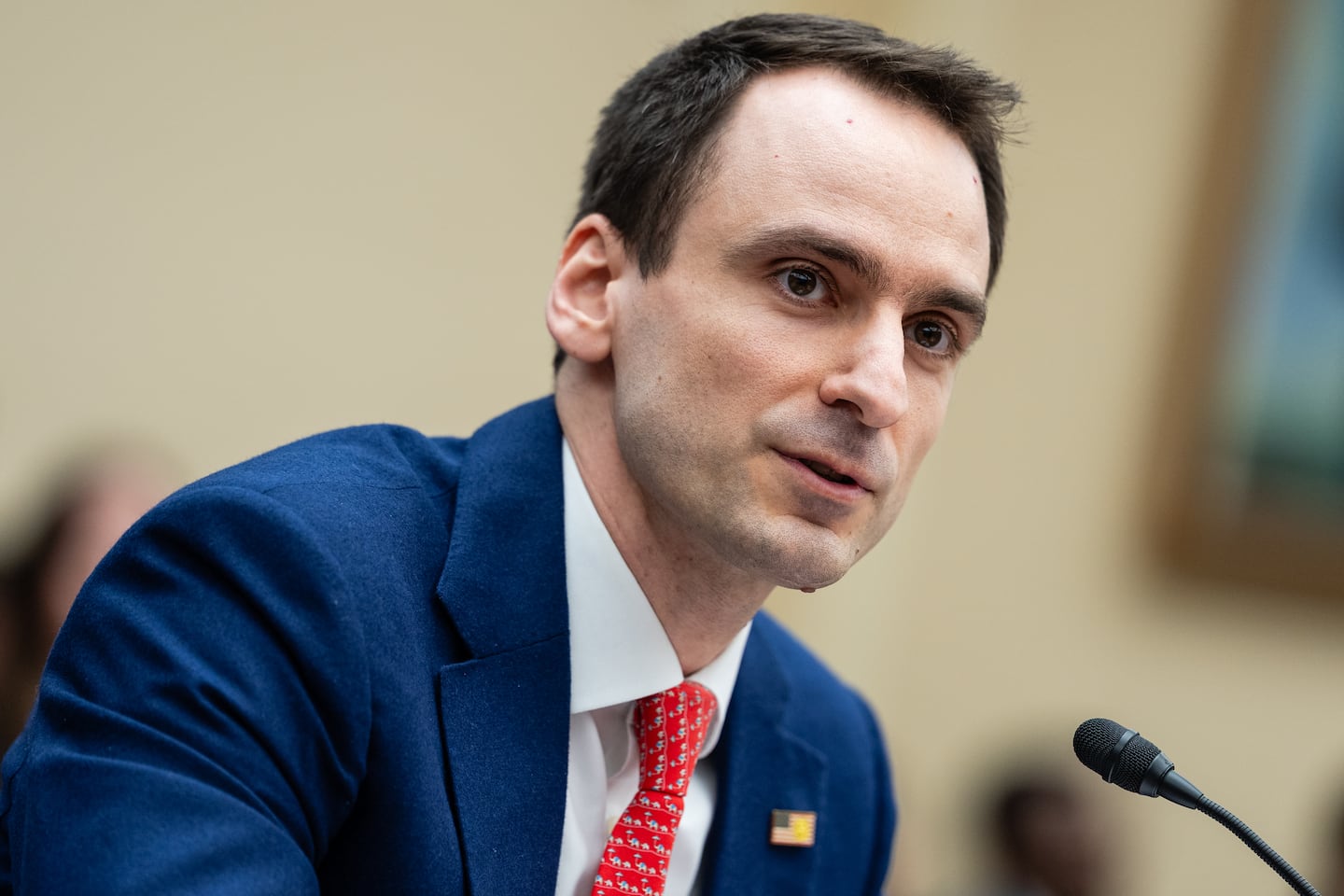
“What we are trying to do here is laying the groundwork for new methods of doing science and figuring out which ones can produce the greatest output for the American scientific community,” Michael Kratsios, director of the White House’s Office of Science and Technology Policy and author of the report, told lawmakers in a hearing on Wednesday.
But experts say moving away from funding university-based research would likely do more harm to scientific development than good.
The Trump administration is trying to “replace a system that has worked to the envy of the world,” said Ambros, whose Nobel-winning research was funded by the National Institutes of Health.
The new report is “not a renovation” of the system, he said. ”It’s a teardown.”
The proposal appears to approach scientific research in the same way a private equity firm would a potential investment target, said Colette Delawalla, founder and chief executive of Stand Up for Science, an advocacy group.
For instance, in a letter introducing the report, Kratsios wrote that federal research agencies should “evaluate their own performance as capital allocators, test new ways of making grants, and construct portfolios with the intentionality of a serious investor.”
Administration officials seem to be looking for areas where the most money might be made and where the “fat” can be cut, Delawalla said.
Shifting funding from academic institutions to individuals doesn’t make sense, she added; Universities provide critical infrastructure and resources for researchers to conduct their work.
“It’s like hiring Tom Brady and then not having a stadium for him to play in and not having a football,” she said.
Some experts worry the report will be followed by a federal budget request that shifts dollars away from universities and toward private companies.
“There’s winners and losers in every policy,” said Scott Delaney, cofounder of Grant Witness, which tracks terminated scientific research grants. “Universities are losers under this policy — like full stop.”
Delaney noted Massachusetts, a leader in university-led scientific innovation, receives the most federal funding for science per capita.
“Now, Massachusetts also has a very robust private sector, biotech sector, pharma,” he said. “I do think there’s reason to believe that some of those institutions would benefit.”
Joanne Padrón Carney, chief government relations officer for the American Association for the Advancement of Science, said the impacts of the plan remain unclear.
“This report proposes an untested experiment on a national scale to reshape the innovation ecosystem,” Carney said in an email. “As with any experiment, it could yield results that are difficult to predict or create damage that could take decades to address.”
‘AI revolution’
To prepare for an “AI revolution,” the administration calls for integrating AI into every stage of the scientific process, from drug discovery to analyzing data at NASA. Kratsios also announced a new $5 billion commitment from the federal government to make that happen, funding the administration’s so-called Genesis Mission.
Sam Scarpino did not read the report as a threat to funding at Northeastern University, where he’s the executive director of the Institute for Experiential AI. If anything, Kratsios’s vision validates the work he does, he said.
Scarpino and his team work with companies to both deploy and develop new AI tools with human oversight.
“Artificial intelligence is something of an existential moment for universities, and I think a report like this maybe gives some confidence that we’re heading in a reasonable direction,” Scarpino said
To him, the road map sketched by Kratsios leads to an “integrated, diversified research ecosystem” that includes both private sector businesses and universities, without one coming at the expense of the other.
“If we frame this report as that, it is very positive,” he said.
At Boston University, Gianluca Stringhini has received funding from OpenAI to conduct research in artificial intelligence focused on cybersecurity. His work seems to embody the exact model Kratsios is promoting.
But partnerships between industry and academia only work with adequate support for both, said Stringhini. He is worried by recent funding cuts to scientific research and said most ideas that can be brought to market, such as his partnership with OpenAI, have been the product of years of academic inquiry. In an academic lab, his team has time to test new models and scrutinize results. Inherently, that takes time.
“It’s good to look at industry partnerships and something else than basic traditional academic research. But there needs to be basic academic research as well,” he said. “Otherwise, it is kind of a house of cards, and everything will fall apart.”
Allyson Chiu can be reached at allyson.chiu@globe.com. Follow her on X @_allysonchiu. Michaela Towfighi can be reached at michaela.towfighi@globe.com. Follow her on X @michaelatowfghi.