
2026-07-27T06:47:13+00:00
font
Enable Reading Mode
A-
A
A+
Shafaq News- Najaf
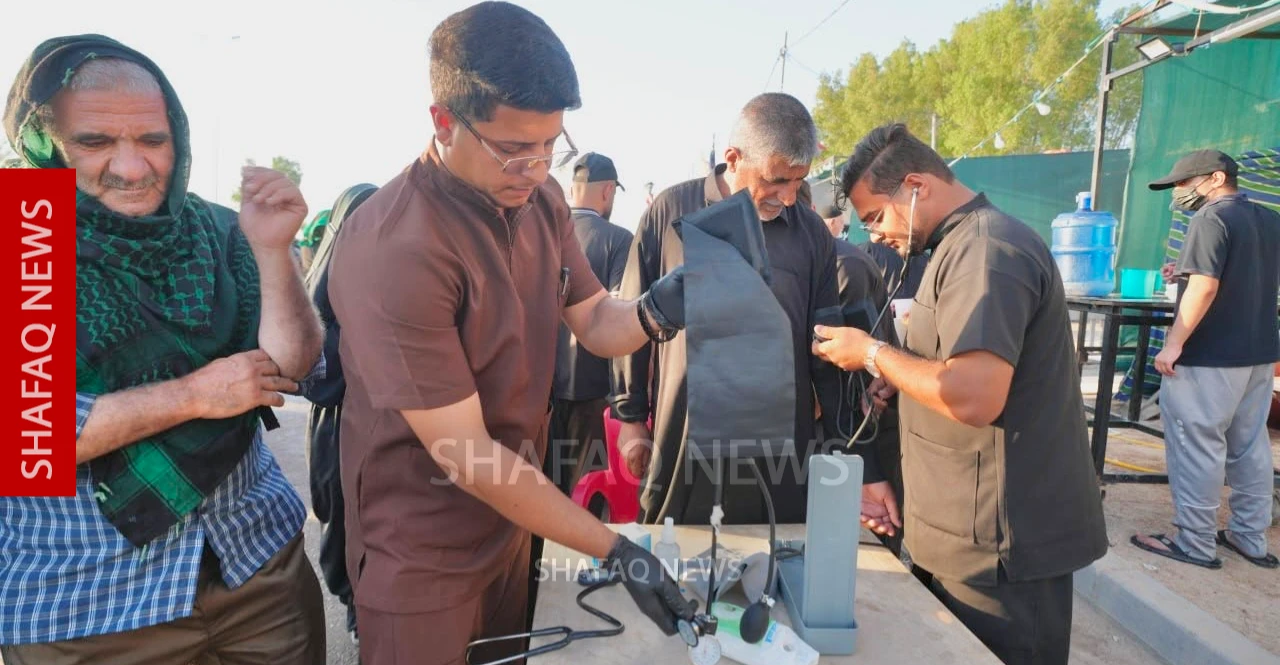
Sixty medical units staffed by more than 2,500 volunteers are providing
healthcare services to pilgrims walking the 80-kilometer route between Najaf
and Karbala for the Arbaeen pilgrimage, offering first aid, medical checks and
emergency assistance throughout the journey.
The units, operated by Najaf’s Health Directorate and volunteer groups,
have been positioned along major pilgrimage routes to support visitors
suffering from exhaustion, heat-related illnesses, dehydration and minor
injuries.
Rasl Fadhil Shukor, head of the Volunteer Work Division at Najaf’s
Health Directorate, told Shafaq News that the division received requests from
health employees wishing to establish medical stations, assessed their needs
and completed the required procedures before deployment.
“Volunteers were instructed to follow health regulations, referral
procedures and coordinate with medical institutions to ensure appropriate care
for pilgrims,” he remarked.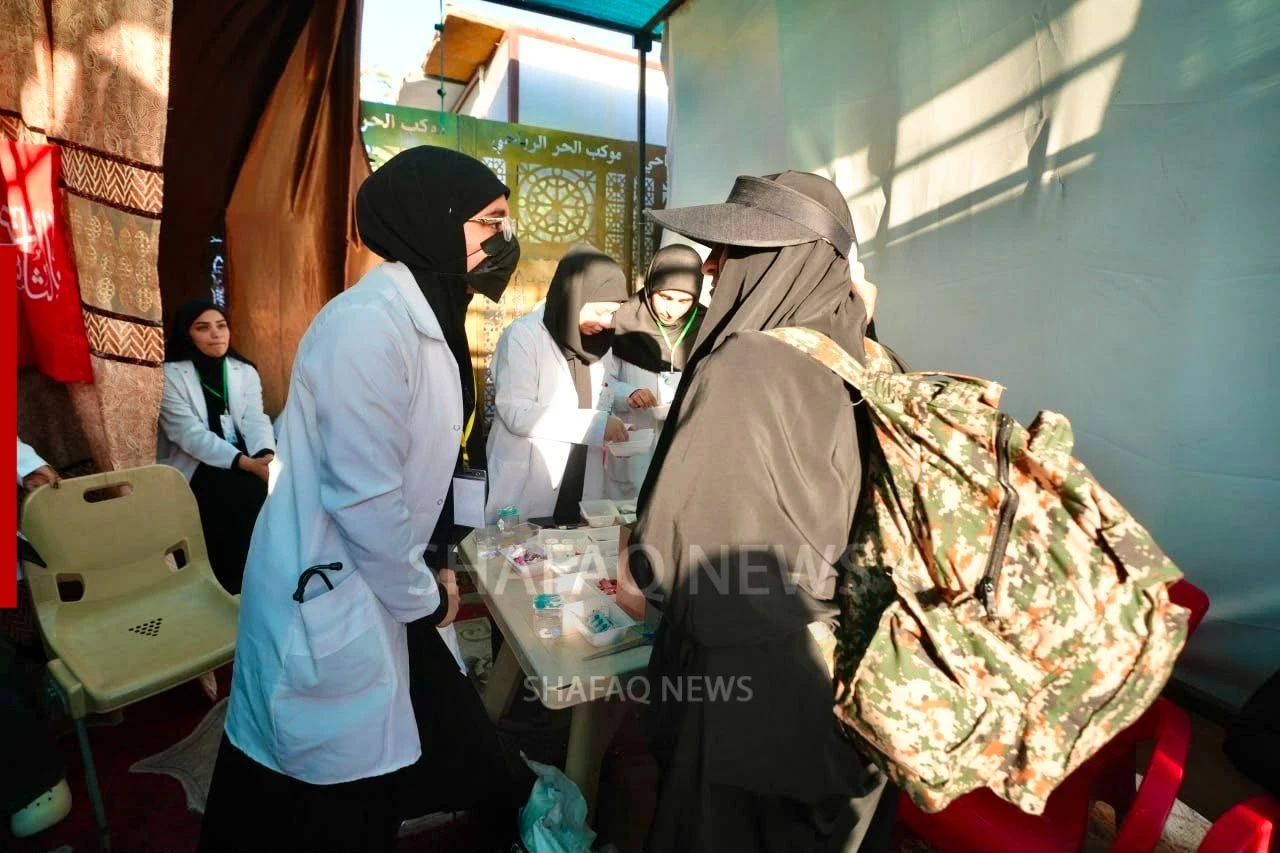
The medical network consists of 20 stations operated by Najaf Health
Directorate employees and 40 managed by volunteer teams. The stations have been
distributed across key pilgrimage routes, including the Mishkhab and Manathira
areas, the Kufa route and the Thawrat al-Ishreen road toward Khan al-Nus.
Doctors, pharmacists, dentists, nurses, paramedics and other healthcare
volunteers are working in shifts to ensure medical coverage continues
throughout the pilgrimage period.
The most common cases treated by medical teams involve exhaustion caused
by long-distance walking, heat exhaustion, dehydration, minor cuts, foot
injuries, and blood sugar or blood pressure issues. Stations without doctors
provide first aid and health guidance, while those with authorized medical
staff can dispense medicines in accordance with health regulations.
Read more: Al-Juwaiber women: A tradition of serving Arbaeen pilgrims
Along the same route, the Najaf Volunteer Health Team has mobilized 222
volunteers, including doctors, healthcare workers, pharmacists and medical
graduates, to offer additional support to pilgrims.
“We have allocated part of the medical unit for women and emergency
cases,” team coordinator Murtadha Abbas told Shafaq News.
Maram Asim, a PhD student volunteering with the team, explained that
taking part in pilgrimage services has allowed her and her colleagues to
directly assist visitors.
She added that the team provides pain relief medication and wound
treatment, while ambulances are available to transport patients requiring
hospital care.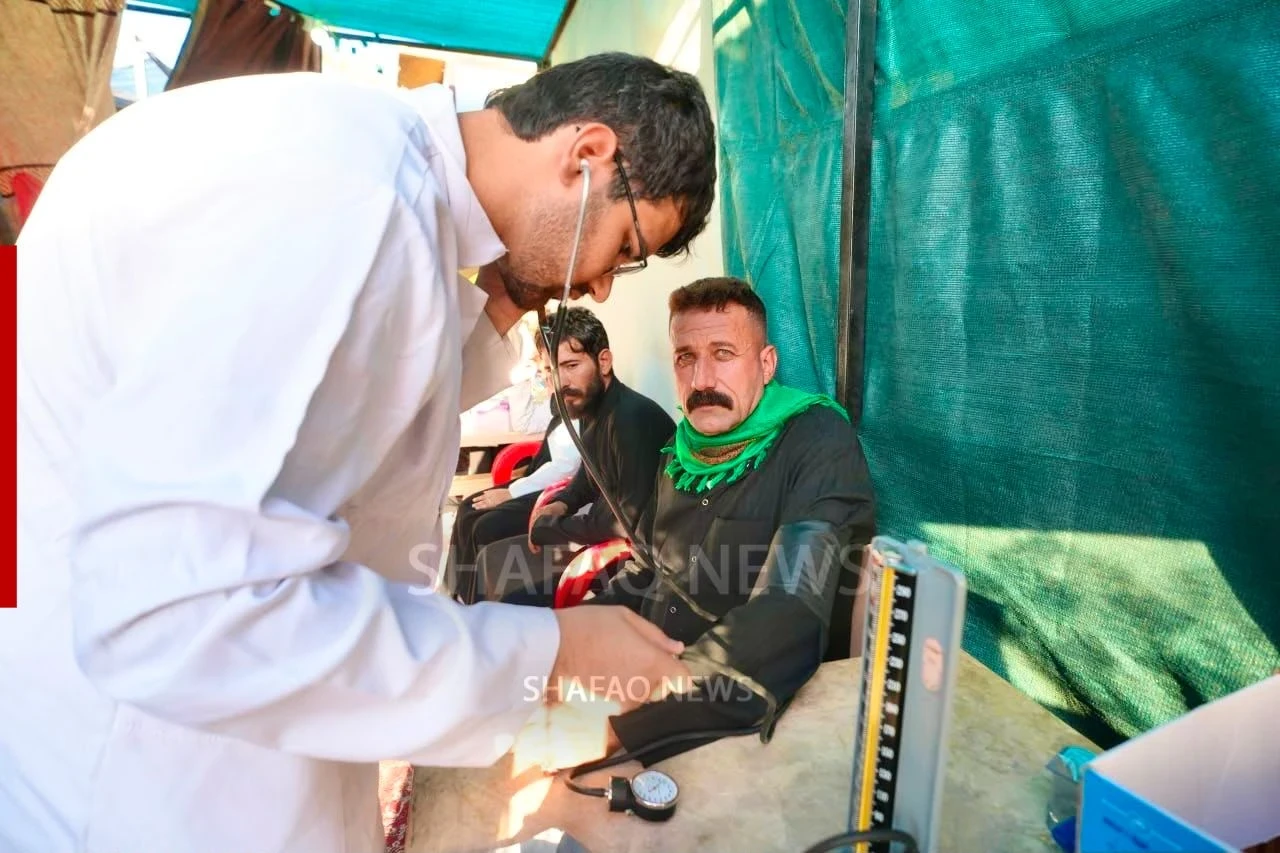
The medical response is accompanied by cultural and awareness activities
along the pilgrimage route. The Volunteer Cultural Development and Advancement
Team has distributed awareness materials, guided pilgrims and provided general
assistance, particularly for children and elderly visitors.
Arbaeen marks the 40th day of mourning after the martyrdom of Imam
Hussein, the third Shia Imam and grandson of the Prophet Muhammad. The annual
pilgrimage draws millions of Shiite visitors to Karbala, making it one of the
largest religious gatherings in the world.
Read more: Discover Iraq: Karbala, where memory breathes and future beckons