
At the Folk Art Museum, “Self-Made” overcomes the problem of “insiders” ventriloquizing self-taught artists.

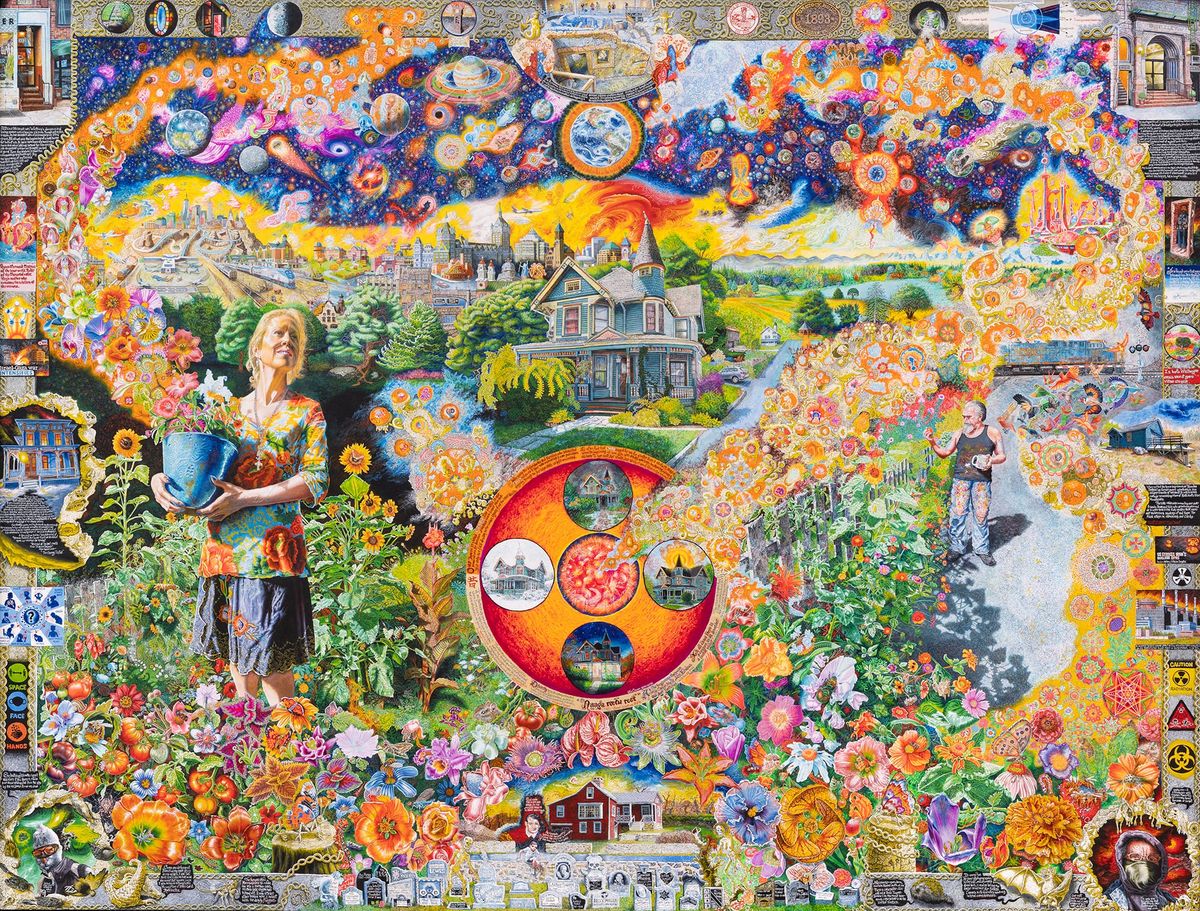
Joe Coleman, “Voyage to Candyland” (2026), acrylic on panel (© Joe Coleman; photo Adam Reich, courtesy the American Folk Art Museum; all other photos Ekin Erkan/Hyperallergic)
It should come as no surprise that the term “outsider art” was coined not by any of the artists it applies to but by an “insider” academic, Roger Cardinal, in 1972. This explains why the concept was limited to late 19th and early 20th-century “Sunday painters” like Henri Rousseau, William Doriani, and Morris Hirshfield rather than any of the preceding millennia of artists.
Museums, too, have played a role in limiting how “outsider art” has been traditionally understood. Collectors and curators like Jean and Howard Lipman helped introduce European-American self-taught artists into the collections of North American art institutions like the Whitney and High Museums during the mid-20th century. But in doing so, they often overlooked myriad traditions — including ones that were geographically proximate, like Haudenosaunee art or Hopi Kachina carving.
Create a free account, or sign in to continue reading.
Registered readers of Hyperallergic get access to a limited number of free articles every month, and the Hyperallergic Daily newsletter.
Already have an account? Sign in