
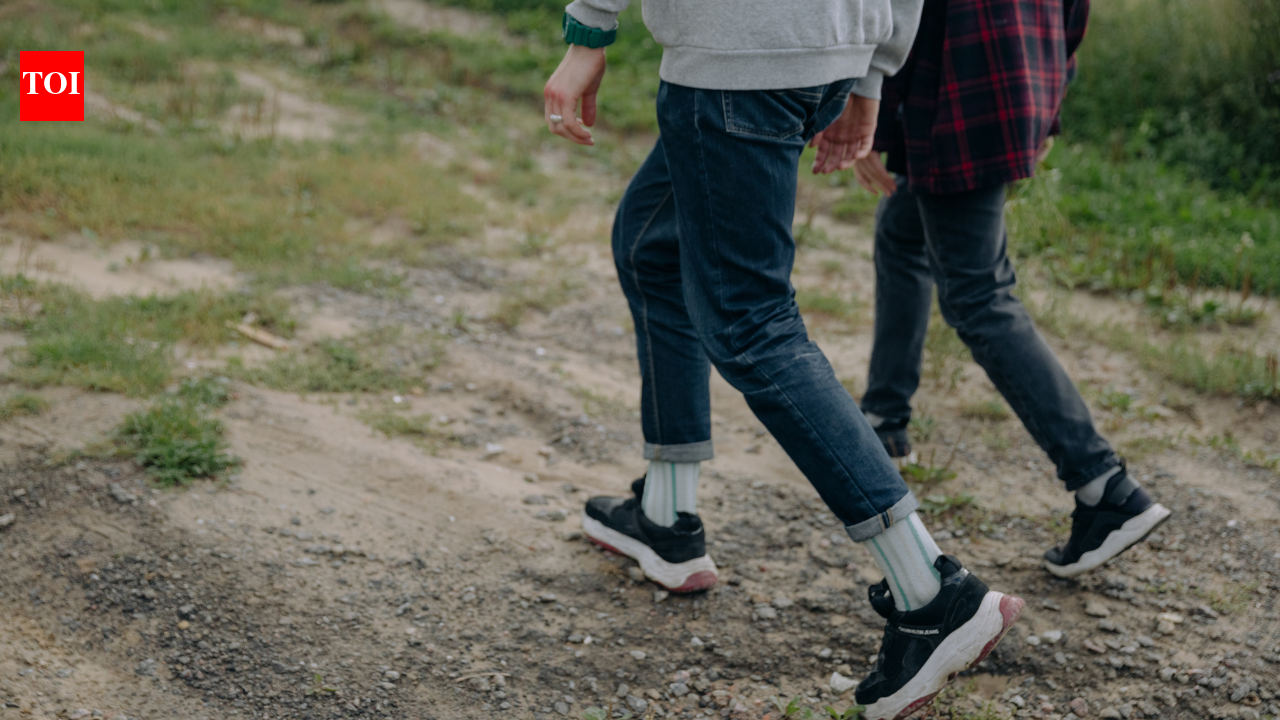
Despite the trendy name, lymphatic walking does not involve any secret technique. It is simply steady, rhythmic walking that encourages the body’s natural muscle pump. The focus is less on speed and more on continuous, relaxed movement.
A good lymphatic walk usually includes:
Walking at a pace that allows comfortable conversation.
Standing tall instead of leaning forward.
Letting the arms swing naturally.
Taking smooth heel-to-toe steps.
Breathing deeply through the nose whenever comfortable.
Keeping the shoulders relaxed rather than tense.
This combination activates muscles in the calves, thighs, hips, abdomen and arms, all of which contribute to moving lymph fluid.
The calf muscles are sometimes called the body’s “second heart” because each contraction helps push blood and lymph back upward against gravity.
Walking outdoors may offer another advantage. Studies from the US Centers for Disease Control and Prevention (CDC) continue to show that regular physical activity lowers the risk of heart disease, type 2 diabetes, several cancers and premature death. While these benefits are not specific to lymph flow, they highlight why walking remains one of the healthiest habits people can build.