
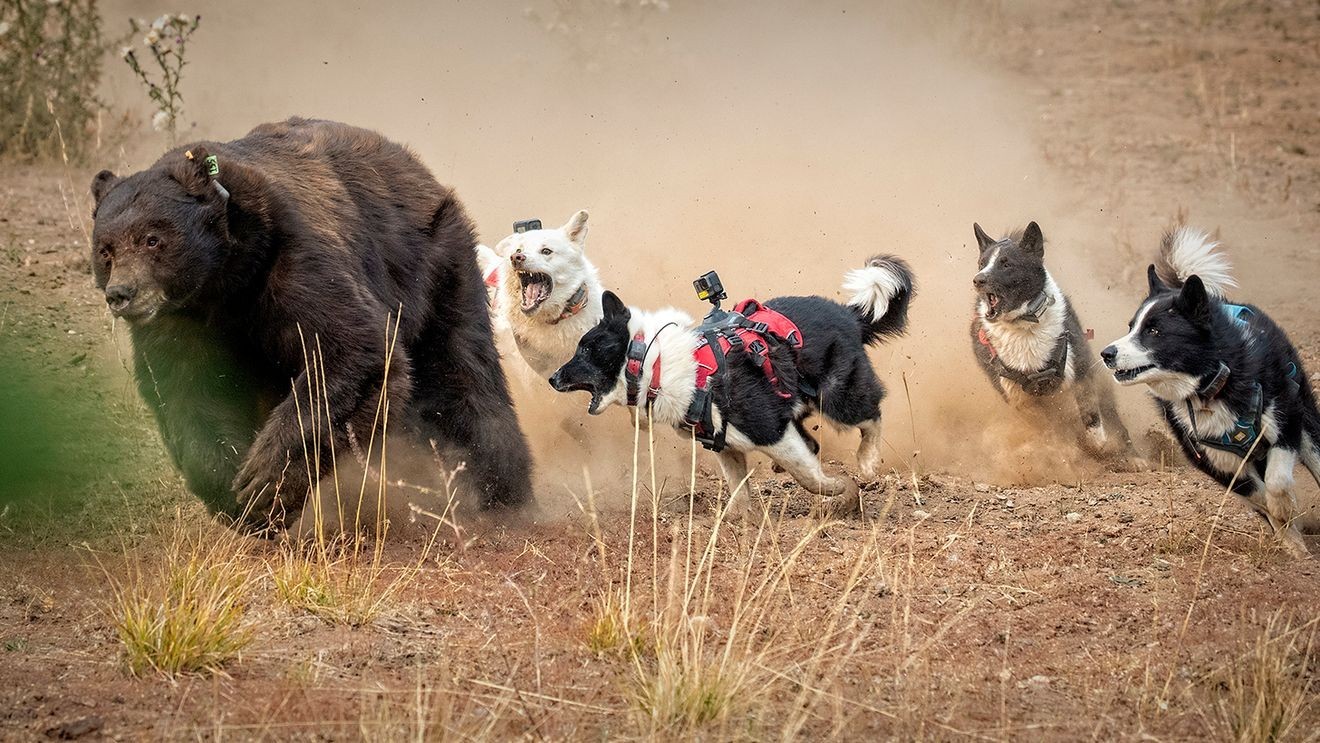
RENO, Nev. (News 4 & Fox 11) — When a black bear becomes too comfortable roaming through a neighborhood or searching for food near homes, the Nevada Department of Wildlife may call in two fearless, four-legged specialists.
Badger and Banjo are Karelian Bear Dogs trained to work alongside NDOW wildlife biologists during bear hazing operations. Their job is not to catch or fight the bear. Instead, the dogs bark, chase and sometimes nip at the animal to create an unpleasant experience around people and developed areas.
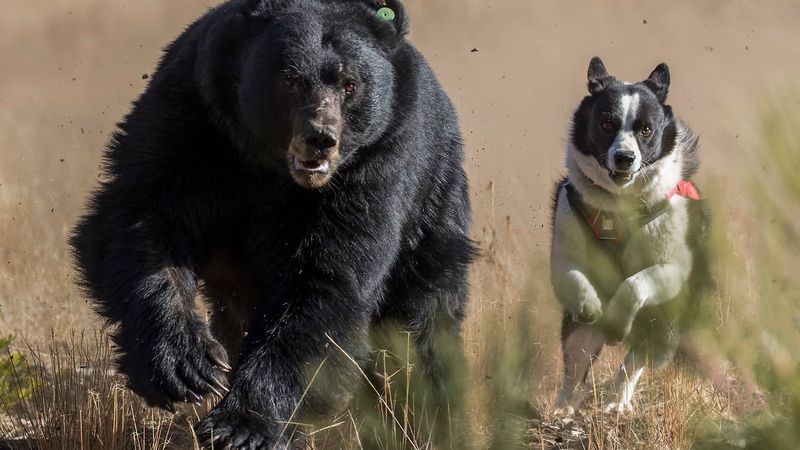
Karelian bear dogs (Courtesy NDOW)
The non-lethal technique, known as aversive conditioning, is designed to restore a bear’s natural wariness of humans.
By making the encounter stressful and uncomfortable, biologists hope the bear will leave the neighborhood, return to a wild habitat and think twice before coming back for another easy meal.
The dogs assist NDOW bear team members Carl Lackey and Becca Carniello as they manage Nevada’s black bear population and respond to human-bear conflicts.
In addition to hazing bears during releases, Badger and Banjo can help flush bears from urban dens, crawl beneath homes to locate animals in crawl spaces and search for injured or orphaned bears. They also support wildlife research and may be used to haze other animals, including mountain lions and deer.
Karelian Bear Dogs were originally bred in the Karelia region between Finland and Russia to hunt large game such as bears and moose. Their high energy, fearless instincts and ability to work around large animals make the breed well suited for wildlife management.
Nevada’s program began in 2001 with NDOW’s first Karelian Bear Dog, Stryker. NDOW was among the first wildlife agencies in North America to use the breed as part of its bear management efforts.
The dogs have since become an important part of the department’s effort to allow bears and people to coexist in areas such as Lake Tahoe, where development increasingly overlaps with bear habitat.
The goal is to keep bears from associating homes and neighborhoods with food. A bear that continues returning to developed areas can become a threat to public safety and may eventually have to be destroyed.
NDOW says hazing operations are carefully planned and conducted by trained wildlife professionals. The goal is to protect both the public and the bear while encouraging the animal to find food naturally in the wild.
But wildlife officials say trained dogs can only address part of the problem. Preventing bears from finding food around homes remains the most effective way to reduce conflicts.
More than 90% of the black bear calls NDOW receives are connected to unsecured garbage or other food provided by humans.
As summer progresses, bears become increasingly active and spend more time searching for food. Black bears are highly adaptable and can quickly learn where an easy meal is available.
Once a bear finds food inside an unsecured trash can, it is likely to return. Relocating the animal may appear to solve the immediate problem, but NDOW says moving bears is rarely an effective long-term solution if the food source remains available.
Residents are encouraged to use bear-resistant trash containers whenever possible and keep lids securely closed and latched. Garbage should be stored inside a garage, shed or another secure enclosure until collection day.
Officials say trash cans should be placed at the curb on the morning of pickup rather than the night before. Residents should also rinse recycling, clean garbage cans regularly and remove other potential attractants.
Those attractants can include pet food, bird feeders, dirty barbecue grills and coolers stored outside.
Removing those easy meals can prevent a bear from becoming comfortable around people in the first place, keeping the animal out of neighborhoods and eliminating the need for Badger and Banjo to give it a noisy escort back to the wild.