
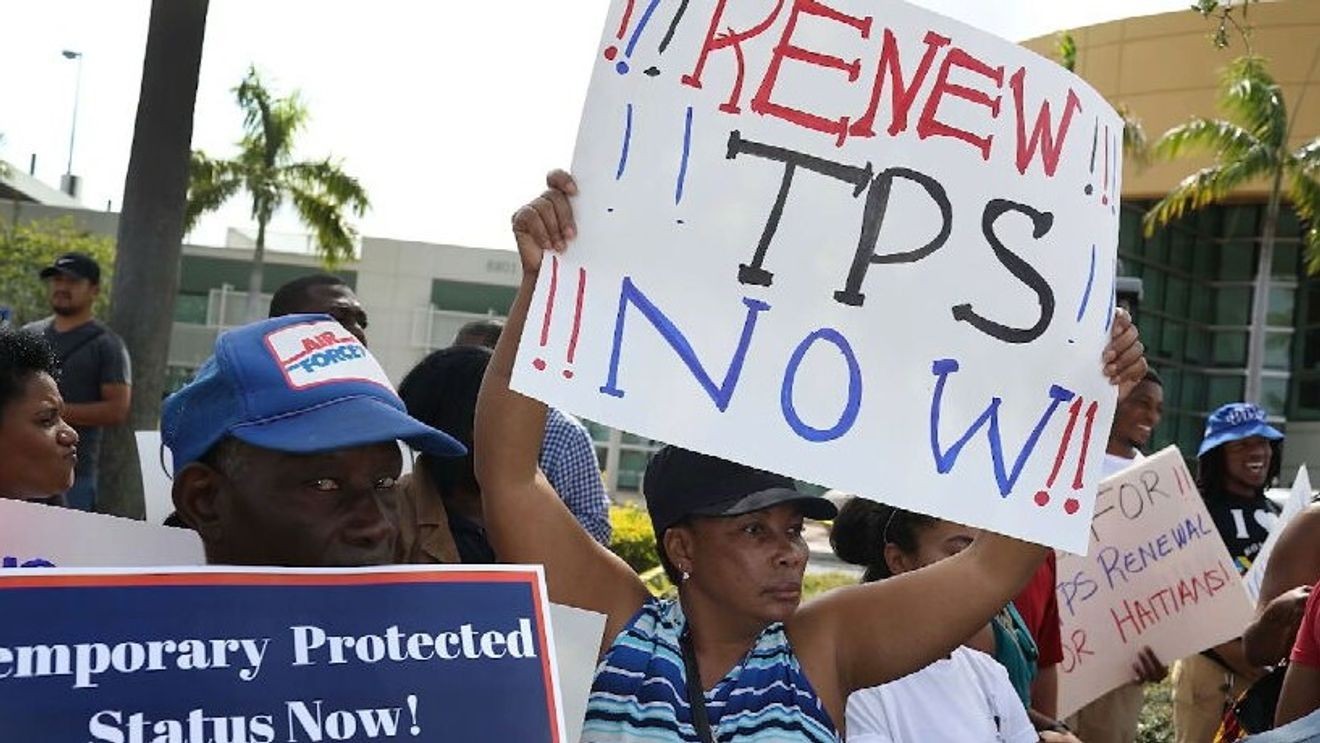
PENSACOLA, Fla. — “Temporary Protected Status” (TPS) has expired for more than 300,000 Haitian migrants living in the United States. That includes more than 150,000 in Florida. It’s the most in the country.
A Supreme Court ruling in June allowed the Trump administration to end legal protections for them on Monday.
Many Haitian families are now facing an uncertain future. Haitians WEAR News spoke to say their community is bracing for impact because going back home could be a death sentence.
“Almost 90% of the country does not have electricity,” said Al Stubblefield. “That’s unfathomable to us, but it’s real.”
Stubblefield is the board chair of the “Children of Christ Home” orphanage in Haiti. He’s visited the country more than a dozen times and has seen its downfall firsthand.
“Probably the word ‘anarchy’ is what’s used the most,” Stubblefield said. “For instance, Port-au-Prince is the capital of Haiti. Airplanes do not fly into Port-au-Prince because the gangs shoot at them. So that airport has been closed down.”
“There is no real effective government, there’s no effective police,” he said. “It is a country now that is being run by gangs.”
After a devastating earthquake in 2010, the Obama administration granted TPS to Haitians living in the U.S. On Monday that protection expired.
Missy Nolf commented on a WEAR News post saying, “Temporary means just that. Our government and our taxpayer dollars need to start taking care of our own citizens.”
Lipo Davis saying, “We’re not responsible for Haiti. Let them solve their problems their way.”
WEAR: “Do you think Haiti is equipped to handle this large number of people returning [from] the U.S.?”Stubblefield: “No. Haiti is not equipped to handle what they’ve got, much less the people that have tried to escape by coming up here.”
Ismael Estiverne is an accountant who immigrated to the U.S. from Haiti in 2006.
“A lot of people that I work with, they’re having to shut down what they do and looking at self-deporting,” said Estiverne.
WEAR: “And how’s that like for them?”Estiverne: “It has been very difficult for them because they had been here since 2010 and some of them from 2011. So they’ve looked at life here and hadn’t been back to the country since then.”
Estiverne says Haitians make up much of Florida’s labor force, from senior care nurses to hospitality workers, maids, cosmetologists and more.
He estimates that Haitian TPS holders contribute billions of dollars annually to the United States’ economy.
“And it’s sad to say because I don’t think the loss is gonna be immediate,” Estiverne said. “So we’re not gonna see it right then and there. But I think once it’s, we’ll probably notice it within a year or two.”
Temporary Protected Status for 6,000 Syrians in the United States also ended Monday.
People who lose TPS and have no other lawful immigration status may become subject to removal proceedings and deportation.