
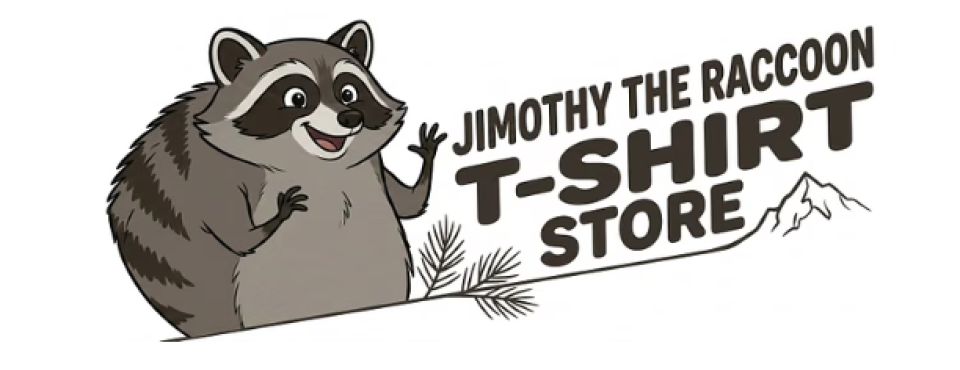
Just as a wild Seattle raccoon with a shortened spine nicknamed Jimothy became the internet’s latest obsession, the merchandise followed almost immediately.
Street vendors are hawking Jimothy T-shirts. At least one online store sells nothing but Jimothy merchandise. There’s reportedly a Jimothy-themed cryptocurrency circulating, too.
And then came the intellectual property claims.
In an effort to further monetize the viral sensation, someone has already filed an application to trademark the name Jimothy for stuffed animals. Another filing by Sabine IP LLC covers Jimothy-branded baby products like cloth bibs, pacifiers, and baby lotions.
But according to IP attorneys, Jimothy is a free agent. He belongs to both everyone and no one.
“I don’t see it being something that anyone can claim rights to,” said Eric Perrott, a trademark and copyright attorney at Gerben IP.
Viral phenomena like Jimothy move too fast for anybody to easily claim exclusive rights, he said.
Comparisons to other viral animals like Grumpy Cat or Doge don’t hold up because those memes had an identifiable owner from the start, Perrott said.
“They weren’t protecting the idea of a cat named Grumpy Cat,” he said. “They were protecting the videos that they produced, the content they produced under that name.”
Jimothy can’t be controlled by any one source, Perrott said.
No Owner, No Trademark
A trademark must be able to tell consumers who is behind a product or service, said Josh Gerben, trademark attorney and founder of Gerben IP. “The name of the raccoon, in all likelihood, and a general image of the raccoon drawn however you would, would not theoretically be possible to be protected as a trademark,” he said.
The one person who might have a claim is Seattle resident Kiana Hall, who is believed to have filmed the original video naming the raccoon Jimothy.
But proving it would mean showing that consumers associate “Jimothy” specifically with her, not just with the raccoon — a high bar to clear once a name has gone fully viral, Gerben said.
“It can be very hard to recapture certain rights with trademarks once a name is part of the general vernacular,” he said.
“It doesn’t matter if you’re the one that even said it first,” Gerben said, describing how the US Patent and Trademark Office has reasoned on similar applications in the past. “This is what everybody’s using, so you can’t protect it as a trademark.”
With Jimothy’s image already on coffee mugs, onesies, and T-shirts from vendors with no connection to each other, he said, any single trademark owner has a challenging case to make.
And even if the PTO approves the pending Jimothy applications, enforcement isn’t likely to follow, said Ashley E. Holland, an associate at McKee Voorhees & Sease.
She referenced New York City street vendors who sell “pretty obvious dupes.” She said, “Does it really happen that Louis Vuitton goes after all of those people? Not super often.”
Copyright’s Narrow Reach
If there’s any real legal leverage here, attorneys said, it’s in the copyright space — and even that’s limited to the original footage itself.
There could be copyright claims against people reusing Hall’s original video, but “the minute they go to a clip art picture, or they draw one of their own,” they get around the issue, Gerben said.
Christopher Sprigman, a professor at the New York University School of Law, said posting a video publicly narrows those rights even further.
“By sharing it and basically not shutting off re-shares, you’re essentially at least implicitly licensing people to re-share it,” he said.
Memes spread precisely because people copy them, and copyright law exists to restrict copying, Sprigman said. “There is a very deep tension between ownership and memes,” he said. “If you think of copyright as a restriction on copying, it strikes at the root of what makes a meme successful.”
Considering the limitations of legal remedies, if the video’s original creator wanted to profit from Jimothy, she may have to rely on business strategy instead.
While it isn’t likely that Hall could easily secure a trademark for Jimothy, she instead could market herself as the authentic purveyor of Jimothy merchandise, a move that some customers would be attracted to, Sprigman said.
“That’s not an IP right. It’s just a statement about provenance,” he said. “I don’t think that’s going to be a complete solution, but it’s something for her.”
Lag in the Law
Holland said part of the issue is that the Patent and Trademark Office is a bureaucracy, and IP generally isn’t a congressional priority. As a result, viral internet trends move light years faster than the law.
She pointed to a 2023 US Supreme Court ruling involving Andy Warhol’s work that reshaped how courts weigh fair use in derivative art as evidence that the law is at least beginning to grapple with questions about IP protections for memes.
But the response “is pretty slow for the fast-paced meme generation, viral generation that we are dealing with,” Holland said.
That gap will only widen as AI tools make it easier to generate and remix viral content at scale, she said.
Holland said she doubts meaningful change will come from Congress, but large corporations, not individual meme creators, will eventually force the issue into court.
Still Sprigman was skeptical anyone could build a lasting brand around Jimothy.
“Like most things on the internet, it’s here and gone,” he said. “It’s hard to imagine a branding campaign getting launched versus a bunch of fly-by-night stuff where people think they’re going to get rich quick.”
For now, Jimothy’s commercial afterlife remains splintered across vendors and meme accounts, with no single party positioned to claim him or stop others from doing so.
“I hope he leads a quiet, peaceful, enjoyable life,” Sprigman said.