
The more you know …
I also learned that Baker has a complicated relationship with skunks. “I’ve been nailed directly in the chest many times” by the animal’s horribly stinky spray, he says. His wife makes him strip outside, but the smell has started to grow on him: “After a while, it starts to feel like perfume. To me, it’s got a sweet smell.”
The more he talks, the more my own relationship with nature begins to seem less like fear and more like a boundary dispute. I like animals; I just prefer that they conduct their business somewhere that doesn’t involve the structural integrity of where I sleep.
So maybe the question isn’t how to keep nature away. The question is how to coexist with the animals around us without losing our minds, our garbage cans or our dignity.


Every animal here has a job. Unfortunately, several of those jobs involve sending you back inside.
Peter Arkle
Nature’s least respectful roommates
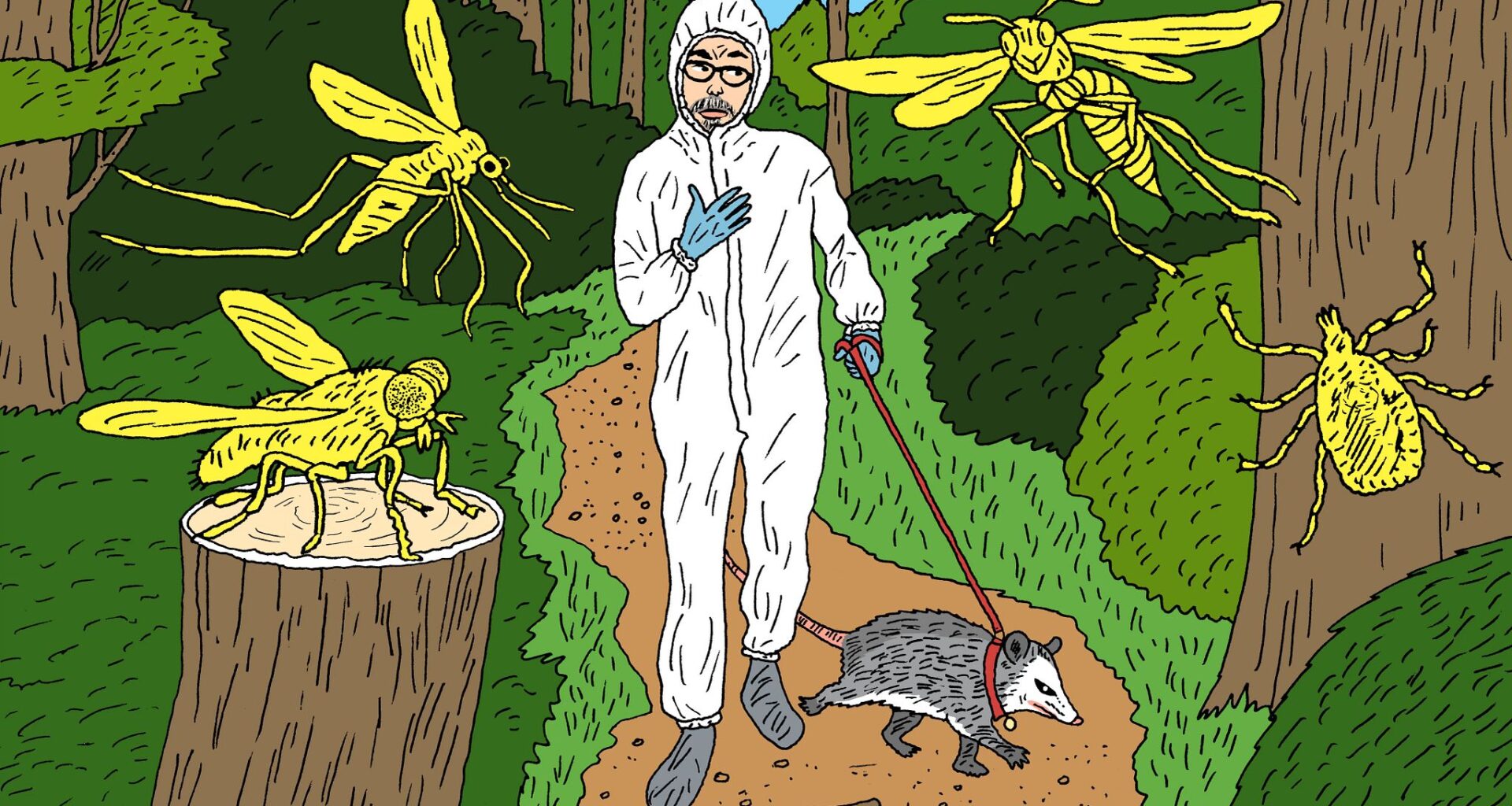
A quick field guide to the summer creatures most likely to treat your yard, porch, attic or bloodstream as shared space — and solutions for their wrath.
Ticks turn a perfectly nice walk in the woods into a full-body inspection with bad lighting. Think low. Thomas N. Mather, director of the University of Rhode Island’s TickEncounter Resource Center, says immature ticks often make first contact at the feet, so use a permethrin clothing-treatment spray on shoes, tall socks and lower pant legs. Look for 0.5 percent permethrin on the label, and let your footwear and clothes dry before putting them on.
Mosquitoes ruin dusk. Eva Buckner, a University of Florida mosquito expert, says mosquitoes can develop in as little as a bottle cap’s worth of water, so empty your flowerpots, buckets, toys, pet bowls and birdbaths regularly. Use an EPA-registered repellent, and put a fan on the porch (mosquitoes are lousy pilots).
Biting flies go for the face, and they chase movement. Wear long sleeves, pants and light colors. Sarah Hughson, an insect/arthropod diagnostician with Michigan State University Plant & Pest Diagnostics, says repellents help but don’t create a “force field,” so insects may still land before giving up. When flies are awful, a mesh head net becomes reasonable. It’s fashion under protest.
Yellow jackets and wasps turn outdoor meals into hostage negotiations over lemonade. Cover your food and trash. Nicole Bell, a pollinator specialist with UMass Extension, says wasps are useful predators and pollinators, but picnic leftovers are an invitation. If a nest is away from foot traffic, note it and avoid it. If you see one near a door, deck or grill, call a professional, especially if anyone in your group has a sting allergy.
Mice and rats treat homes like seasonal rentals and never pay the cleaning fee. Remove food, water and shelter. Niamh M. Quinn, a human-wildlife interactions adviser with University of California Agriculture and Natural Resources, says people often trap animals without fixing their means of entry. Store food securely, trim vegetation away from buildings and seal gaps around doors, vents, pipes, roofs and foundations.
Raccoons have hands, confidence and no respect for your trash schedule. Stop feeding them. Rachael E. Urbanek, professor of wildlife ecology at the University of North Carolina Wilmington, says the top mistake is feeding, whether directly or indirectly. Secure your garbage, bring pet food inside, clean your grills and understand that bird feeders may also feed half the neighborhood’s food chain.
Skunks dig for grubs, wander under porches and make dogs believe they’ve met an exciting new friend. Remove food sources and block access after the animal leaves. Keep garbage covered, clean up pet food, leash dogs at night, and don’t corner the skunk unless your evening plans include apologizing to everyone in the house.
Bats are terrific insect-eaters until one is making loops around the guest room. Don’t handle it. Winifred Frick, chief scientist at Bat Conservation International, recommends “exclusion, not extermination.” If a bat is inside, open your windows and doors and let it leave. If bats are roosting in the house, call a licensed wildlife exclusion operator. Don’t seal entry points in late spring or summer, when pups may be trapped inside.
Opossums look like they could solve a tick problem, which is how the internet got us all emotionally attached to the idea of a marsupial night janitor. Admire them, but don’t hire them. LaBonté says the opossum tick-control myth spread because people want to believe that “every ecological problem has an ecological solution.” Feeding opossums can also attract raccoons, foxes and coyotes, which is a bad trade unless your goal is to open a woodland food court.